Why I choose delight (most days)
People often ask whether my Delight Practice is a gratitude practice, and I understand why. Both involve paying attention to what feels good, what’s working, what’s beautiful. Both can help shift our focus from what’s hard to what’s life-giving. And both practices have a bunch of wonderful benefits - mentally, physically, and socially.
But for me, they feel different and the word gratitude has me feeling a little uneasy. And maybe it’s worth wondering about that.
When gratitude gets complicated
Part of what makes me bristle a little when I think of gratitude practices comes from how gratitude has shown up in my own story. As a transplant recipient, there’s a strong narrative that I should feel grateful - and not just quietly, but in a way that’s visible and continuous.
And of course I do feel gratitude. Deeply. For my brother’s astonishing gift, for the science that made it possible, for the doctors who held my life in their hands.
But alongside that gratitude sits grief. Grief for the health I lost, for the lifelong vulnerabilities and complications that come with being a transplant recipient. When gratitude is the only emotion we’re allowed to show, it can make the rest of the experience invisible - and harder to make sense of and live with as a result.
I’ve seen this play out elsewhere too. In adoption, for example, there’s a strong narrative that adoptees should be grateful for their adoption, while their losses - including the traumatic separation from their first families - are quietly brushed aside.
Or in grief support, where people reach for “at least…” statements:
“At least the baby didn’t suffer.”
“At least your dad lived a long life.”
“At least you can try again.”
These are meant kindly, but they land like a request to simplify the complicated story - to perform only the gratitude, and to act as if the great pain you feel and the complicated questions you grapple with aren’t real.
And then there are charity situations, where people who’ve been systemically pushed into poverty are expected to smile and demonstrate gratitude for any small handouts, while keeping silent about the deeper injustices that hold those systems in place. Gratitude, in that context, becomes a way of maintaining power, inequality, and injustice.
The “should” in gratitude
If you look up gratitude in the dictionary, it says something like:
“The quality of being thankful; readiness to show appreciation for and to return kindness.”
While I think that sharing our gratitude and wanting to offer kindness in return are beautiful human impulses that are good for all of us, it’s that quiet “should” that bothers me. Gratitude, at least the way it’s often framed, can carry a sense of indebtedness - as if we owe something in return for the good things we receive.
And with that can come a subtle belief that to keep the good coming, we need to demonstrate gratitude - to earn more of it by being properly thankful. It can start to feel transactional, even oppressive, rather than liberating.
How delight feels different
For me, delight feels different. It feels unearned - a moment of grace that simply arrives, without needing to be deserved.
Delight doesn’t ask anything of me. I’m not indebted to it, and I don’t have to prove myself worthy of it. It’s the state of grace that I think is our birthright - the way life sometimes offers beauty or humour or ease for no reason at all.
There’s no debt owed, no power over, and no attempt to manipulate your feelings or oversimplify the story.
Delight can be as small as the smell of rain on dry ground, or the way sunlight moves across the floor. It’s something that happens in a moment - not something we have to manufacture or perform for others.
And while (just like with gratitude) it can feel even better to share delight with others, it doesn’t demand that. It’s enough simply to notice it.
Words Are Personal
If gratitude feels like a word that fits for you, that’s wonderful. If it doesn’t, that’s okay too. Words carry histories - personal, cultural, emotional. You get to choose the ones that feel right.
In my Untangle Your Grief Workbook, I share about the Delight Practice and suggest that if delight feels too far away as you make your way through grief, you might try another word … relief, peace, okayness, safety. The point isn’t to get the language “right.” It’s to find something that helps you stay connected to life, even when it’s hard.
Let it be complicated
These practices - whether we call them gratitude or delight - aren’t about pretending everything’s fine. They’re not about ignoring what hurts. They’re about learning to hold both: the ache and the beauty, the loss and the awe.
Our brains are quick to notice what’s wrong, especially when we’re under stress. But that’s only part of the picture. The practice of delight is a gentle retraining towards living wholeheartedly, embracing it all - a reminder that there’s still humour, colour, connection, and warmth, even when things are difficult.
And it’s there for us all - even if we’re not sure we deserve it - and with no strings attached!
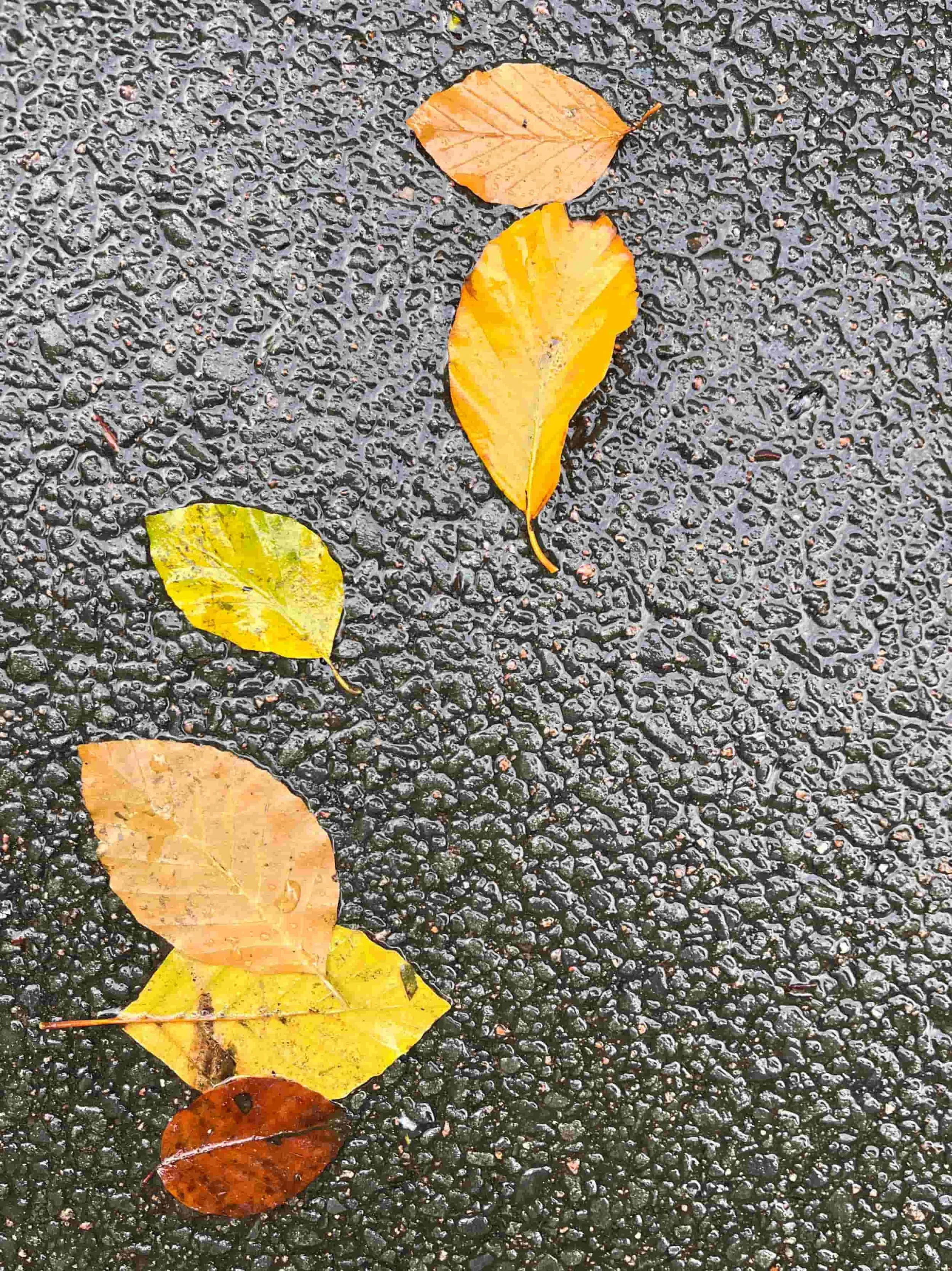
I took this pic on one of my walks this week. Aren’t these fallen Autumn leaves a wonderful example of holding the complicated and whole story of both loss and beauty together? #Delight