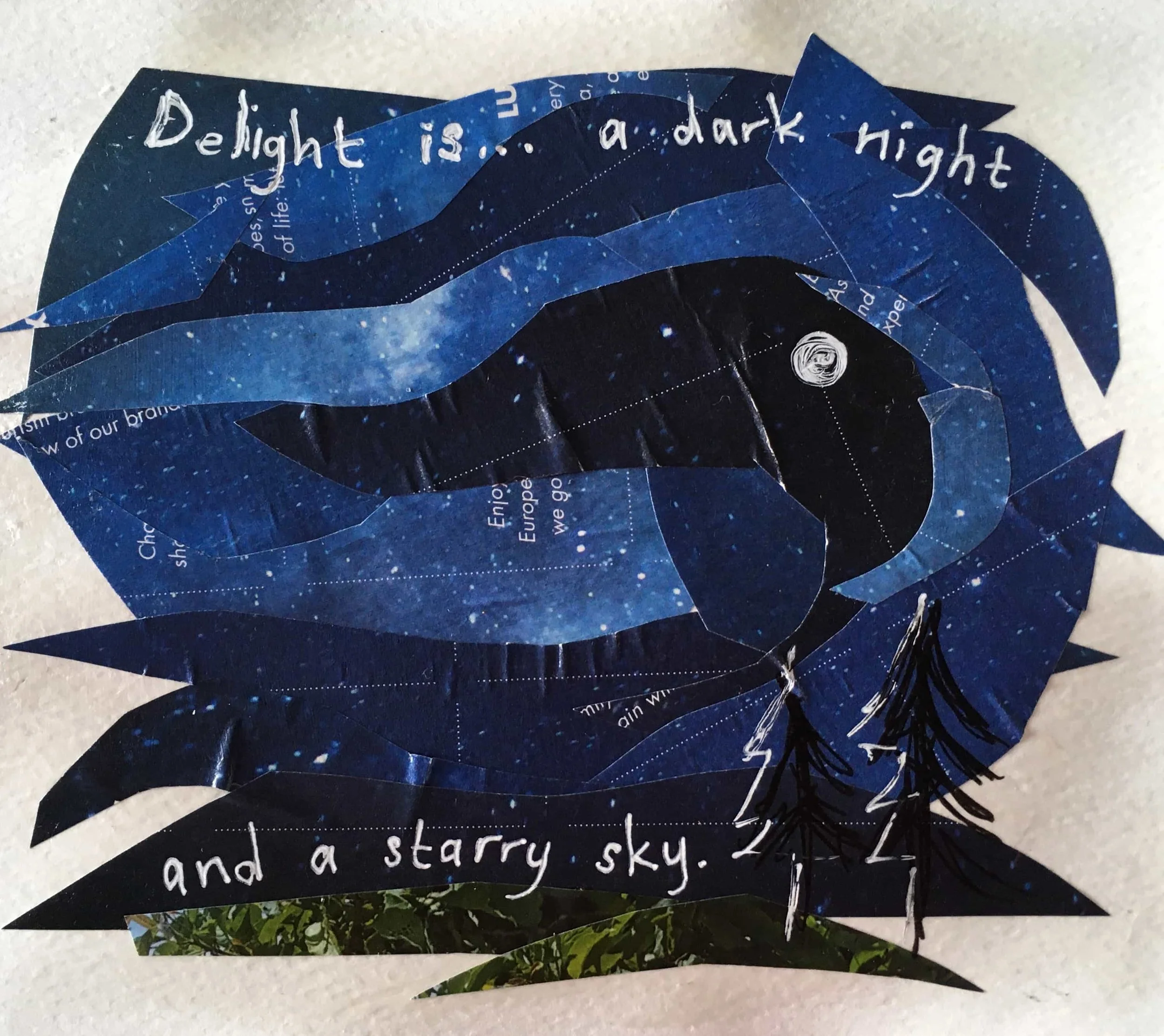
“It began with a simple intention: to notice more of what brought me joy…”
The delight practice: a therapeutic beginning
I started what I now call the Delight Practice during the first Covid lockdown, simply as a way to stay sane. I had no idea it would become the foundation of both my creative process and my overall wellbeing.
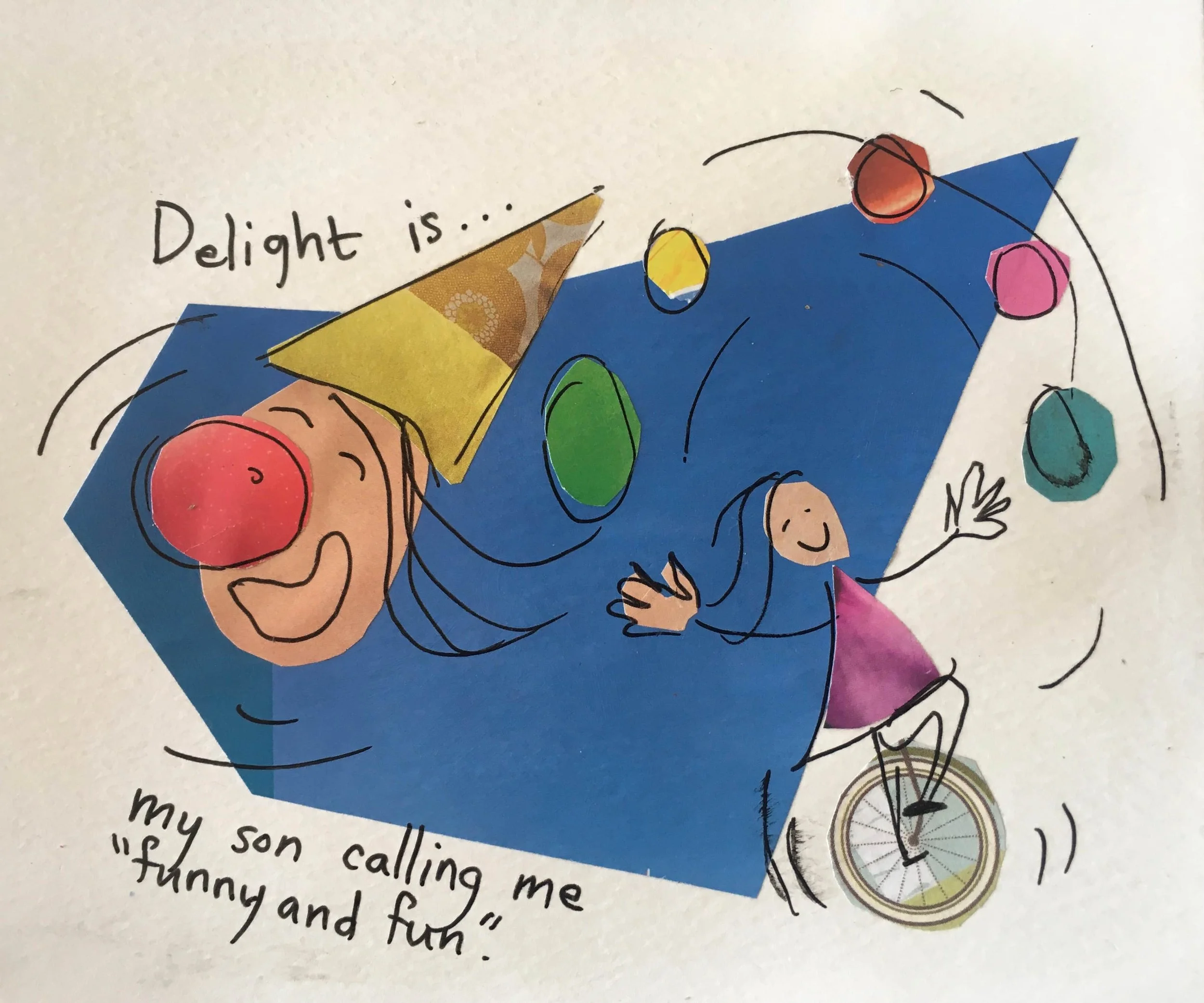
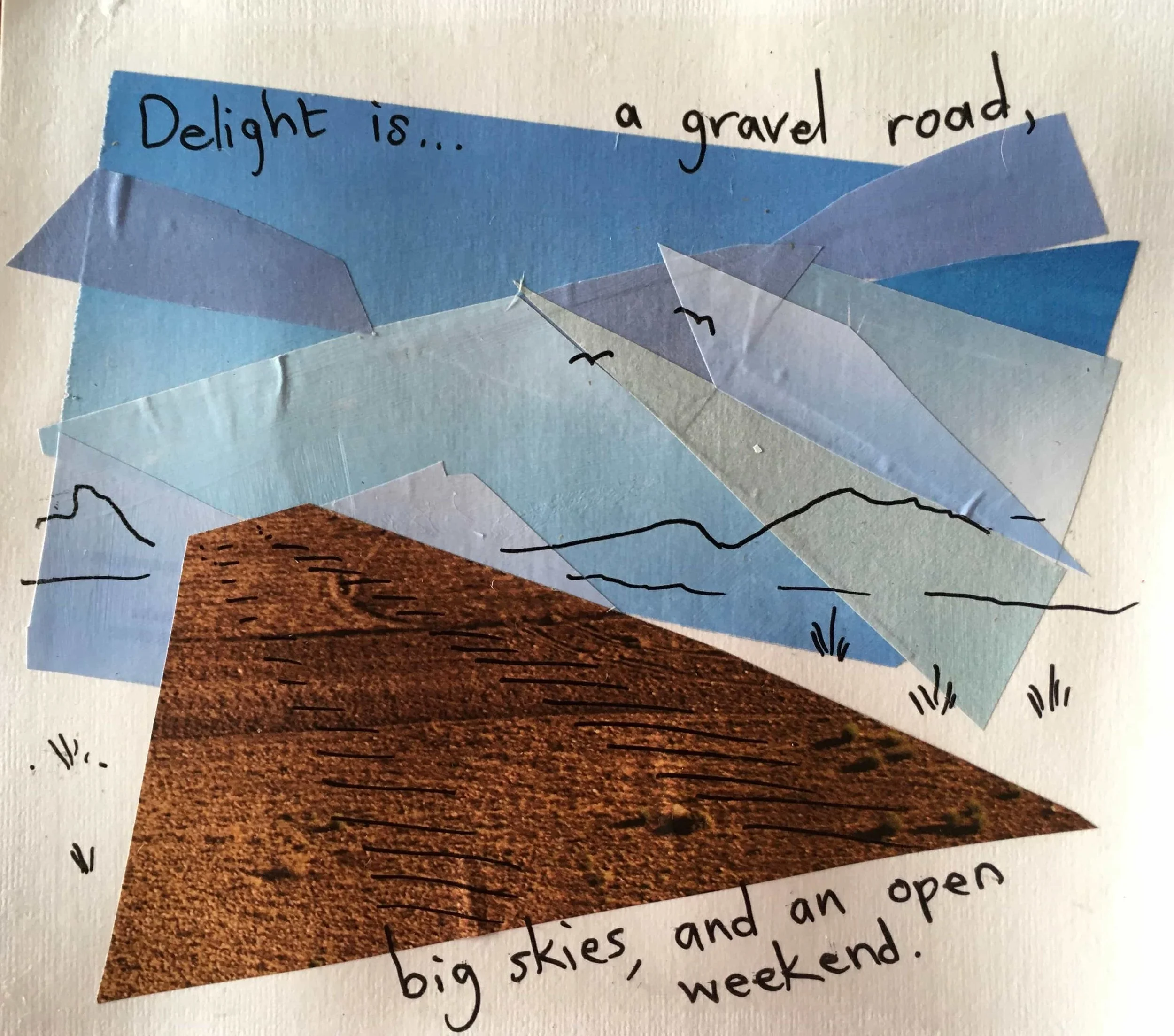
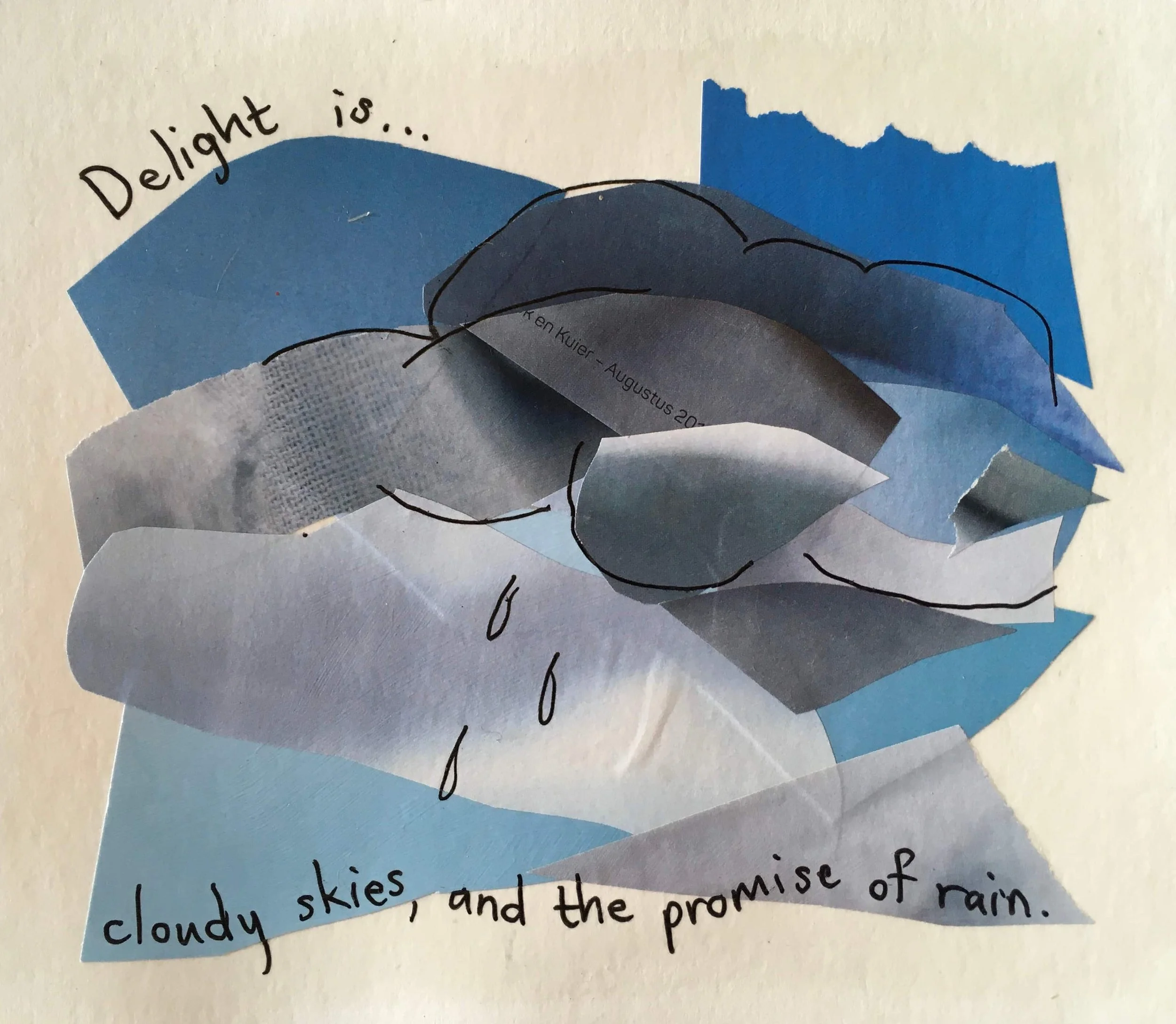
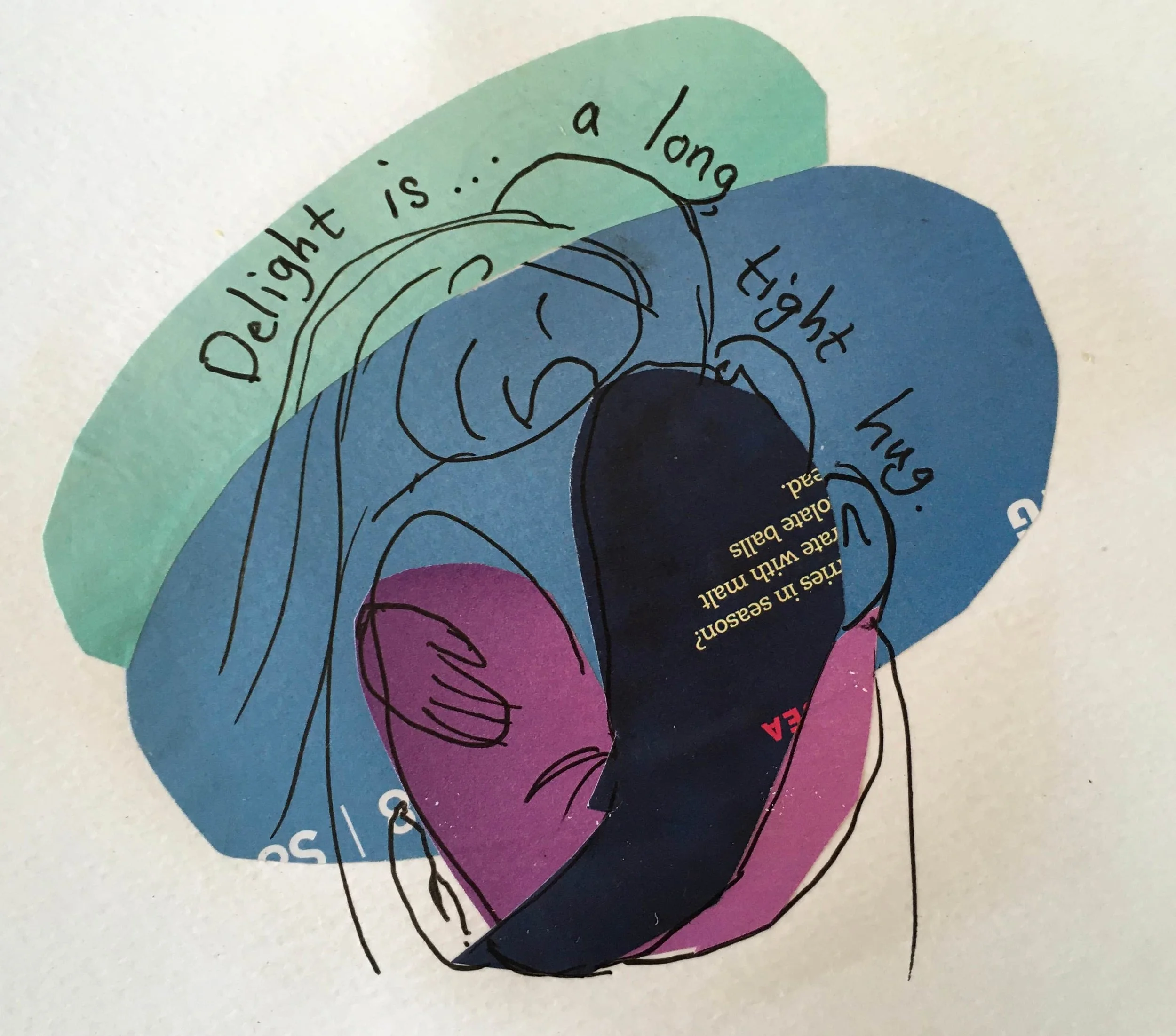
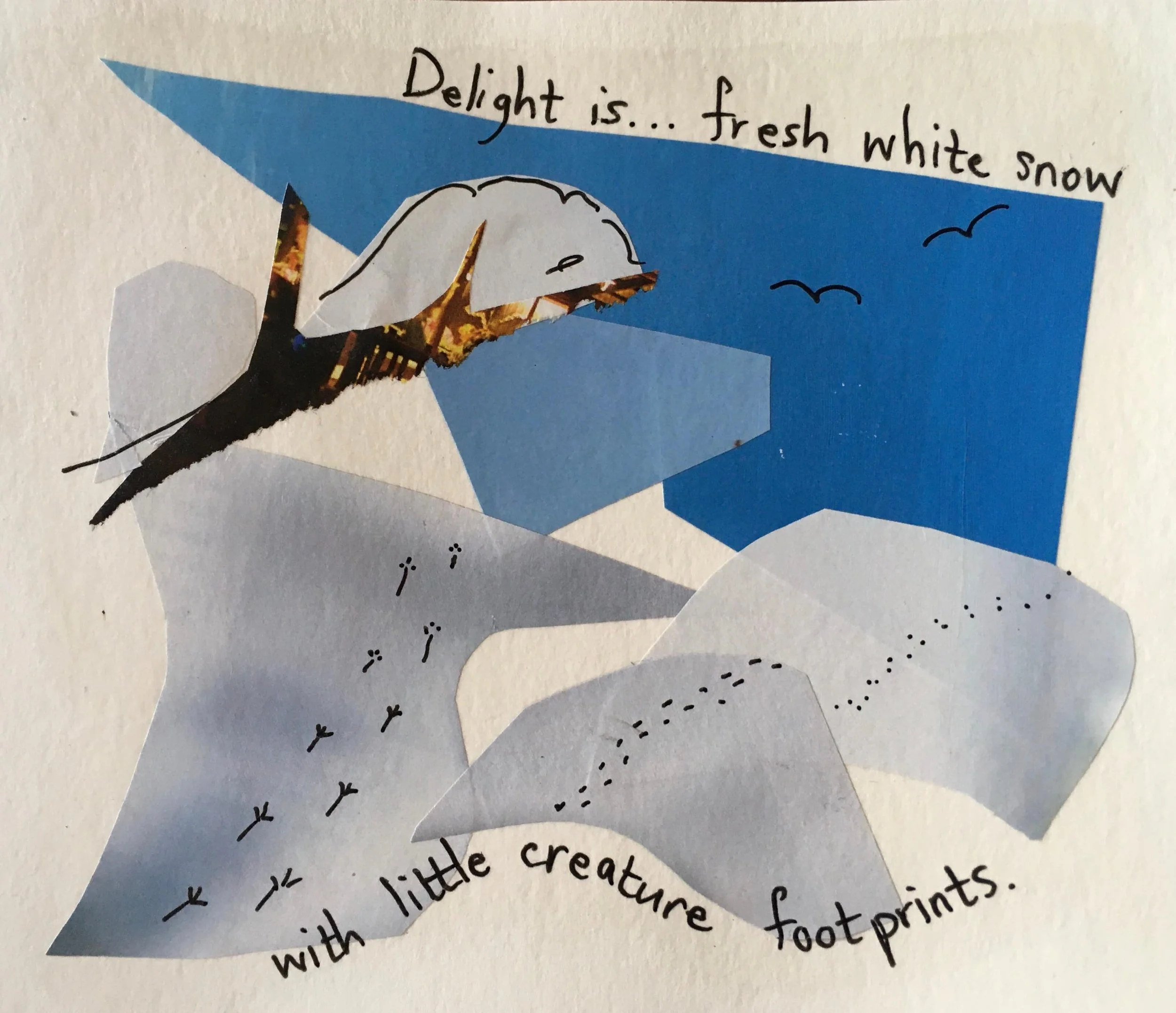
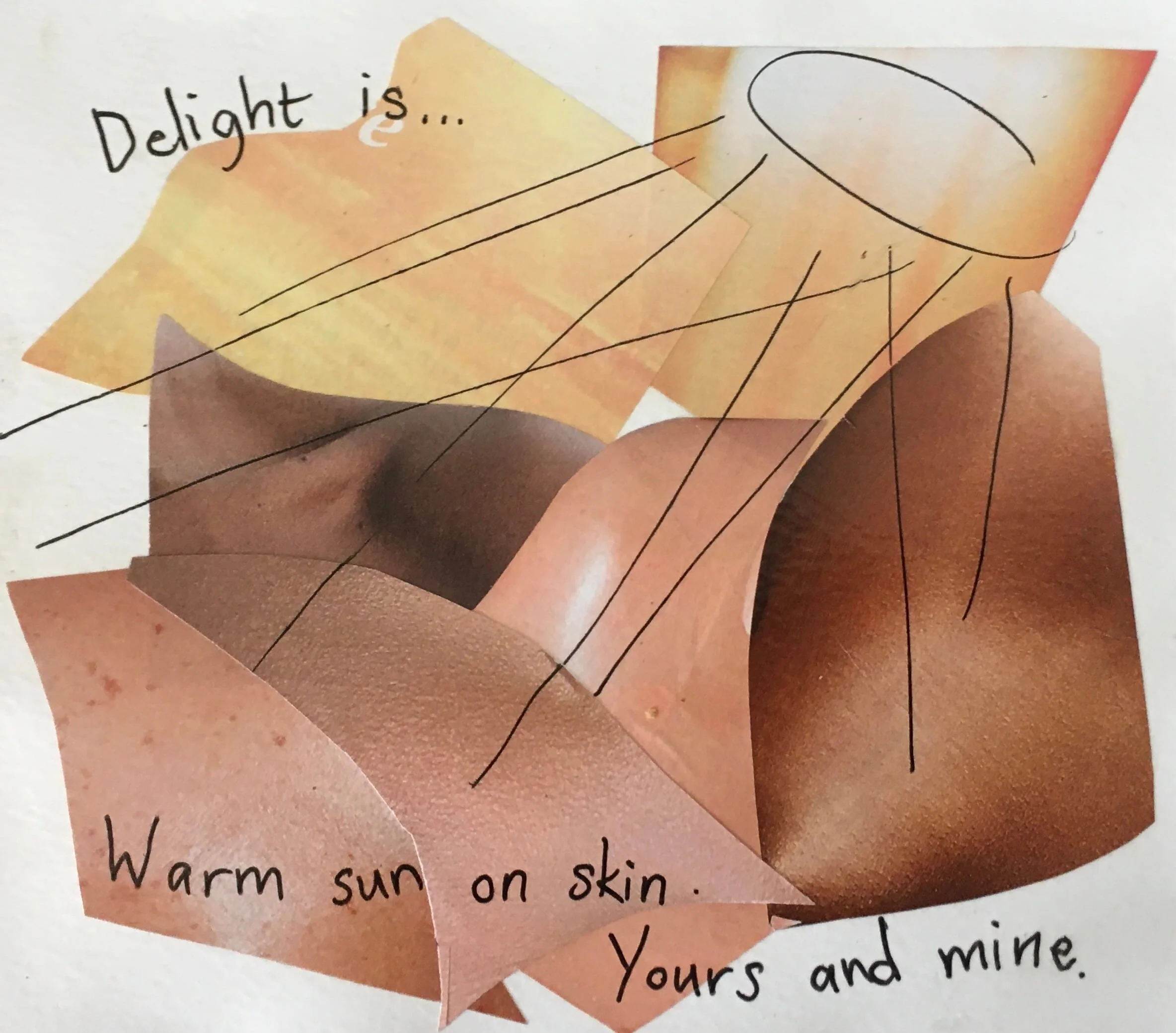
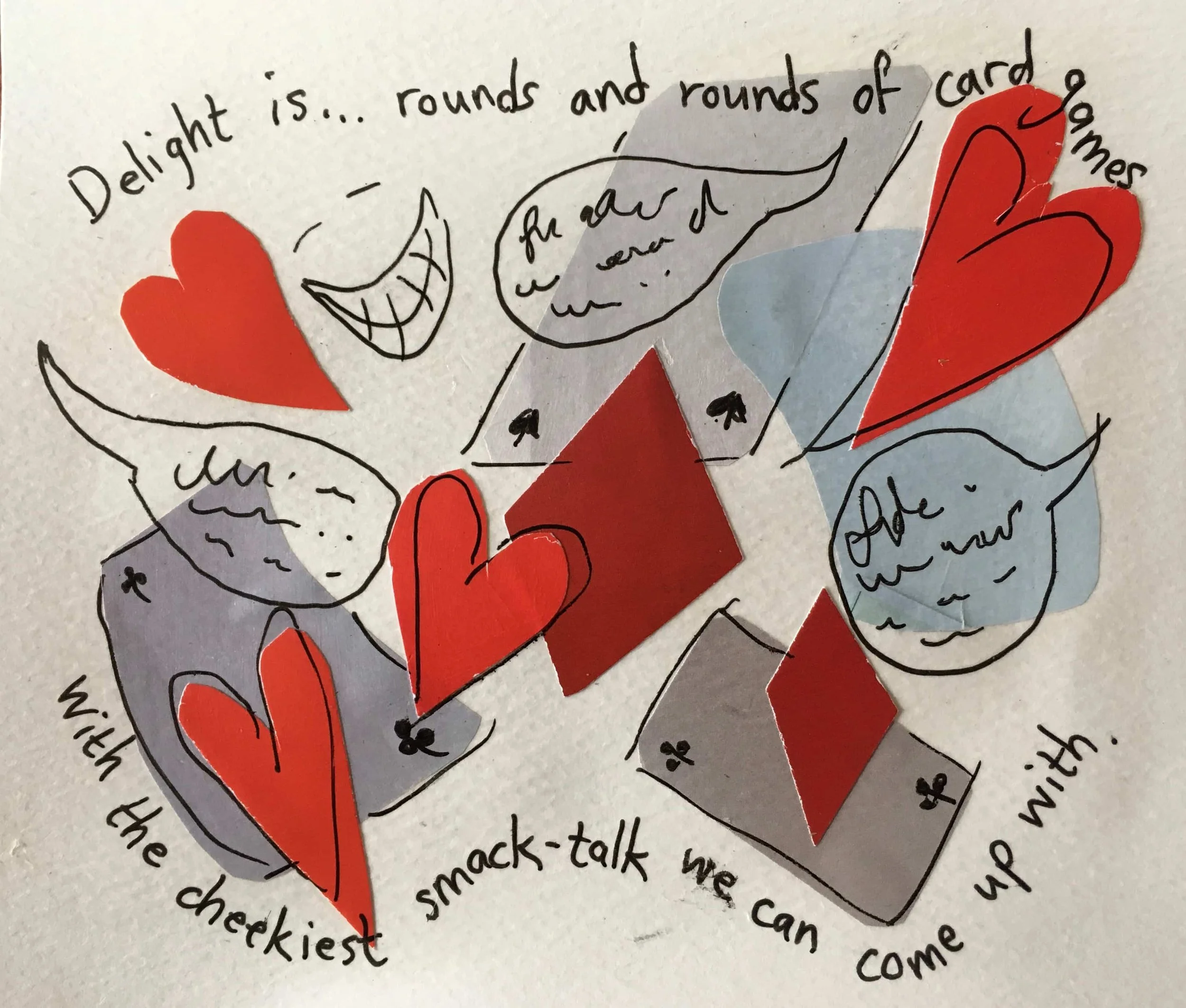
It began with a simple intention: to notice more of what brought me joy. I carried a small notebook titled “Delight is…” and jotted down anything - no matter how fleeting - that sparked a sense of pleasure.
Reclaiming joy in a time of stress
At first, I was shocked by how hard it was to identify those moments. It makes sense, though. In times of prolonged stress, our brains tend to zero in on threats and block out everything that isn’t immediately necessary for survival - including joy, beauty, and connection. Like many people, I’d become disconnected from the small pleasures of daily life.
But as I continued the practice, it became easier. I began to notice more moments of ease and delight, and I started experiencing more days filled with gratitude, playfulness, and a sense of calm.
Expanding delight with creativity
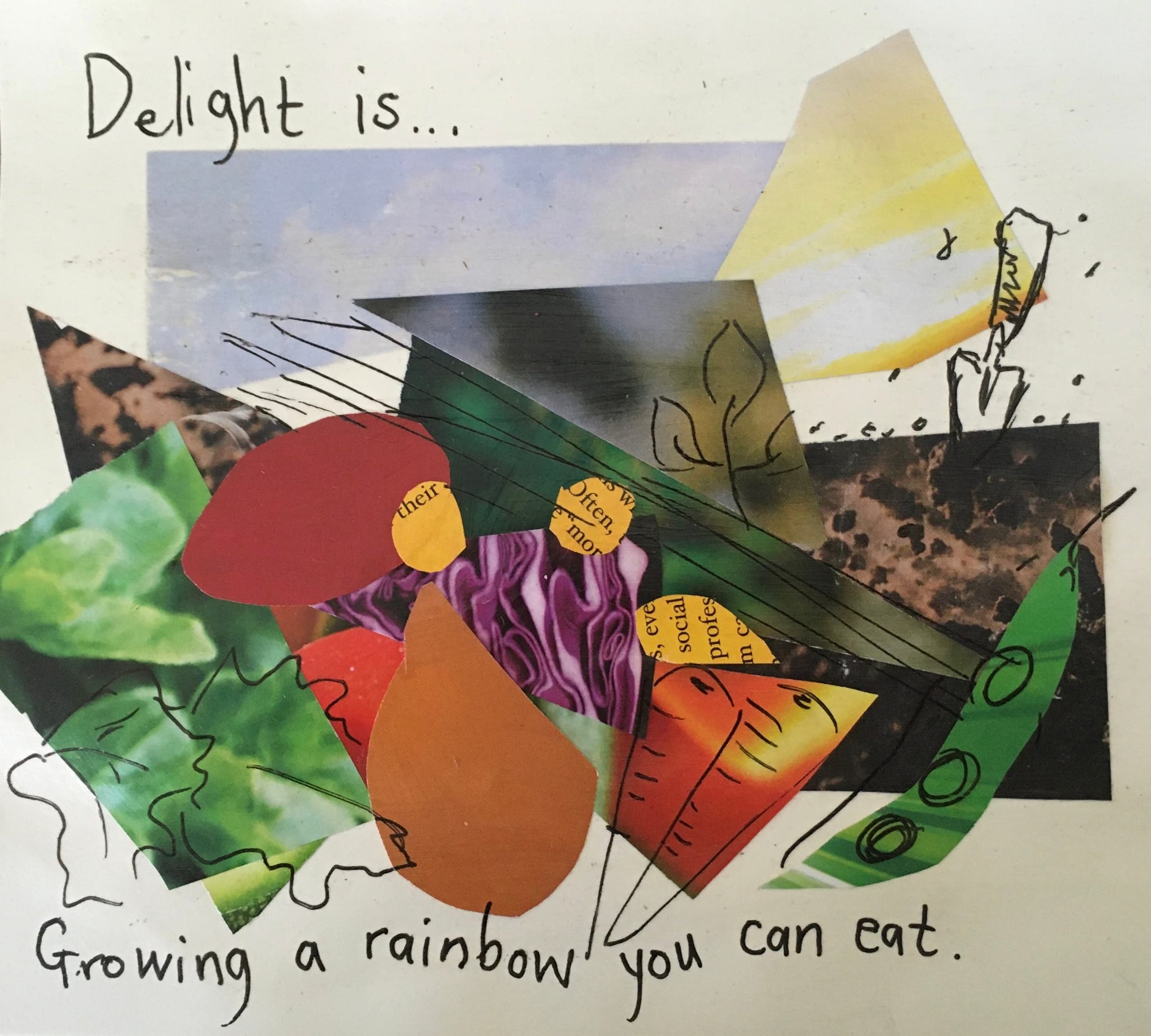
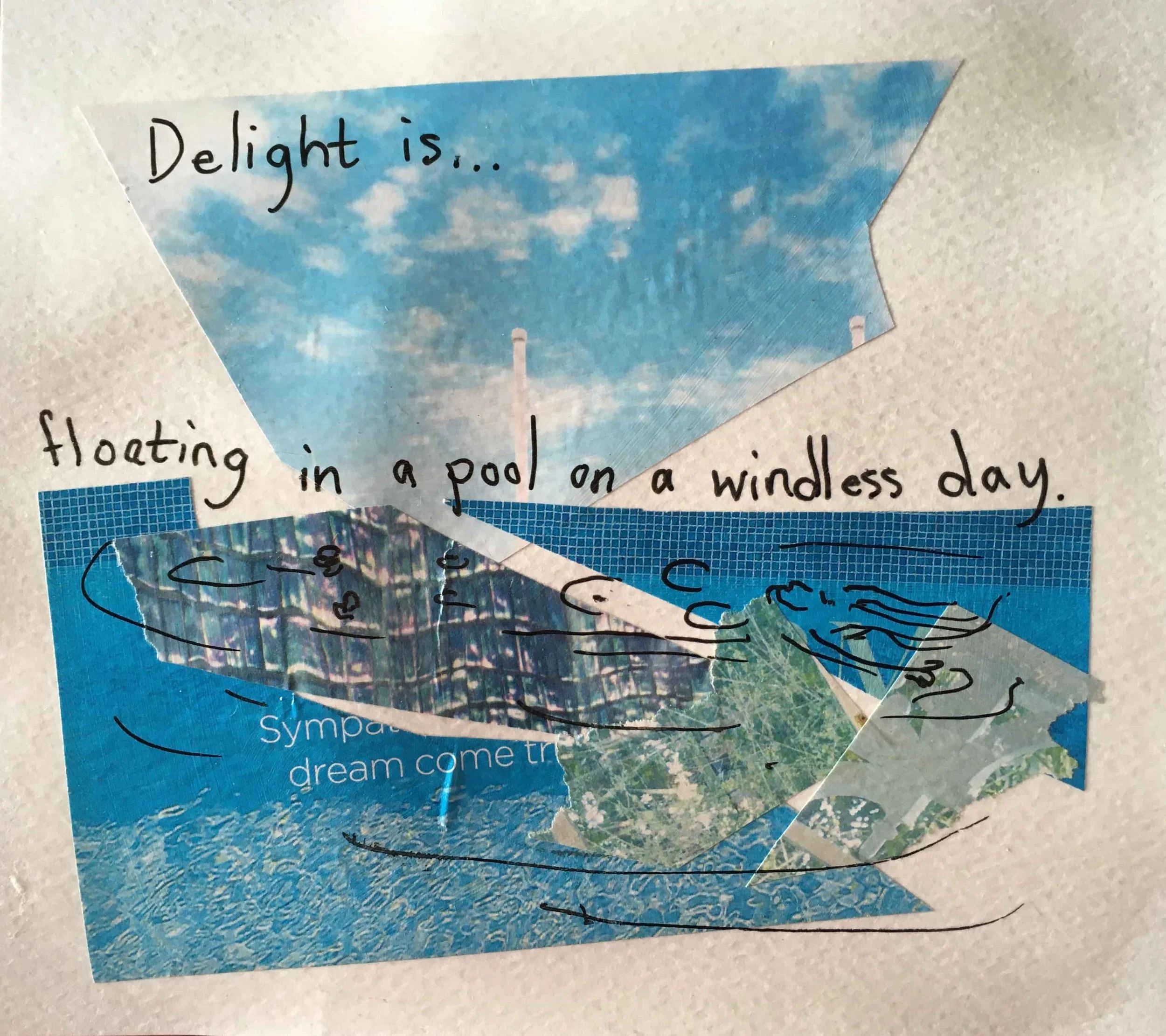
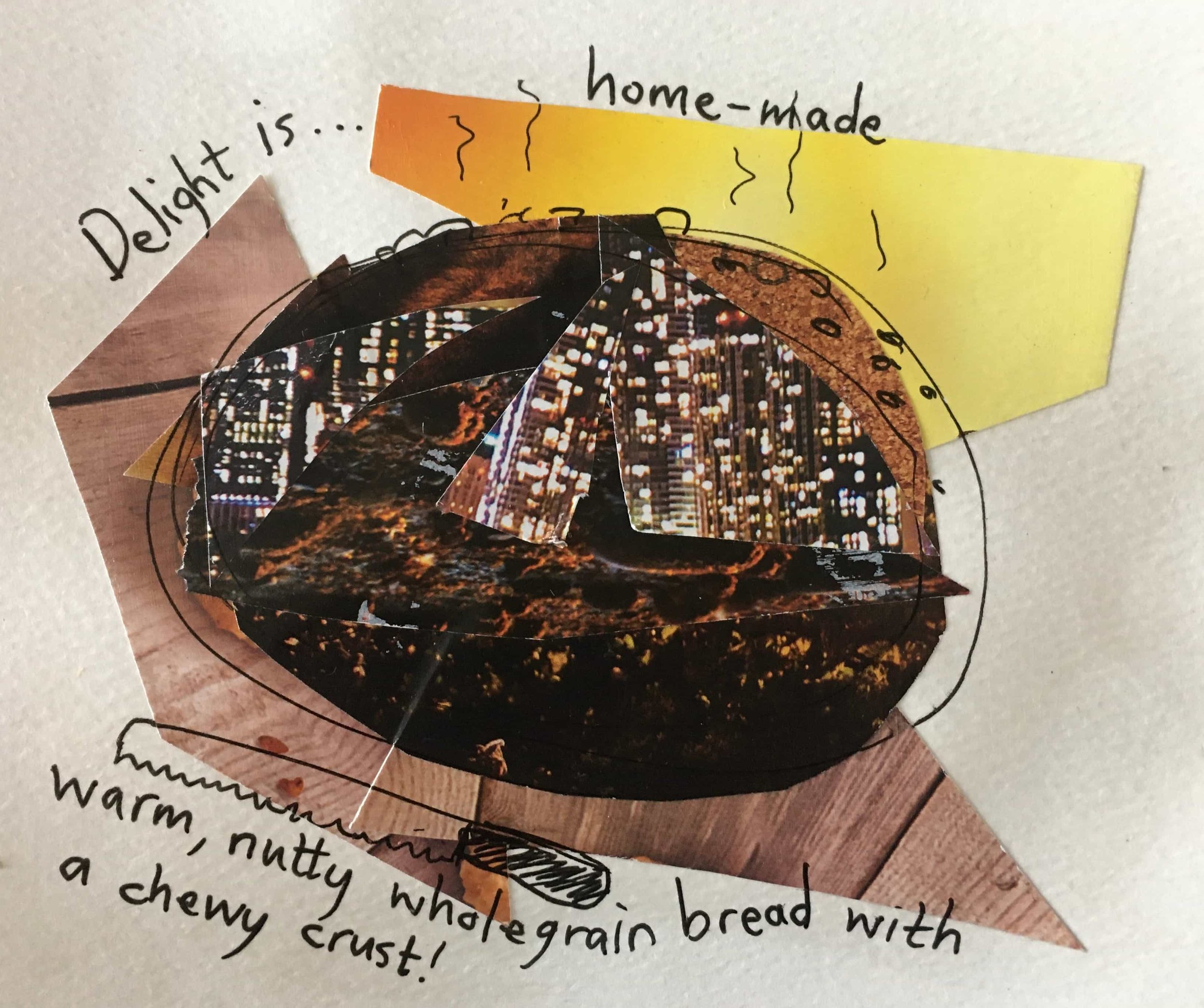
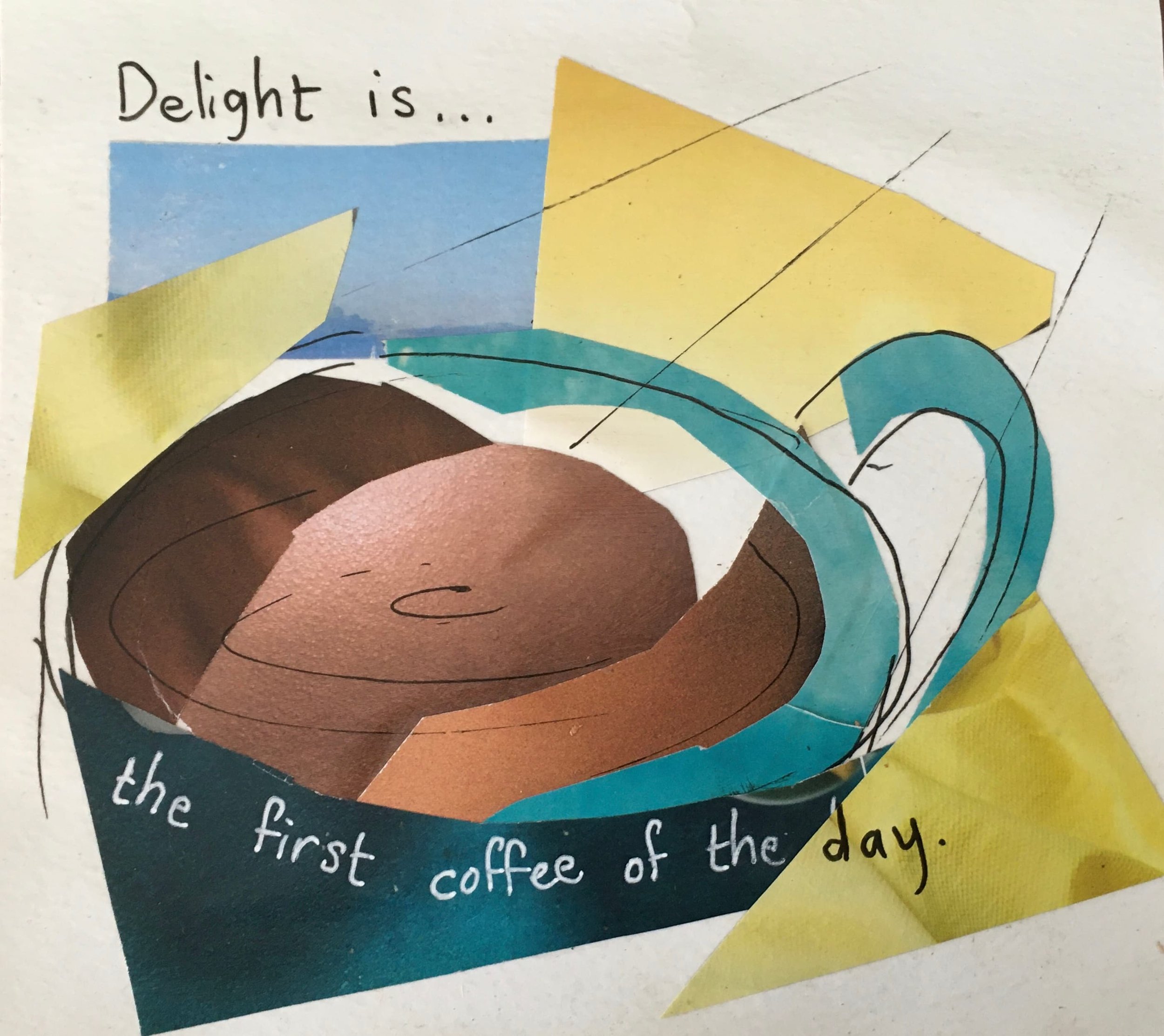
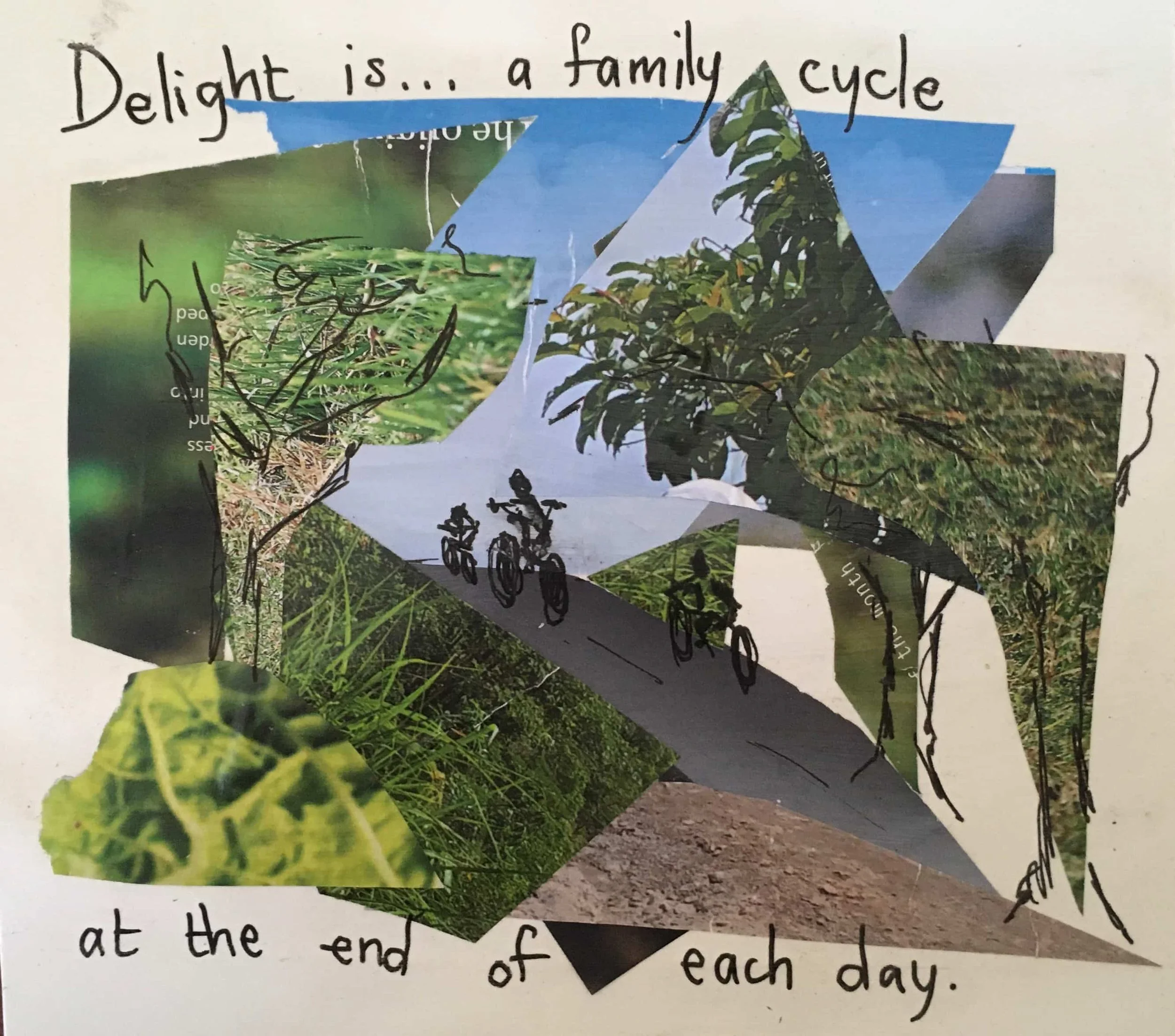
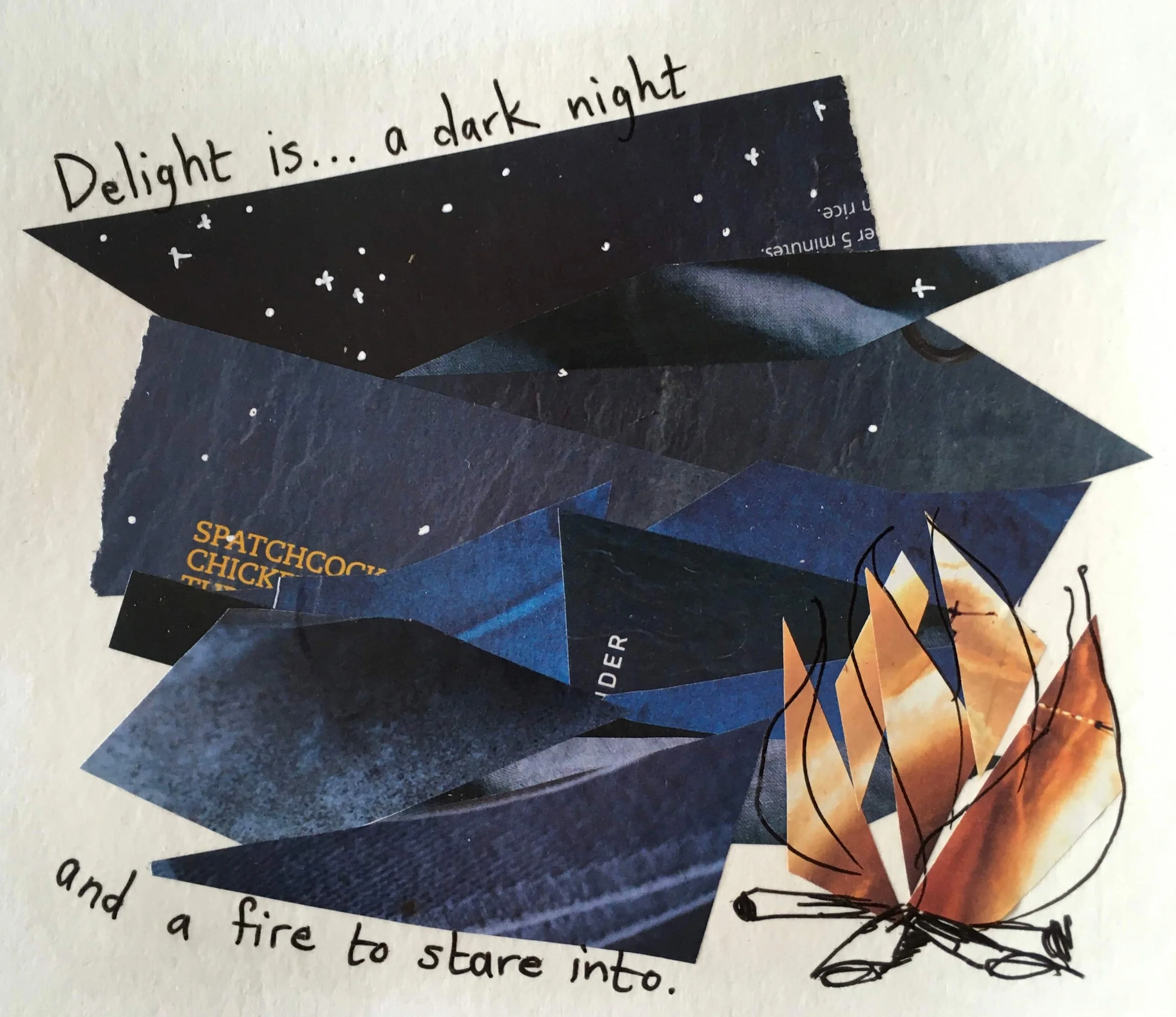
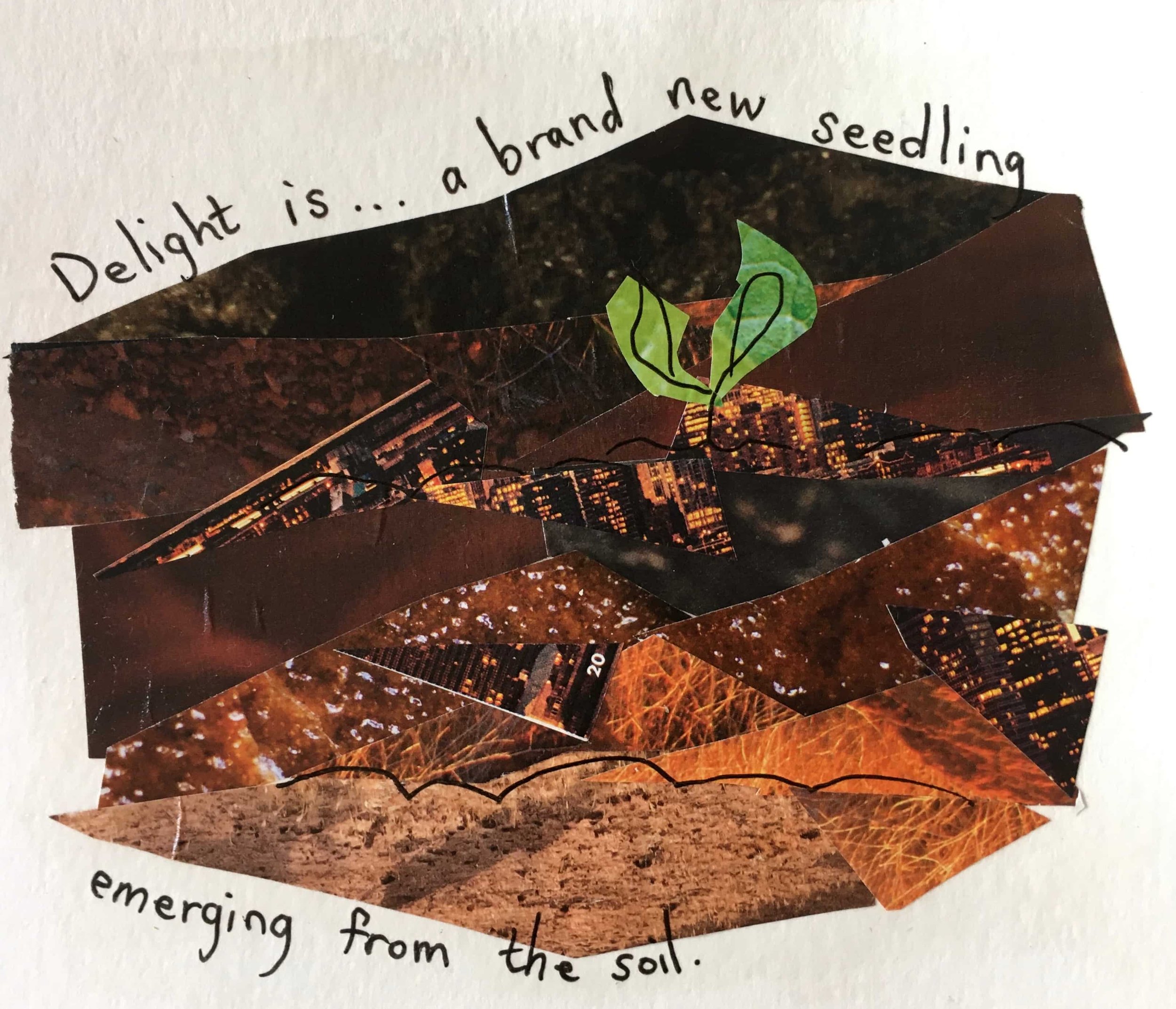
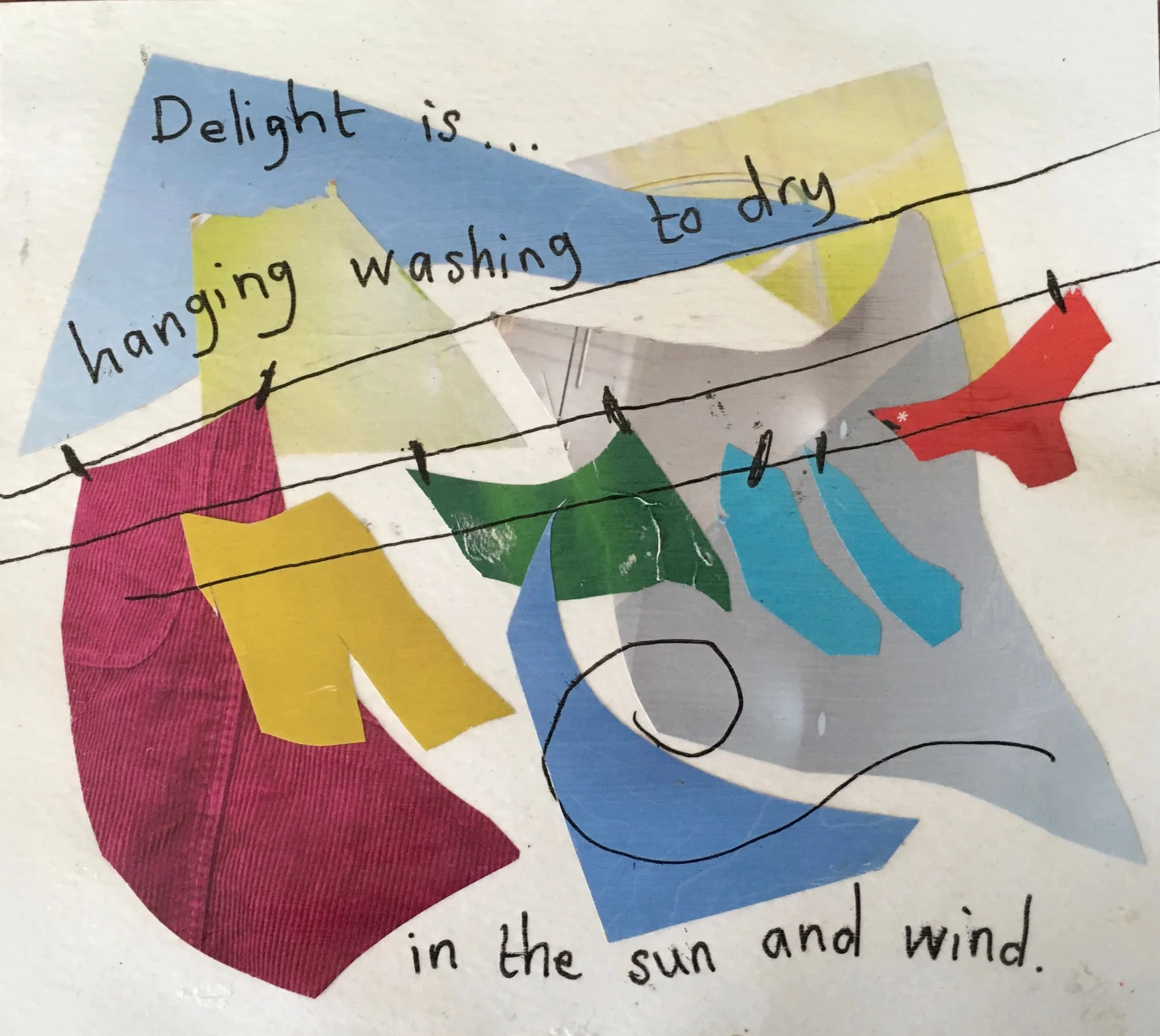
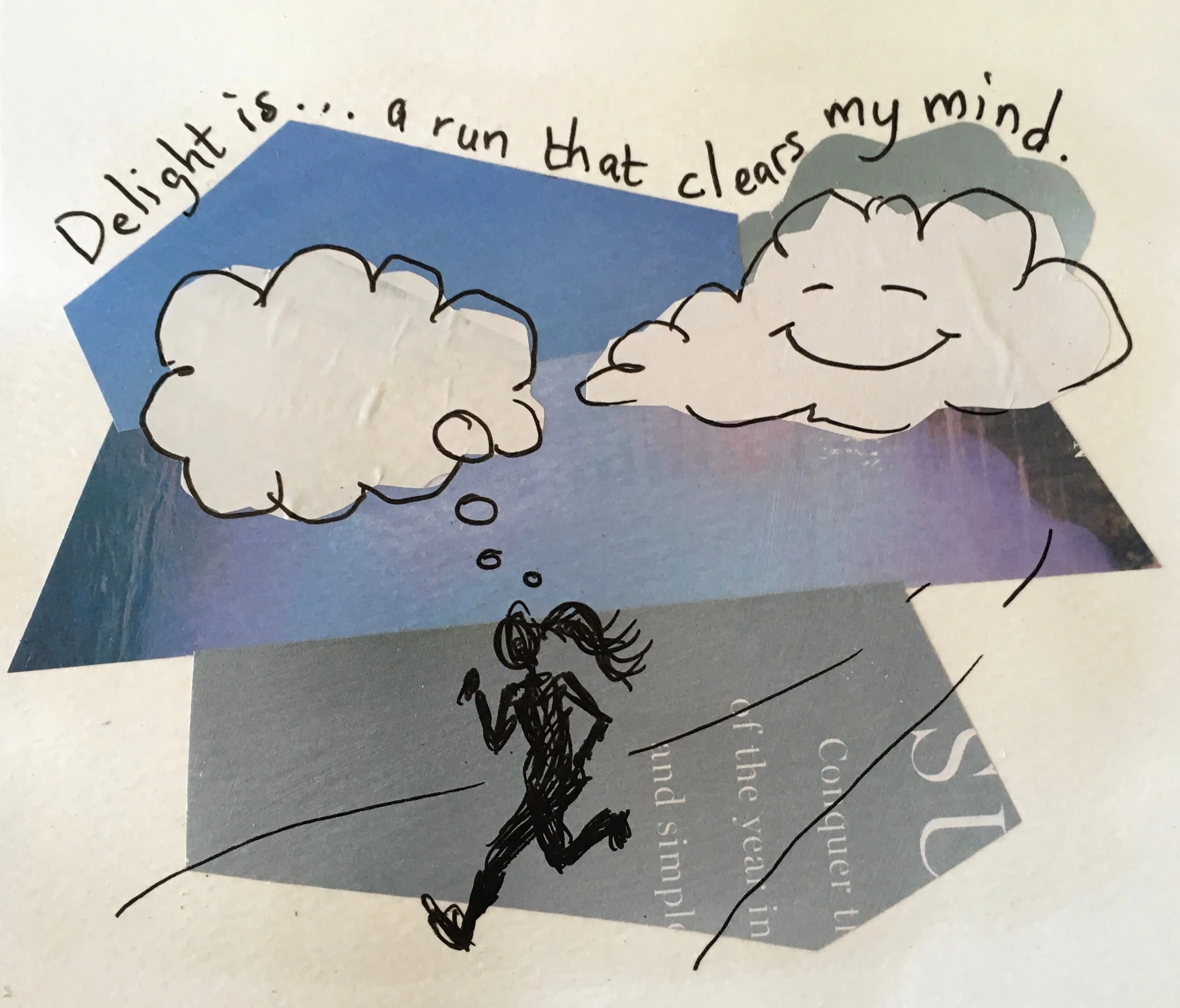
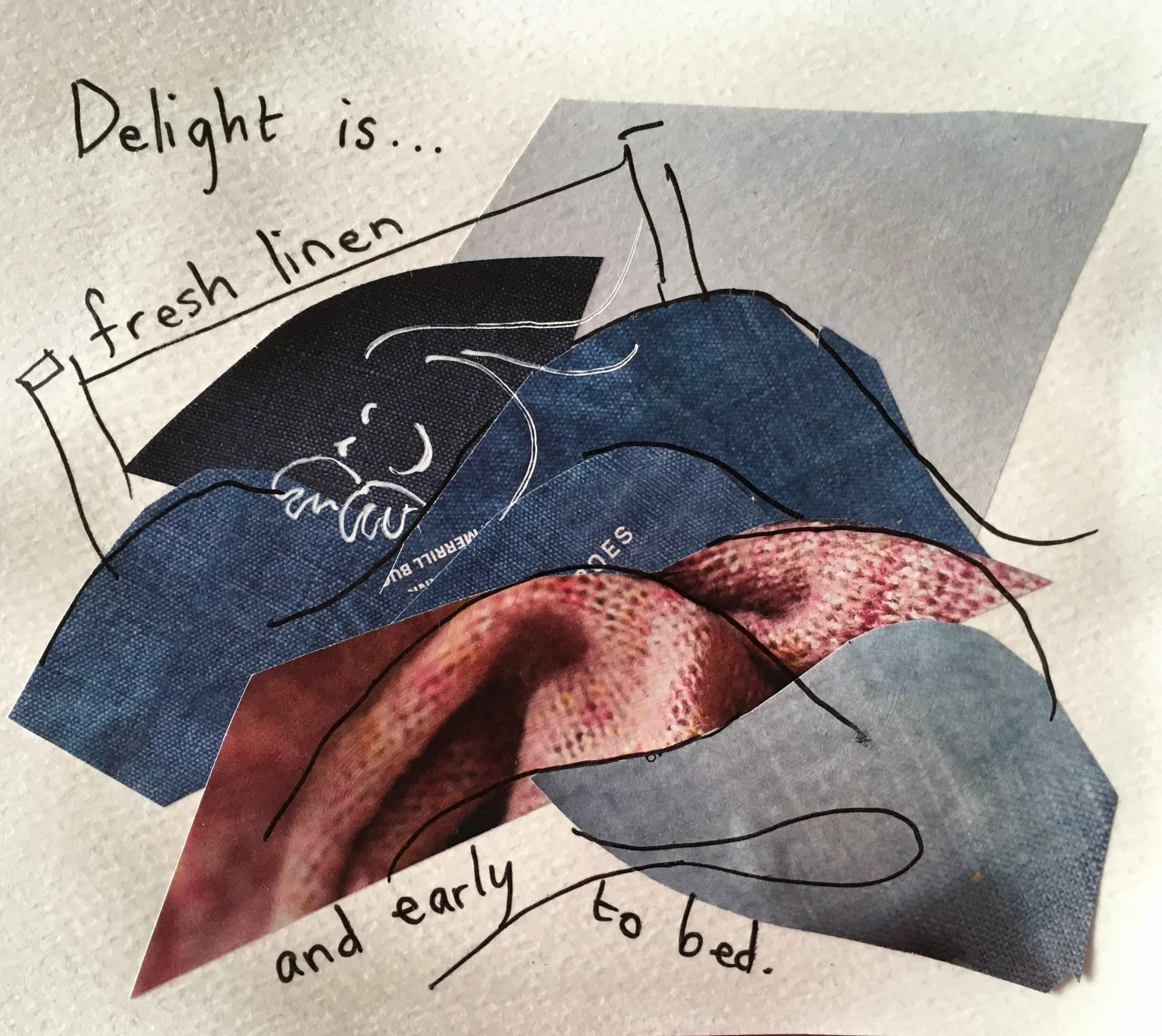
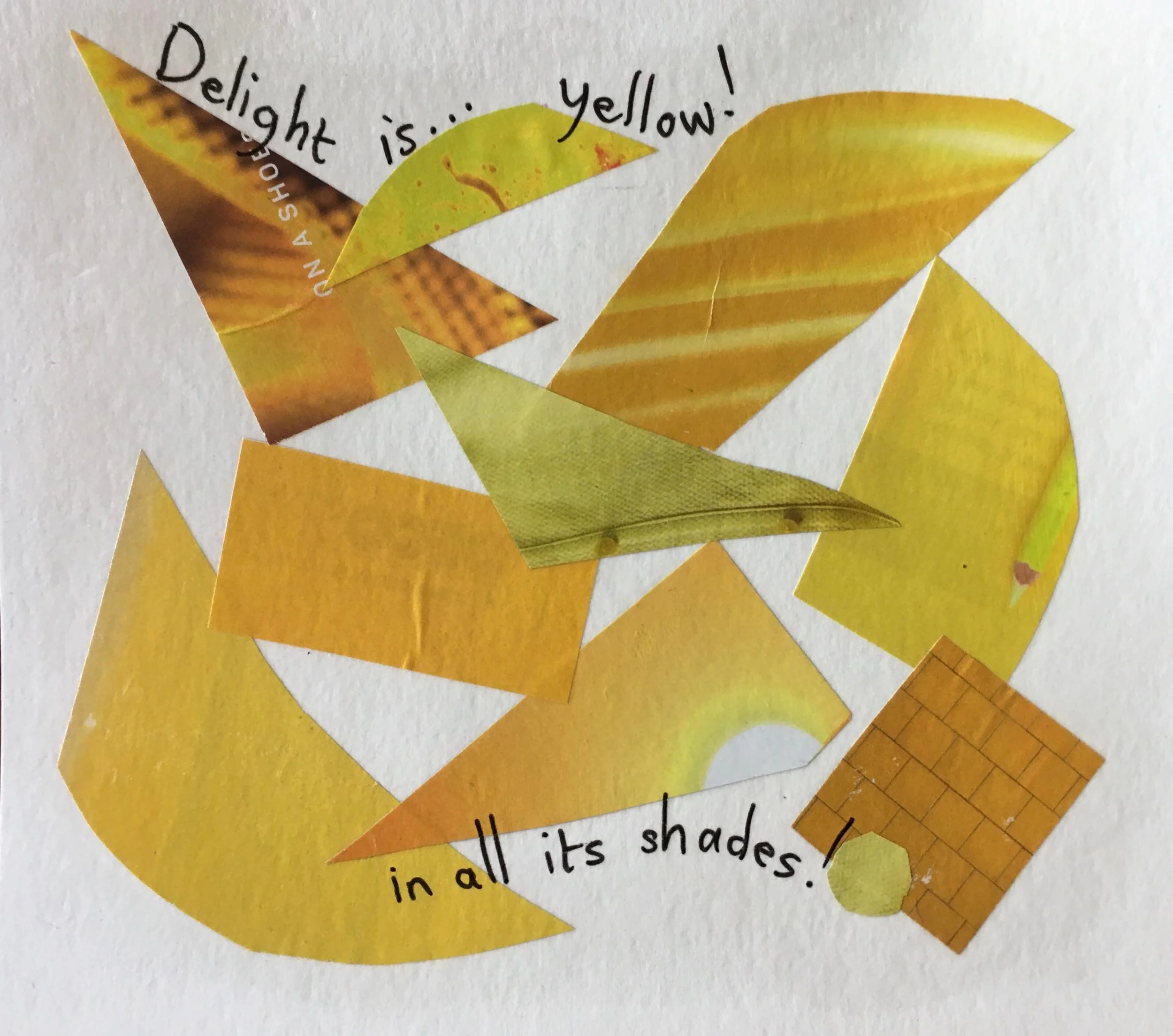
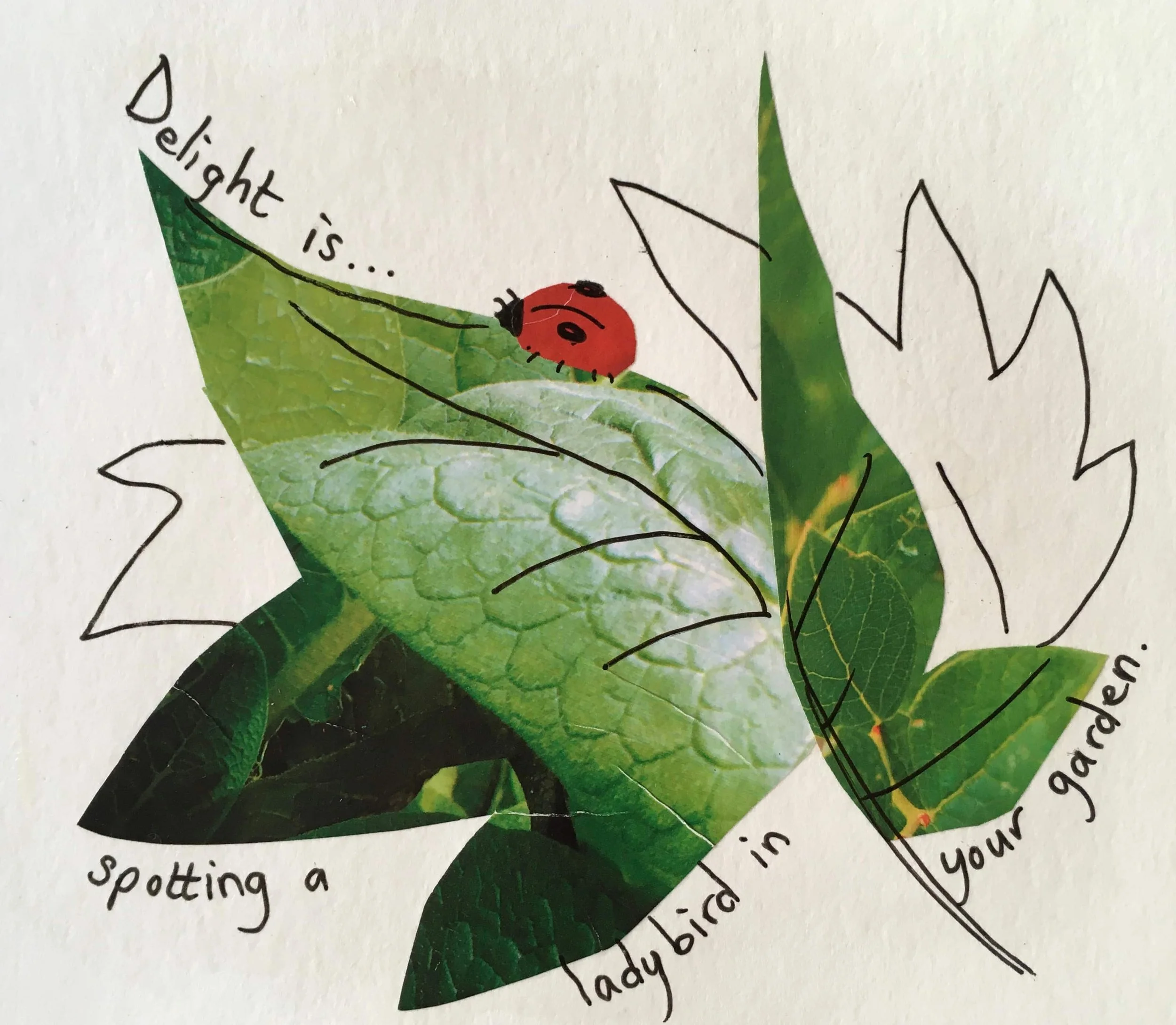
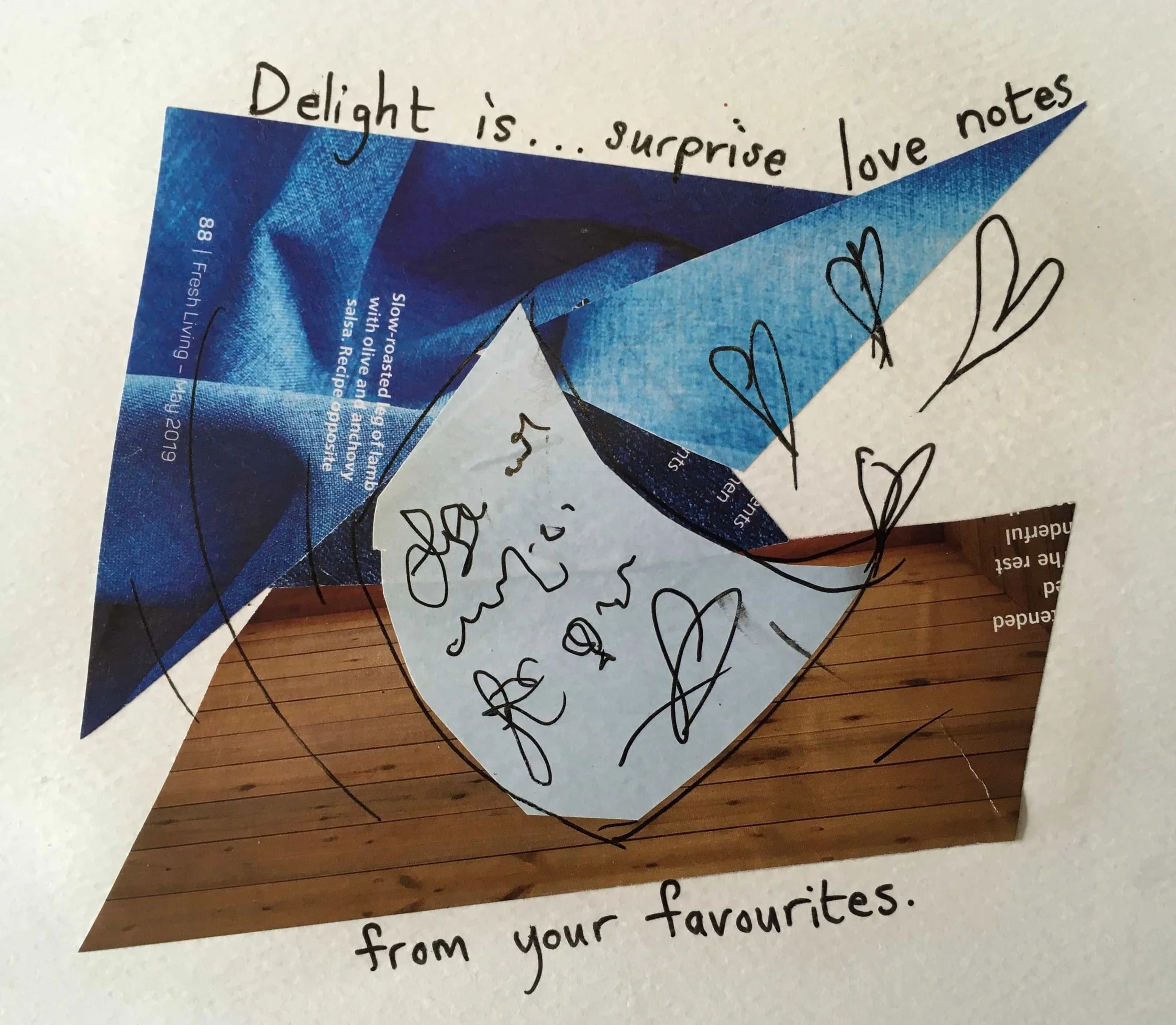
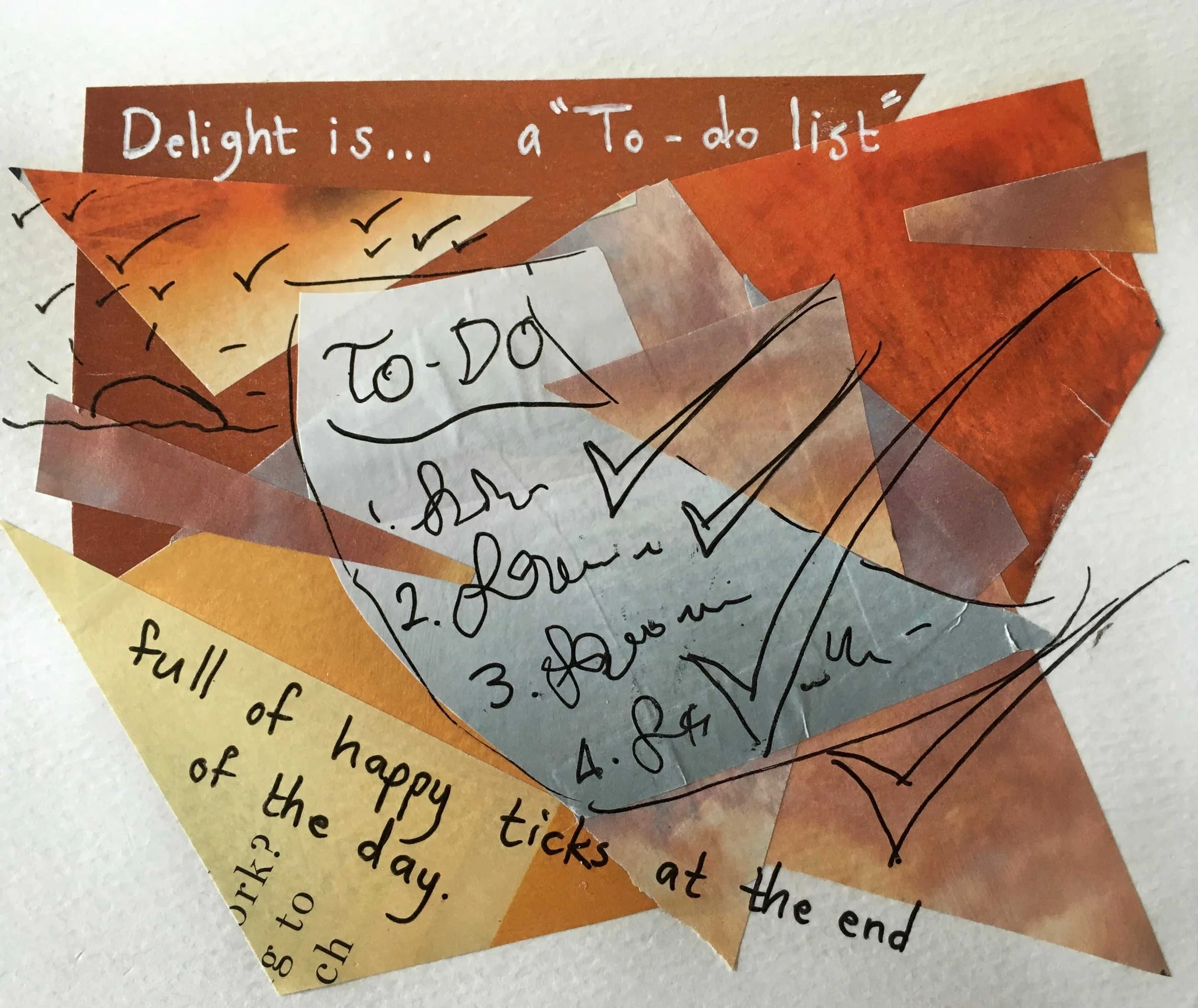
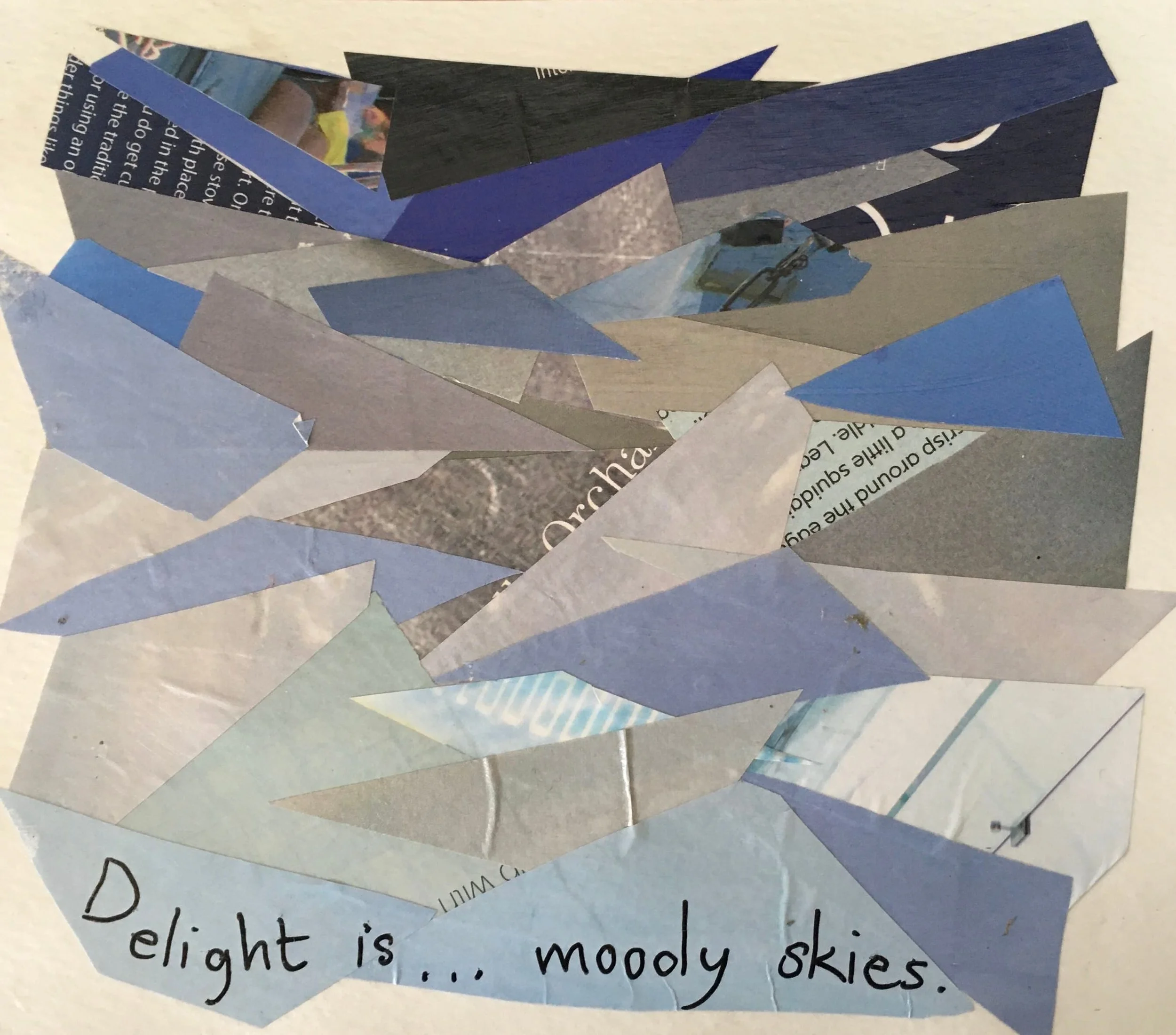
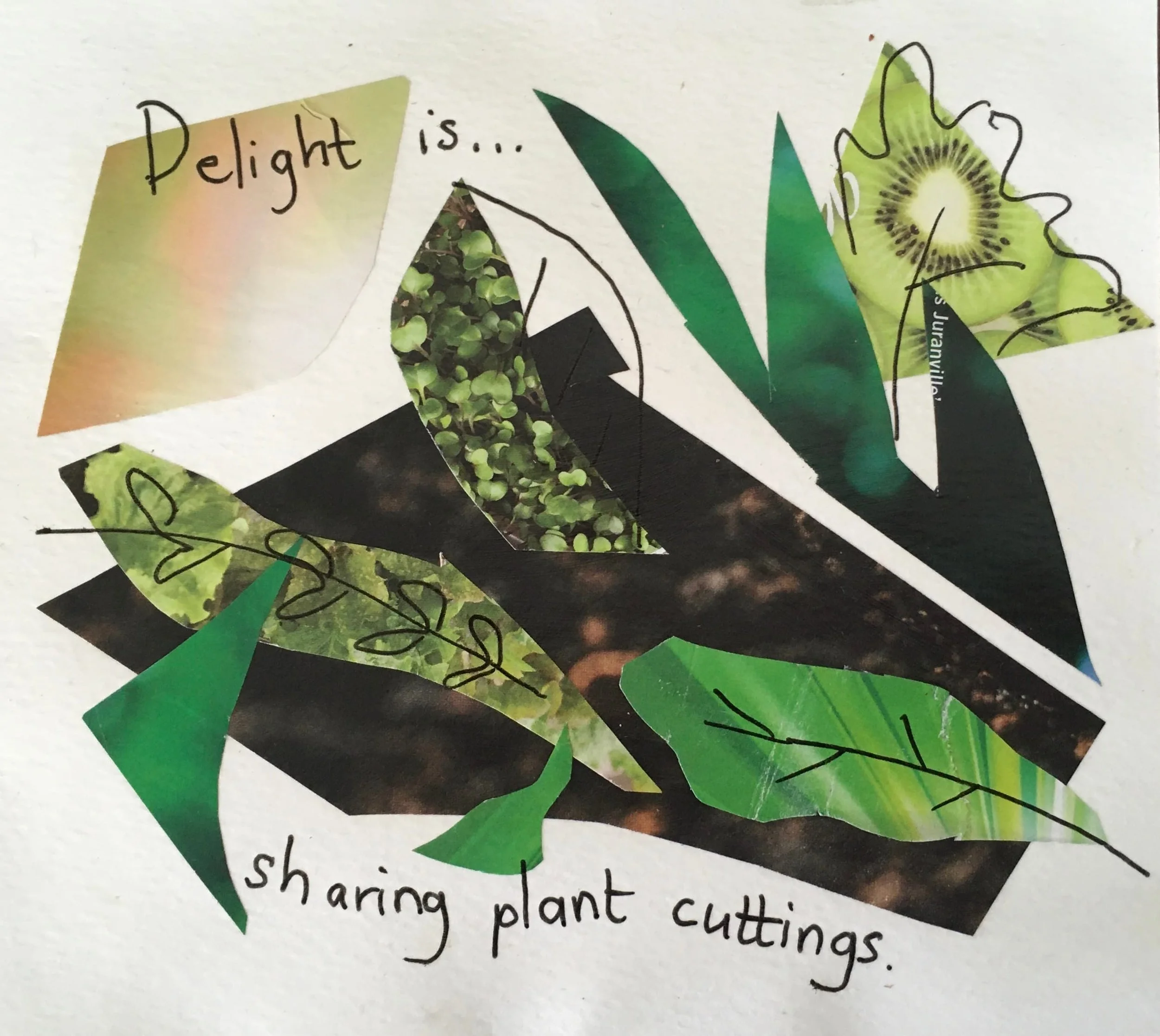
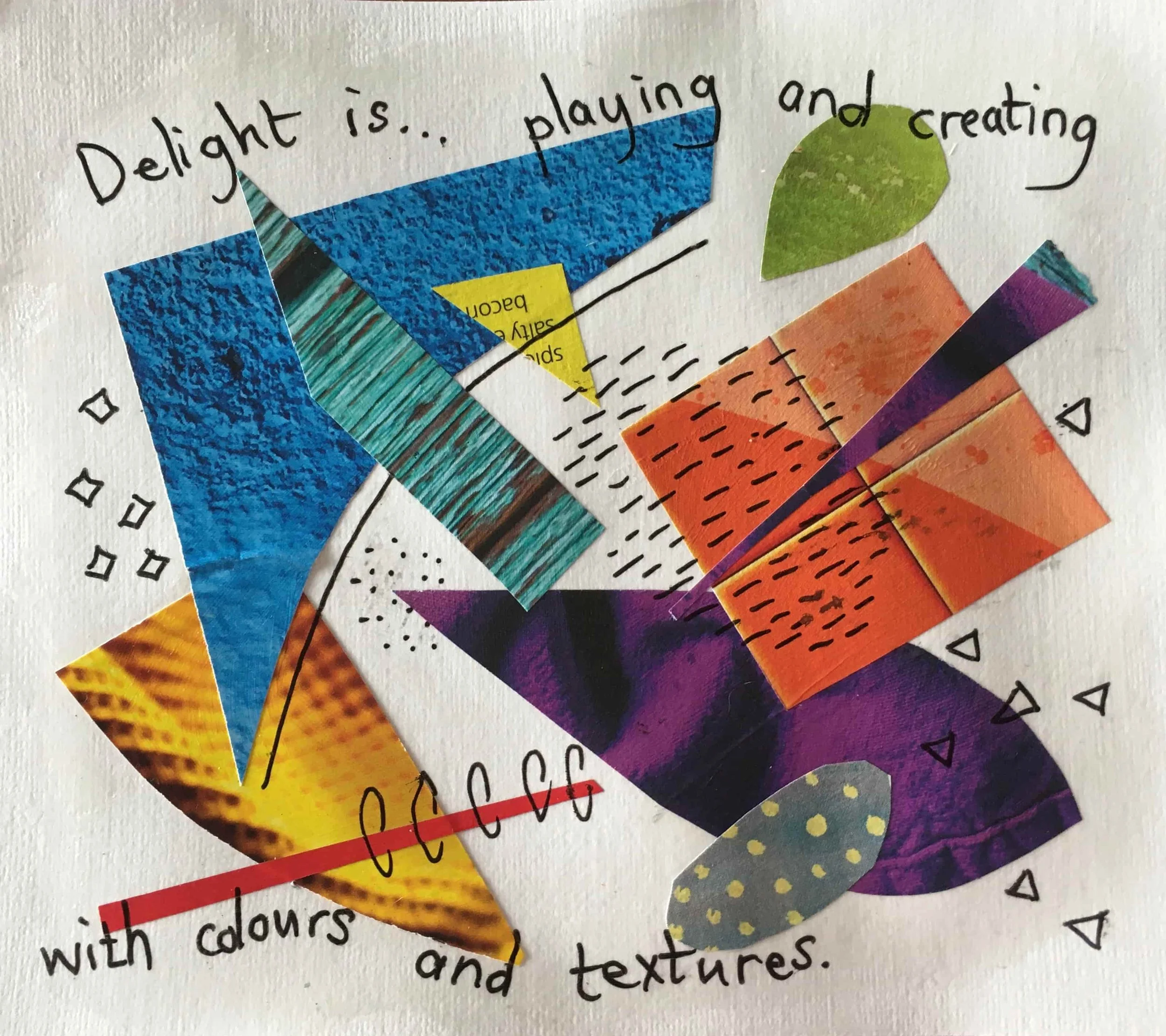
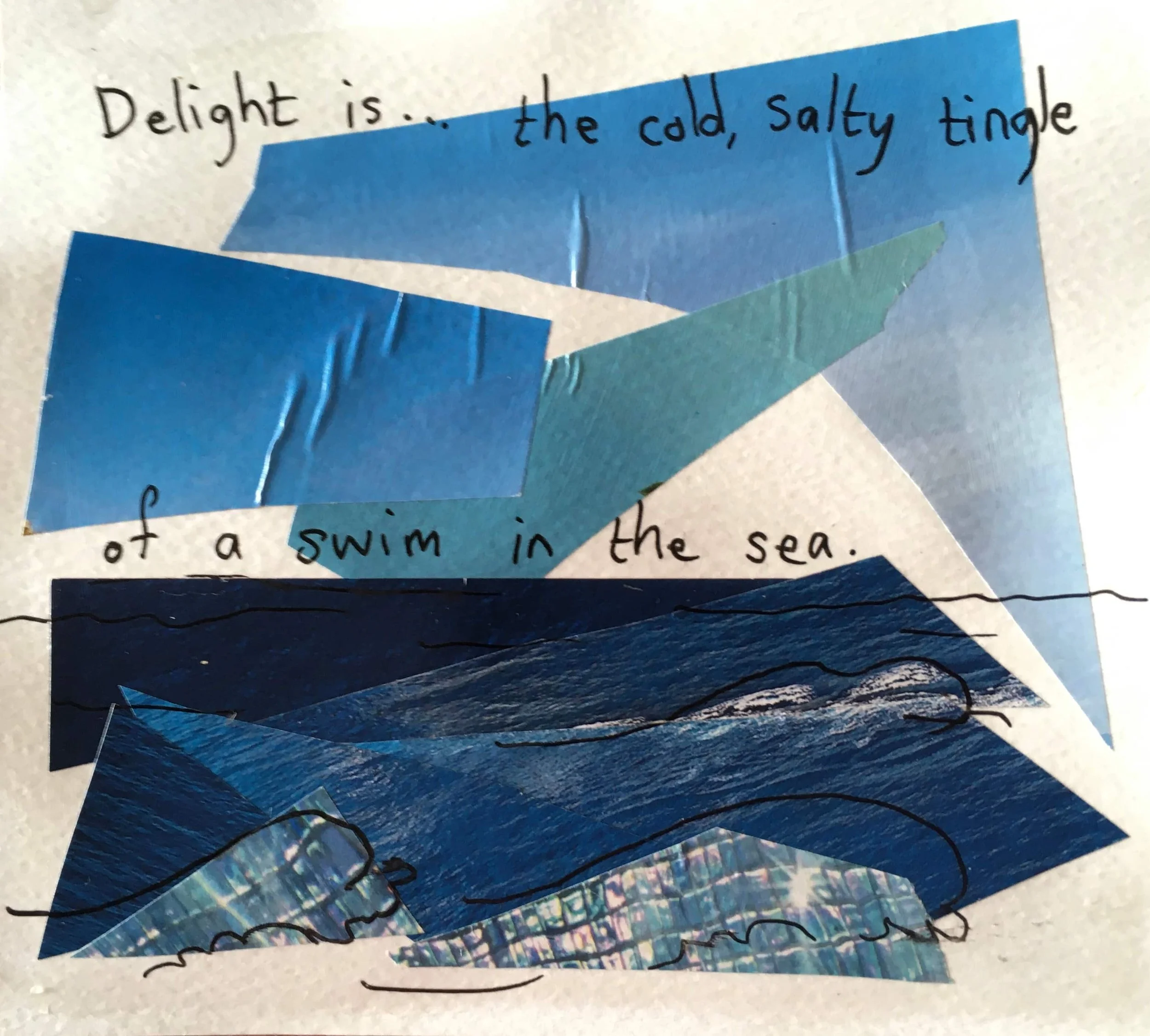
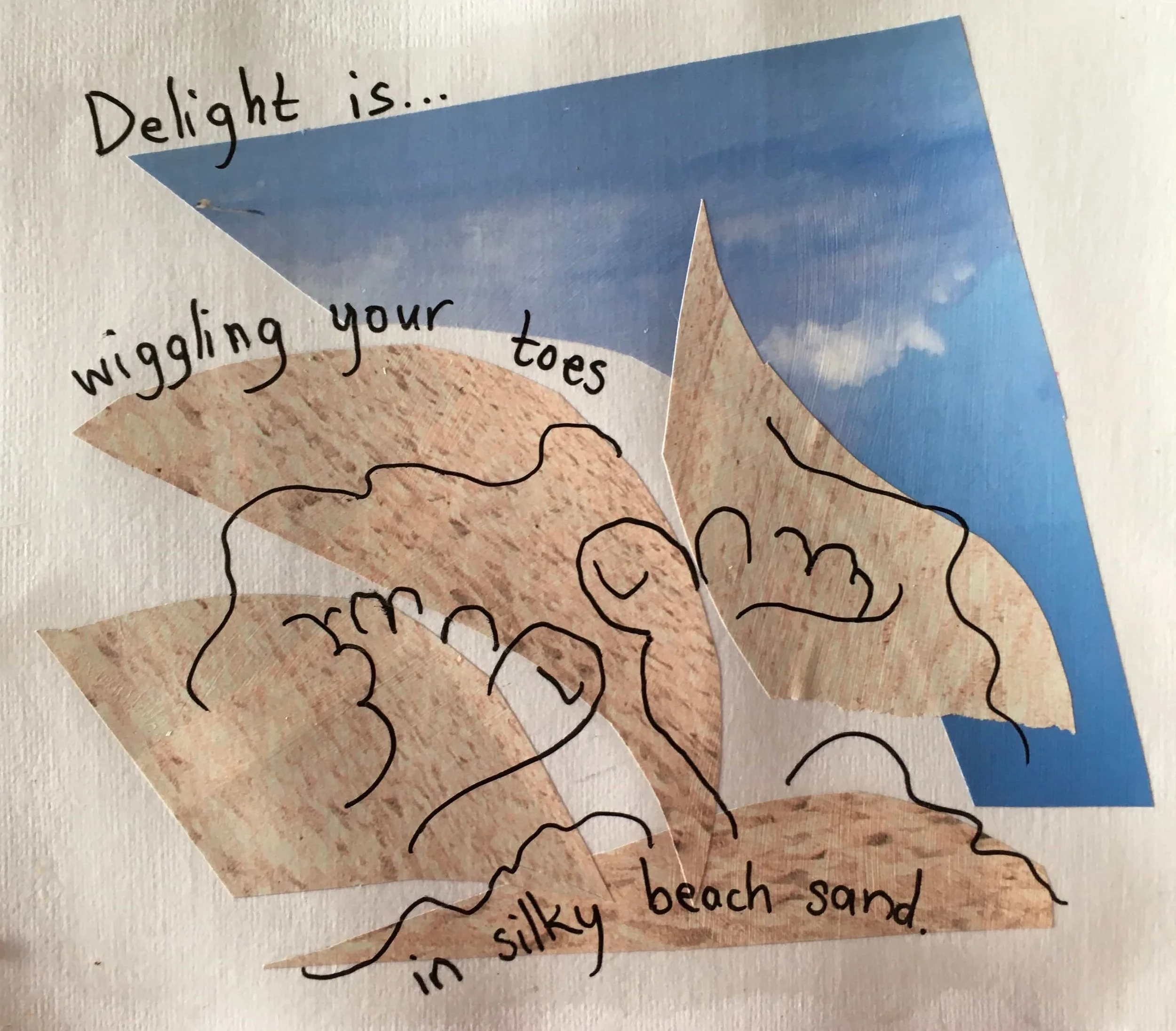
I turned to art as a way to explore and expand this feeling. I created small, intuitive collage pieces inspired by the moments I’d written down. These weren’t meant for anyone else - they were loose, scrappy, and therapeutic. They helped me slow down, reconnect with my senses, and build a kind of internal map for what delight looked and felt like in my own life.
Trusting the process
I wanted it to be easy to do this everyday, and I wanted it to be about the process of being creative - and the benefits of that - not the end product. So I gave myself a 15min time limit and worked with cheap quick-drying materials that would support me to let go of the desire to make “good art.”
I also started experimenting with abstraction and the idea of how little visual information we really need to make sense of what we’re seeing. That felt risky and freeing all at once. Details used to make me feel safe - especially after losing 80% of my vision (and some of my hearing) in 2013. I’d always been good at managing details, but that ability changed dramatically after a series of medical events and the fog of early parenting.
In playing with abstraction, I was gently challenging that craving for precision. I was learning that I could trust myself, even when things felt unclear. Even with limited vision, I could still see enough. I could create, connect, and express myself meaningfully. And more importantly, I could feel my way through. These little art pieces became exercises in trust - trust in my senses, in the process, and in life itself.


How delight now shapes my art practice
A daily creative compass
Today, the Delight Practice is fully integrated into both my creative process and my daily life. The question “What delights me?” is still my compass - but now, it’s also my creative engine.
I continue to collect moments of delight, often by taking photos while out walking or cycling. Because of my vision loss, the camera helps me stay present without needing to visually grasp everything in the moment. I can focus on how the environment feels - the sound of wind through trees, the smell of damp earth, the warmth of sunlight - and capture that along with any visual delights I can see. Later, I zoom in on the images to discover additional textures, shapes, and details I couldn't see at the time. These sensory delights become the seeds of my artwork.
From senses to studio
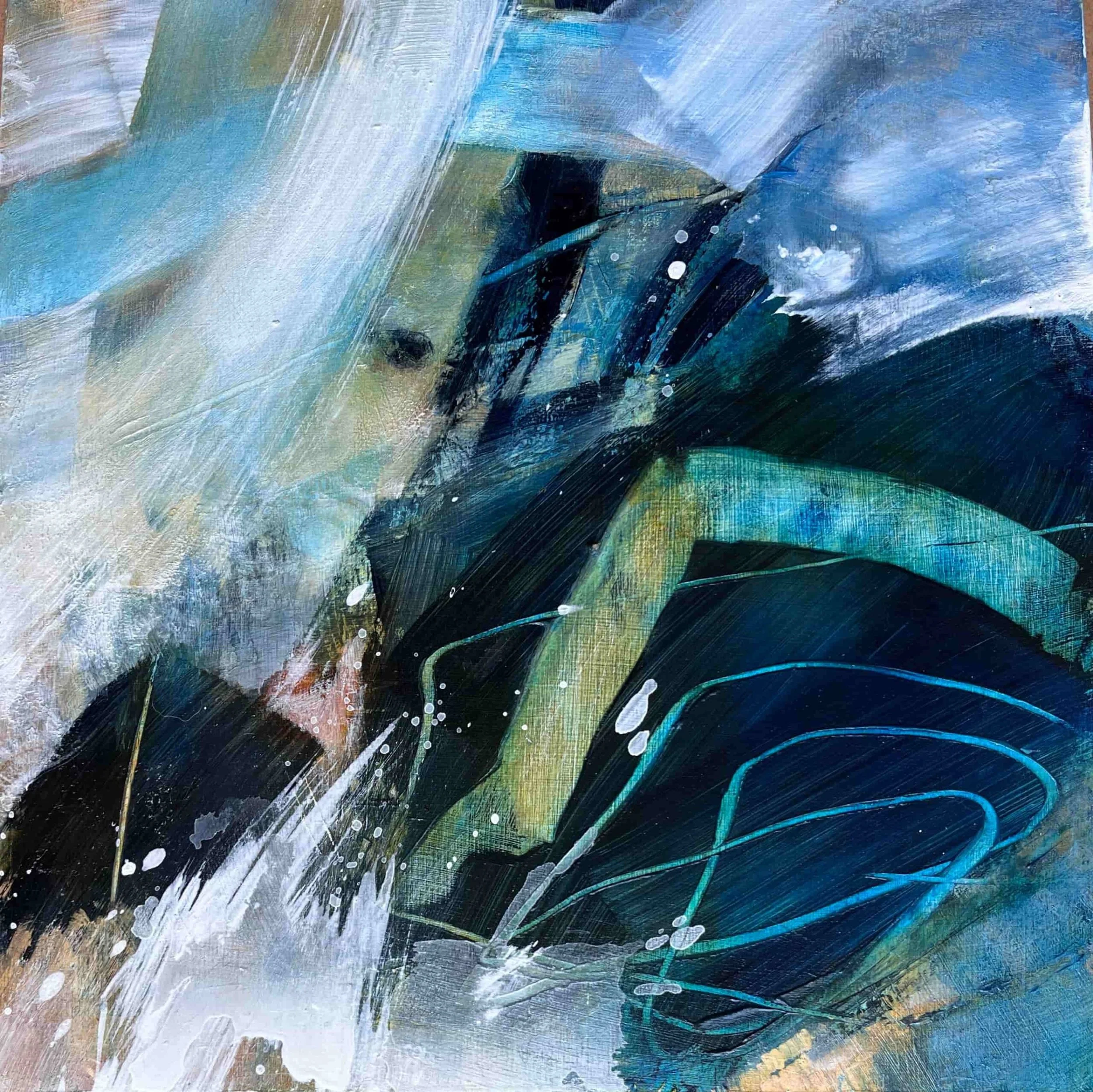
The photos, paired with my daily notes on sensory experiences, inspire the colours, forms, and compositions in my paintings. I work across various mixed media to create artworks that are as rich and layered as the sensory moments they’re born from because I want the process of making to feel as joyful and immersive as the experiences that spark the work.
A mindful and embodied practice
Paying close attention to sensory experience has become a form of mindfulness for me. It gets me out of my head and back into my body—a place from which I create more freely and feel more at peace. It also enhances how I experience everything I love: nature, movement, connection, and making things with my hands.
Creating portals of joy
I love the idea that a painting can act as a portal—evoking the memory of a moment that felt expansive or grounding, and bringing that feeling back into your home and life.
“I hope that each artwork I create invites others to reconnect with their own senses—to notice more, feel more, and remember what lights them up.”
P.S. Want to start your own Delight Practice?
I share more about the Delight Practice in my book, Untangle Your Grief, which offers a guided creative process for exploring and transforming grief experiences that are tricky because they are invisible, chronic, complex, multiple, ongoing, high-stigma, or ambiguous.