Self-Guided Reflection Tour
TOPOPHILIA: Landscapes of Belonging
Sijthoff Cultuur, Leiden
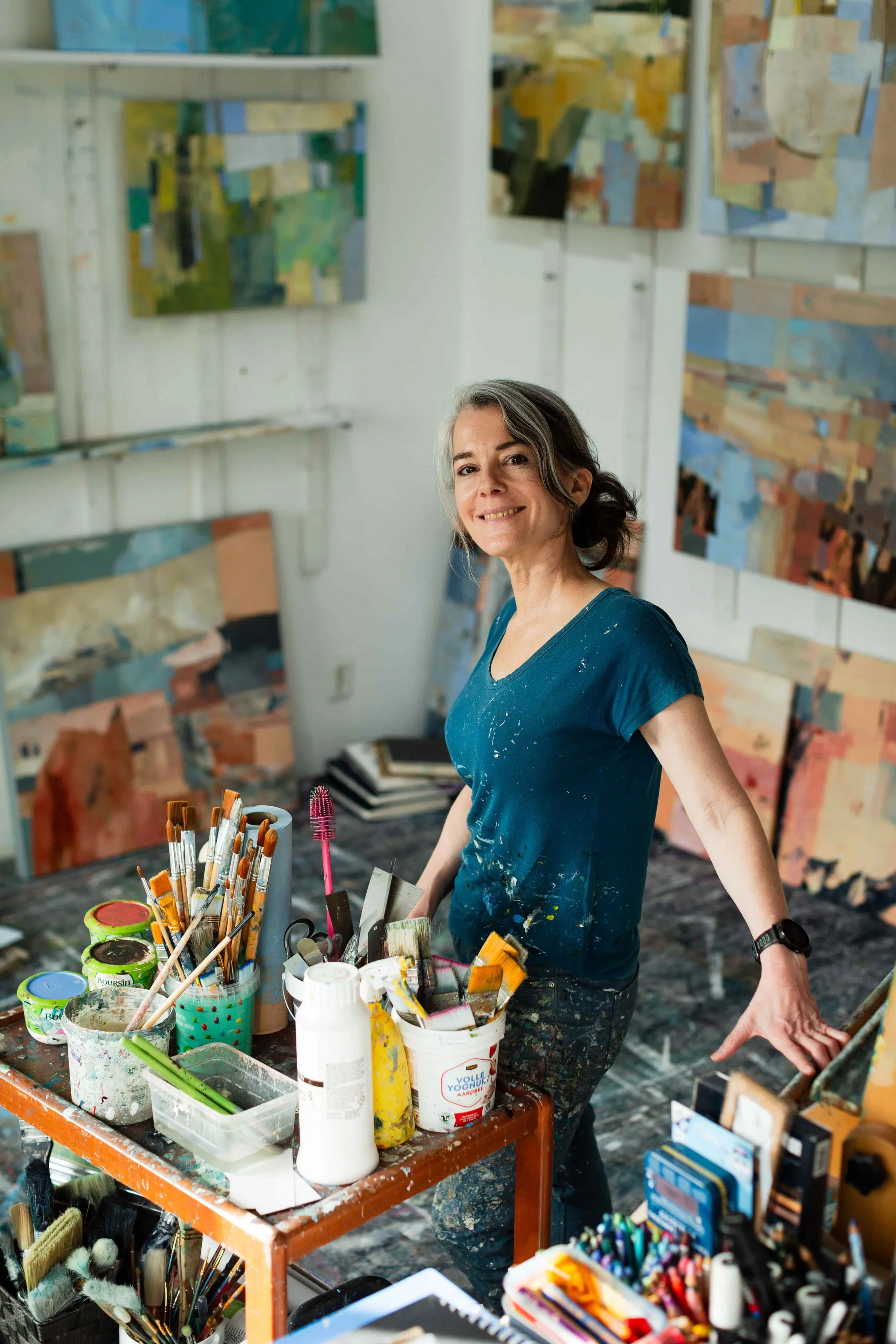
Welcome, and thank you for being here. I’m Cath Duncan, the artist behind these artworks - you’re welcome to read more about my journey from grief therapist to artist.
The term topophilia - first used by the poet W. H. Auden and later popularised by geographer Yi-Fu Tuan - describes the way our love for a particular landscape shapes our memories, identity, culture, and sense of belonging. These artworks grew out of my own ongoing exploration - through paper, paint, poetry, and reflection - of how we create belonging and resilience after loss.
Whether you’re viewing the Topophilia: Landscapes of Belonging exhibition in person at the Sijthoff Cultuur Exhibition in Leiden, or joining online from your home, this Self-guided Reflection Tour is an invitation to spend time with the artworks, noticing what stirs, settles, or surprises you, and explore your own relationship with resilience and belonging after loss.
Take your time. You’re welcome to pause, wander, skip ahead, return later, or come back on another day. Or simply scroll and pick an artwork that calls to you - like pulling a tarot - and let it offer you a visual experience, story, and questions for reflection.
The questions are not tests, and you don’t need to answer all of them - or any of them. Sit with them, hold them, and let them open up your curiosity, sensitivity, imagination, and care - that matters more than any answers.
Above all, enjoy it and trust yourself. There is no right pace, no right response, and no right outcome. Whatever you notice - or don’t - is already part of your way of belonging here.
Before you begin the tour, you might like to take a moment to arrive - noticing your breath, your feet on the ground, the simple fact of being here. And when you’re ready, go ahead and begin…
Begin the Reflection Tour…
1. Loss, disorientation and the tethers that remain
Loss can feel like the ground slipping away. These first landscapes hold disorientation, wounds and grief, and also the small tethers, mendings and rhythms that remain. Loss is not the whole of your story. Other threads are also being woven.
Tethered in the Drift (2025)
Mixed media on canvas
70 × 80 cm
€1200
Soft blues, terracottas, and ochres form an abstract landscape where land-like shapes tilt and hang from sky-like colour blocks. The work evokes moments of disorientation, uncertainty, and grief - when the ground seems to slip away and what we thought we knew is no longer certain. Yet within these shifting forms and colours, if we look for it, there is still always a tether: a sense of grounding, connection, and balance
When the ground has shifted for you, what has been your tether - a person, place, practice or memory - that has kept you connected to what matters? What does holding on to it tell you about what you hold dear?
If this disorientation were weather passing through, rather than a statement about who you are, how would you describe the weather? And what part of you stays steady while it moves through?.
Now Hemmed In, Now Grasping All (2025)
Mixed media on canvas
100 × 120cm
€2300
This watery abstract landscape reflects the movement between the grief of loss and the grace of renewal described in Rilke’s poem, “Evening”. Vertical divisions evoke borders between nations and selves, while soft gradients open toward moments of connection and transcendence. Like the poem, the work expresses the delicate balance of being human: shaped by limits, yet continually reaching toward connection and new beginnings.
Take a moment to read Rilke’s poem before reflecting on the questions below.
Where have you felt hemmed in by a border or limit since your loss? What has that limit protected, or kept alive, that you care about?
Think of one moment of opening or connection, however small, that has appeared in the midst of grief. What did it make possible, and what does it tell you about what you are reaching toward?
No ray of light could fathom the landscape of awe (2026)
Mixed media on canvas
70 × 60 cm
€895
Named after a line from Andrea Gibson’s poem For the Days I Stop Wanting a Body, this abstract landscape unfolds in soft pinks, terracottas, greys, and blues, with textured layers of paint and paper, and restless linework suggesting both tenderness and rupture. Messy marks, scratches, and tangled lines move across the surface like traces of wounds, cuts, or careful attempts to stitch and mend what has been hurt. Smooth, vulnerable fleshy hues bleed into atmospheric, sky-like forms, while flashes of light and scattered speckles evoke stars, salt, goosebumps, or the lingering imprint of touch, grief, and healing. Like the poem, the work reflects on both the wounds and the wonder of being in a body - fragile, imperfect, and fleeting, yet the only place we can experience pleasure and pain, longing and belonging.
Take a moment to read Andrea Gibson’s poem before reflecting on the questions below.
Look for the places in this painting that seem tender or mended. What acts of care, from you or from others, have helped you through hard times, and what do they say about you?
Your body has carried you through loss. What has it held on your behalf, and what would you like to say to it?
Everything Falling, Everything Rising (2025)
Mixed media on canvas
70 × 80 cm x 2cm
€1200
This abstract seascape, set beneath a high horizon, moves in the same rhythms that shape both nature and human life. Its layered forms could be rising toward the light or drifting downward from it - mirroring how our emotions, energy, successes, and even our breath rise and fall. Like tides that ebb and return, the work reflects the cyclical movement of the natural world. It suggests that to rise and to fall is not failure, but part of being human, alive, and deeply connected to the earth to which we belong.
Which parts of your life feel like they are rising right now, and which are falling? How would you describe your relationship with each?
If falling is not failure, what else might you call it? Is there a name that would fit your experience more faithfully?
2. Patience and hope
Belonging is rarely rebuilt quickly. These artworks are about enduring difficult conditions and emotions without forcing them to be different, and about discovering what can steady us through such times.
Weathering (2026)
Mixed media on wood panel
30 × 30 cm
€395 (including natural wood floating frame)
Muted greens, blues, greys and browns evoke an abstract coastal landscape. Brown paper shows through like eroded ground, and soft grey splashes drift across it like salty air, sea spray, drizzle, or raindrops on a window. Gestural marks keep everything gently moving.
Some days are grey, and we'd rather they weren't. Yet out walking along a rugged coast, dressed for the weather and with no picture in mind of how the day should be, the grey skies, wind, cold air, and drizzle can feel validating and nourishing. I wonder if sitting with some of life's unwanted feelings might be like that too. If we let go of what would have been easier, and find what helps us feel sheltered, perhaps they can become bearable, meaningful, even beautiful.
Is there a feeling you have been wishing away? If you stopped bracing against it, what kind of shelter, or “clothing,” might help you meet it?
Who or what has taught you how to dress for hard days? What does that knowledge say about the person you have become?
Even Before The View Appears (2026)
Mixed media on wood panel
30 × 30 cm
€395 (including natural wood floating frame)
This abstract landscape formed through layers of warm colour and textured marks, with a high horizon that might be hills, mountains, or perhaps an old stone wall catching the sun. A tall, narrow tree stands in the foreground, a quiet presence pointing the way within a wide and rising land. The artwork holds memories and stories of those times in life when the path rises steeply, we know the journey will be long, and we have no idea how we’ll ever reach the higher places - or even whether the long, hard climb will be worth it. This small artwork reflects on learning to move forward without rushing, drawing on patience, hope, and the small sustaining joys that help us continue the climb long before the views and rewards appear.
What small joys have sustained you on a long, hard climb? What do they tell you about what you value?
If someone you cared about were beginning a steep stretch of their own, what would you want them to know, drawing on what you have learned?
What the Wind Wants You To Know (2025)
Mixed media on canvas
80 × 80 cm
€1280
Created through an intuitive process of choosing textures, shapes, and colours that felt alive in the moment, this abstract landscape reflects the gentle guidance nature offers. The work evokes the way wind, weather, and open spaces can steady us, reveal quiet wisdom, and reconnect us to something larger than ourselves. In its layered fragments and flowing forms, the painting suggests how the natural world speaks - not in words, but through sensations, metaphors, and moments of stillness that invite us to listen.
If the wind were a wise and kind friend who has been watching you, what might it want you to know?
Where in nature do you feel most steadied? What does that place remind you about who you are?
Let Everything Happen to You (2026)
Mixed media on canvas
90 × 80cm
€1450
Burgundies, purples, rusts and sages, punctuated by vibrant cobalt, gather in layers evoking sky and wind, heather, grasses, seeds, stones and insects. The scale shifts between the intimate and the vast, as though tiny details and distant horizons are experienced at once. Unexpected prints and splashes of colour travel across the canvas like pollen, while a soft bowl of light rests in the landscape, its surface crossed by shimmering yellow, like the gold-mended cracks of a kintsugi bowl.
I made this in my studio, drawing on memories of painting on the heathlands of Northumberland: papers flapping, paint flying, no waiting for calmer weather, and the wind as a
collaborator. I felt exhilarated, completely in the landscape and in the making, and I wanted to carry that into this work.
The title borrows Rilke's invitation to "let everything happen to you: beauty and terror". Being fully engaged, rather than hesitant and careful, can be scary, and it leaves its unpredictable marks and messes - and there can be so much beauty in that.
Take a moment to read Rilke’s poem before reflecting on the questions below.
When have you let yourself be fully immersed in something, messy and unpredictable, and found something precious in it? What did that experience show you about yourself?
Is there a crack or break in your story that has since been mended in a way you now value? What would you call the gold?
3. Uncertainty, thresholds and trusting what holds us
After loss, many of our questions have no immediate answers. These landscapes invite you to stay with the unresolved and to notice what already holds you up while you wait.
Living the Questions(2026)
Mixed media on canvas
120 × 80 cm
€1900
Among splashes, sparkles and clouds, hard and soft edges separate colours and textures into small worlds, like rockpools, full of wonders for anyone willing to linger. The shoreline is an edge, like the many edges we meet in life and within ourselves, where transition and choice become clearer, and we decide whether to stretch, cross or stay within the boundaries.
The artwork's title is inspired by Rainer Maria Rilke's advice to be patient with what is unresolved and to "live the questions now". You don't have to decide yet. Stay and explore the shoreline until, perhaps one day, you "live your way into the answer".
All That Grows in Loose Ground (2026)
Mixed media on canvas
60 × 60cm
€750
A landscape caught mid-shift, delighting in its own instability - full of movement, and still, somehow, at ease. Pink holds the tenderness of not knowing. Red is the risk of staying present to it anyway. Orange is creativity, vitality, the imagination waking up once we stop bracing against the unknown. Held together by green's quiet insistence on growth, the work is an invitation - to recognise that uncertainty is not a loss of ground - it's the landscape in which change becomes possible. Not emptiness, but abundance: many futures waiting, each one offering its own delights.
A Falcon, a Storm, or a Great Song? (2026)
Mixed media on canvas
100 × 120cm
€2300
Warm ochres stretch wide beneath a cobalt sky, the horizon loosened rather than fixed. Dark, bird-like gestures rise from a tangle of blue brushstrokes and find lift on unseen currents. The artwork takes its name from the final line in Rilke’s poem, Widening Circles - a poem that invites us to trust what the birds already know - that you don't need to know what you are, or where the circle ends, to give yourself to it. To live expansively is not to arrive at certainty, but to find, again and again, that there is always a current that will hold you up.
Mysteries, Yes (2026)
Mixed media on canvas
70 × 50 cm
€750
Soft fields of sage, grey, and cream open into a landscape that feels both seen and unseen - hovering between form and atmosphere. Light moves through it in quiet pulses of apricot glow, like small revelations that do not insist on explanation.
Inspired by the spirit of Mary Oliver’s poem, “Mysteries, Yes”, this work reflects on the ease of not needing to understand everything. Scientific language may describe the world in detail, yet there is another way of meeting it - with openness, wonder, and trust in what cannot be fully named. It is a space for attention without certainty, for being held by mystery, and for allowing awe to arise simply from looking, and noticing, and responding with quiet joy.
Inside This Soft World (2026)
Mixed media on canvas
40 × 40 cm
€450
The foreground of this abstract seascape is filled with textured grasses and scattered traces, like small treasures left behind along a path. The artwork reflects on the quiet practice of paying attention as a form of care - of learning to track the soul the way we might track animals in the wild, by noticing the small signs of aliveness it leaves behind. It speaks to the importance of staying curious and awake to delight, longing, tenderness, and awe, protecting them from disappearing beneath obligation, fear, numbness, or speed. Looking back at the work, I found myself returning to Mary Oliver’s poem Mindful, and especially the lines, “to look, to listen, / to lose myself / inside this soft world - / to instruct myself / over and over / in joy.” Hidden among the layers of landscape is a gentle question: do you see the tracks your soul is leaving for you?
Here, held in the light (2026)
Mixed media on wood
30 × 30 cm
€395, including natural wood floating frame
An abstract seascape in soft yellows, lilacs, and ochres, with layered forms suggesting water and sand held in warm light. This artwork is a reflection on the quiet delight of being in a body - even one that is vulnerable, struggling, or faltering. It holds an invitation to slow down enough to notice how extraordinary it can be to feel, to be present, and to inhabit this fleeting, sensory life: salt on the lips, warmth on the face, and the gentle rhythm of breath.
The Sky Was (2025)
Mixed media on canvas
80 × 70 cm
€1200
This work began in pure delight - an immersion in the colours, textures, and vastness of the sky. I wanted the sky and land to feel integrated rather than separate or hierarchical, because in truth they belong to one another, despite the divisions we often impose in our minds. The process was playful and sensory, guided by the simple joy of exploring colour, shape, and movement. The resulting artwork feels open and cheerful, peaceful yet alive. When I later read E.E Cummings’ poem, “The Sky Was”, it felt as though we had been looking at the very same sky.
The Sun’s Birthday (2026)
Mixed media on canvas
70 × 50 cm
€750
Light returns in fresh greens and yellows, the colors of new leaves and open sky. Wild foliage lifts into brightness, carrying the simple joy of sunlight, air, and movement. The painting holds the feeling of a world beginning again.
Echoing the spirit of ee cummings’ poem, “i thank You God for most this amazing”, this work celebrates the astonishment of being alive in the present moment - the sensory delight of color, light, and growth, and a quiet gratitude and hope that life continues to unfold toward the light.
The Water We See Each Other In (2026)
Mixed media on wood panel
70 × 40cm
€710
Sunny yellows glint across calming colours of sky, water and growth, evoking a landscape reflected in a pond - or glimpsed through its shifting surface. Textures ripple and overlap, breaking the view into forms that are never quite still.
We come to know ourselves through our relationships: they are the water we see ourselves in. When life’s unanswerable questions and relentless demands leave us afraid of going under, our instinct may be to struggle - to thrash, grasp and fight against the water. But in doing so, we disturb the very surface in which we might otherwise find our reflection.
What if, instead, we trusted the water to hold us? What if we could surrender to it, float, and rest within a relationship long enough for the turbulence to settle? In stillness, the water clears, and we may begin to see ourselves - and each other - more clearly.
The Sweetness Between Us (2026)
Mixed media on canvas
60 × 70 cm
€895
Soft lavenders hold sage greens in gentle suspension, while ripe peach forms glow, dart, and hover like fireflies in a twilight forest. Nothing here strains upward alone; everything moves in relation to something else, held in a kind of shared buoyancy - balanced, abundant, and beautiful. This work is a vision of paradise - not as solitary abundance, but as vitality built together. Peach speaks of wellness and sweetness, goodwill passed hand to hand. Life flourishes not through force but through connection: roots reaching toward roots, generosity meeting generosity, one living thing lending its light to the next.
All That Belongs (2026)
Mixed media on canvas
50 × 50cm
€600
Gestural strokes and collaged shapes weave pathways, rays of light, and fragments of water, sky, and land into one another, until they become difficult to separate. The boundaries keep shifting, asking us to see the whole rather than its separate parts.
Wholehearted living asks something similar of us: to resist the temptation to divide our experience into what we want and what we wish we could avoid feeling. There can be no courage without fear, no resilience without something to recover from, no deep appreciation of joy without having known its absence. Perhaps the difficult feelings are not obstacles to the life we want, but part of what makes that life possible. To live wholeheartedly is to recognise that the whole of our experience belongs.
Nothing Is Wasted (2026)
Mixed media on canvas
60 × 70 cm
€895
Beneath a narrow horizon, the ground holds the slow labor of breakdown and becoming: fragments, losses, and buried seasons turning quietly into nourishment. In the dark there is movement - roots searching, matter loosening, life rearranging itself.
This work reflects on the patience required to tend the soil rather than forcing growth, trusting that failure and loss are not wasted. Instead, they become nourishing compost for what comes next.
Interested in owning one of these artworks?
These artworks and my other collections of artwork are all available to buy, and I also accept commissions to create custom original art.
I’m based in the Netherlands and I ship both locally and internationally. Shipping costs are additional. I’ll gladly get you a shipping quote.
Please email me at cath@cathduncan.com or whatsapp me on +31-6-27-97-73-66 if you’d like to discuss or order art. I’m very happy to schedule a studio visit or a call if you’d like to view the artwork via a live video link. Once you’ve chosen your art, I’ll send you an invoice that you can pay securely online, and then I’ll get your art carefully packed and shipped to you.
Here’s answers to FAQs about buying, shipping, and my refund policy. Feel free to be in touch if you have any other questions!
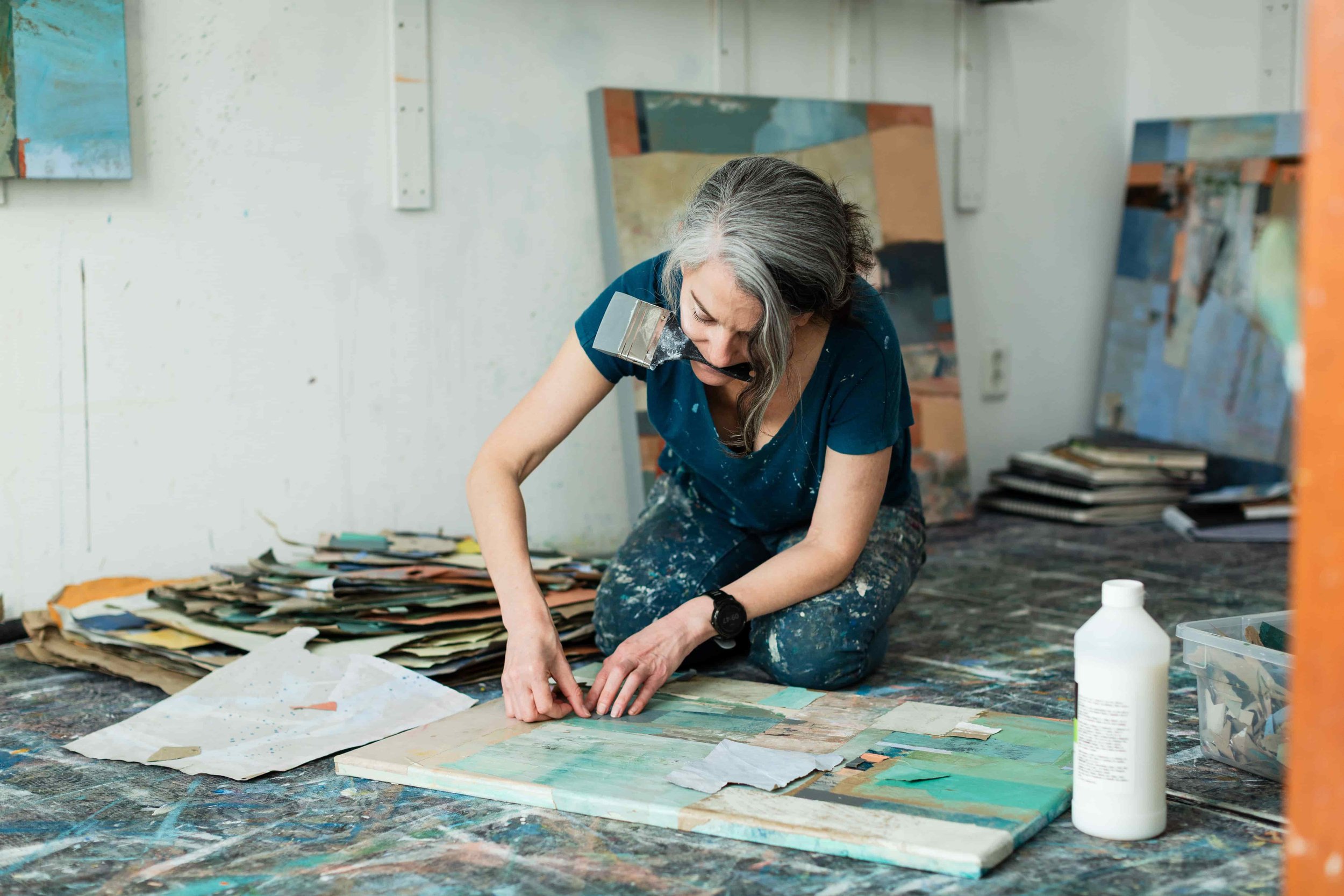
The work behind the work
Interested in finding out about my creative process and how it relates to narrative therapy, meaning-making, and the stories of these artworks?