What my “happy art” has to do with living with loss and grief
A friend asked me recently, “How is your art about loss and grief? You make happy art, not dark or disturbing art.”
It’s a good question, because it’s true. I make art inspired by sensory delights, beautiful landscapes, and experiences I treasure. People often tell me my work feels peaceful, uplifting, invigorating, hopeful.
So how can this be the same art I say is rooted in my experiences of loss and grief, and in my first career as a grief support therapist?
The invisible thread between joy and loss
For me, art-making is my answer to loss, grief, and fear. The losses I’ve known are painful precisely because I loved the people, abilities, places, identities, and dreams I lost.
As Kahlil Gibran wrote in On Joy and Sorrow:
“When you are sorrowful look again in your heart, and you shall see that in truth you are weeping for that which has been your delight.”
Living with grief means I am deeply aware of my vulnerability to more loss. Knowing how hard it is to lose what I love, I sometimes guard my heart and hold back from delight and love, and choose dissociation and numbing instead, so I won’t be hurt by loss and grief again.
Refusing to lose to fear
But to let that fear keep me from noticing, savoring, and falling more deeply in love with life would be another kind of loss - one I’m unwilling to accept.
My “Delight Practice” and the art it inspires are my way of turning away from fear of loss and grief, toward the vulnerability of delight and joy.
Dr. Brené Brown writes in Atlas of the Heart:
“Joy is the most vulnerable human emotion … We are terrified of being blindsided by pain, so we practice tragedy and trauma. But there’s a huge cost… When we push away joy, we squander the goodness that we need to build resilience, strength, and courage… In the midst of joy, there’s often a quiver, a shudder of vulnerability. Rather than using that as a warning sign to practice imagining the worst-case scenario, the people who lean into joy use the quiver as a reminder to practice gratitude.”
Delight is not denial
Choosing to focus my art on delight is not about toxic positivity or pretending that grief and fear don’t exist. They are very present in my own life, and they loom large in the world we share. Grief and fear get plenty of airtime … our newsfeeds, conversations, and our own thoughts rehearse them endlessly. Safe spaces and relationships where we can sit with and feel and share that vulnerability with each other are of course vital.
But delight is also here, always. Even when I forget. The truth is, our brains aren’t great at noticing opportunities for play, rest, connection, beauty, and pleasure when grief and fear feel big. And yet, to miss those moments of delight is the greatest loss of all.
Delight sustains us through the hardest times. Shared delight deepens our bonds with each other. And delight gives us reasons to want to live, even alongside the grief and fear. My art is one of the ways I stay connected to play, love, rest, beauty, and pleasure in the face of uncertainty, vulnerability, trauma, and loss. My hope is that it can offer the same lifeline to others too.
Holding it all - a wholehearted life
As poet Ross Gay says, “It all becomes more lustrous and luminous when we know that we too are disappearing.”
An intimacy with loss and grief can sharpen our senses to life’s brilliance. When we embrace vulnerability instead of shielding ourselves from it, we don’t just protect our joy; we deepen it. We let ourselves love more fully, notice more tenderly, and delight more expansively.
Loss reminds me that everything is fleeting. Delight is how I honor that truth without letting fear steal what is most precious to me.
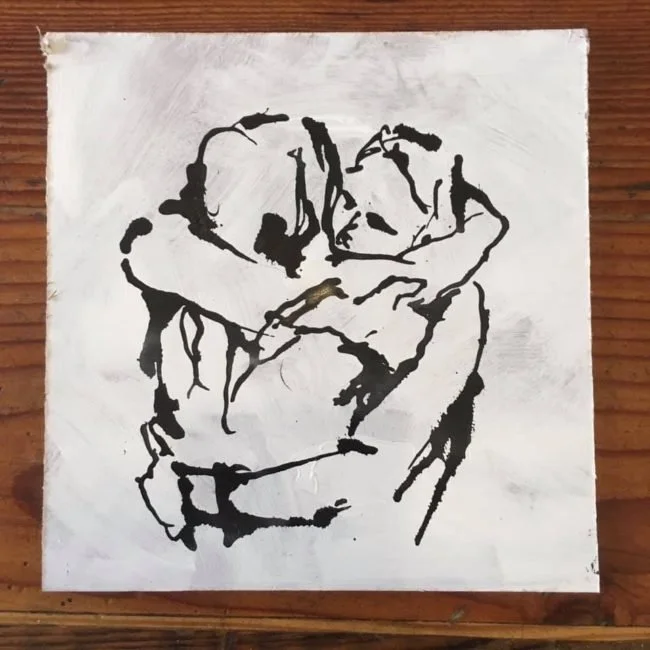
I created this ink sketch during Covid lockdown. Because I’m an immunosuppressed transplant recipient, our family of 3 chose to keep a very small bubble and strict social distancing protocols on the rare occasions that we spent time with people outside of our household. We did this so that we could maintain the safety and freedom for the 3 of us to have unrestricted physical contact with each other, instead of isolating me all by myself - an incredible sacrifice and gift to me on the part of my husband and son. I’ve never seen myself as a “big hugger”, but the social isolation from our friends and extended family was so hard and I really missed being able to be physically close with them.