Self-guided Reflection Tour

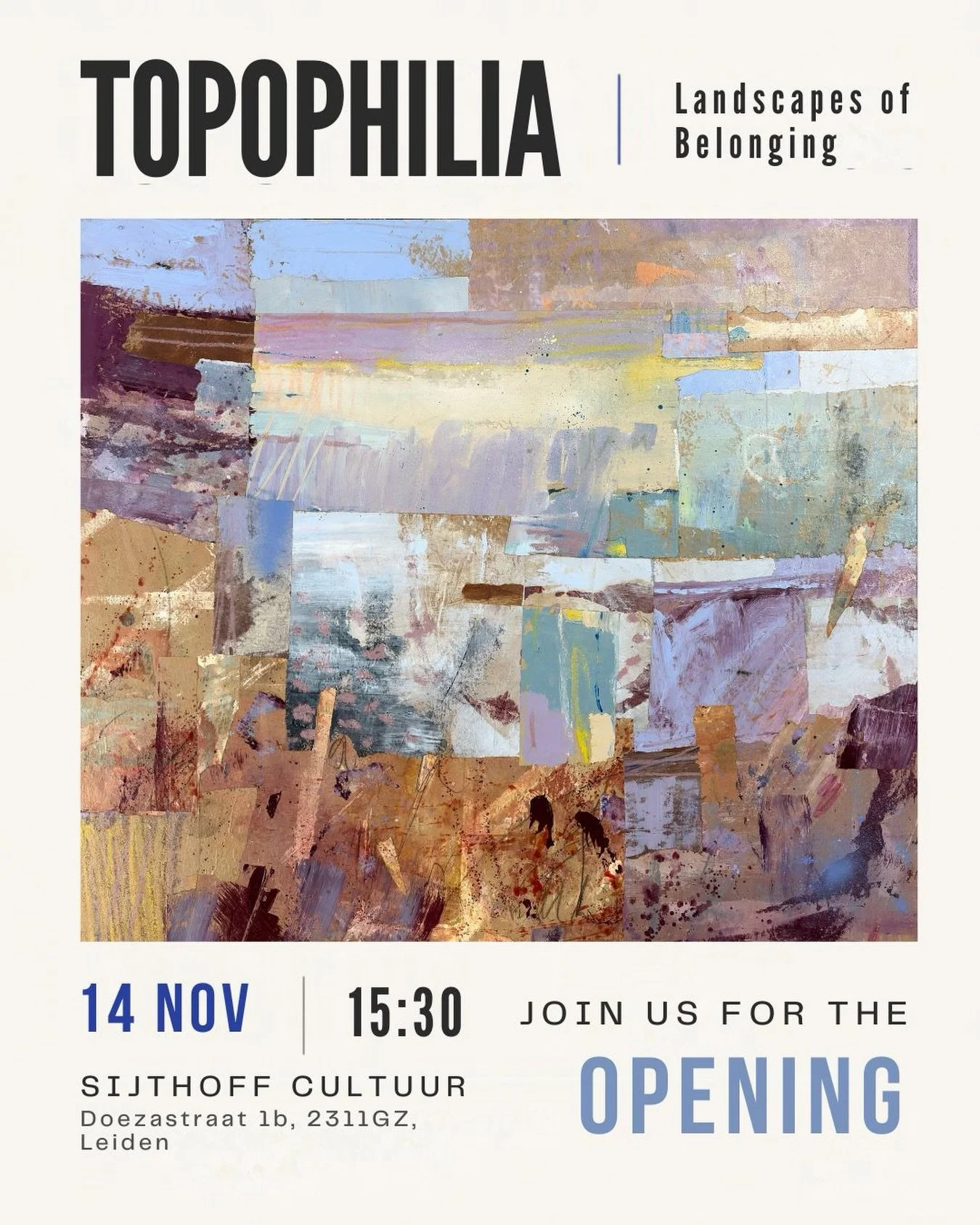
TOPOPHILIA: Landscapes of Belonging
Sijthoff Cultuur, Leiden
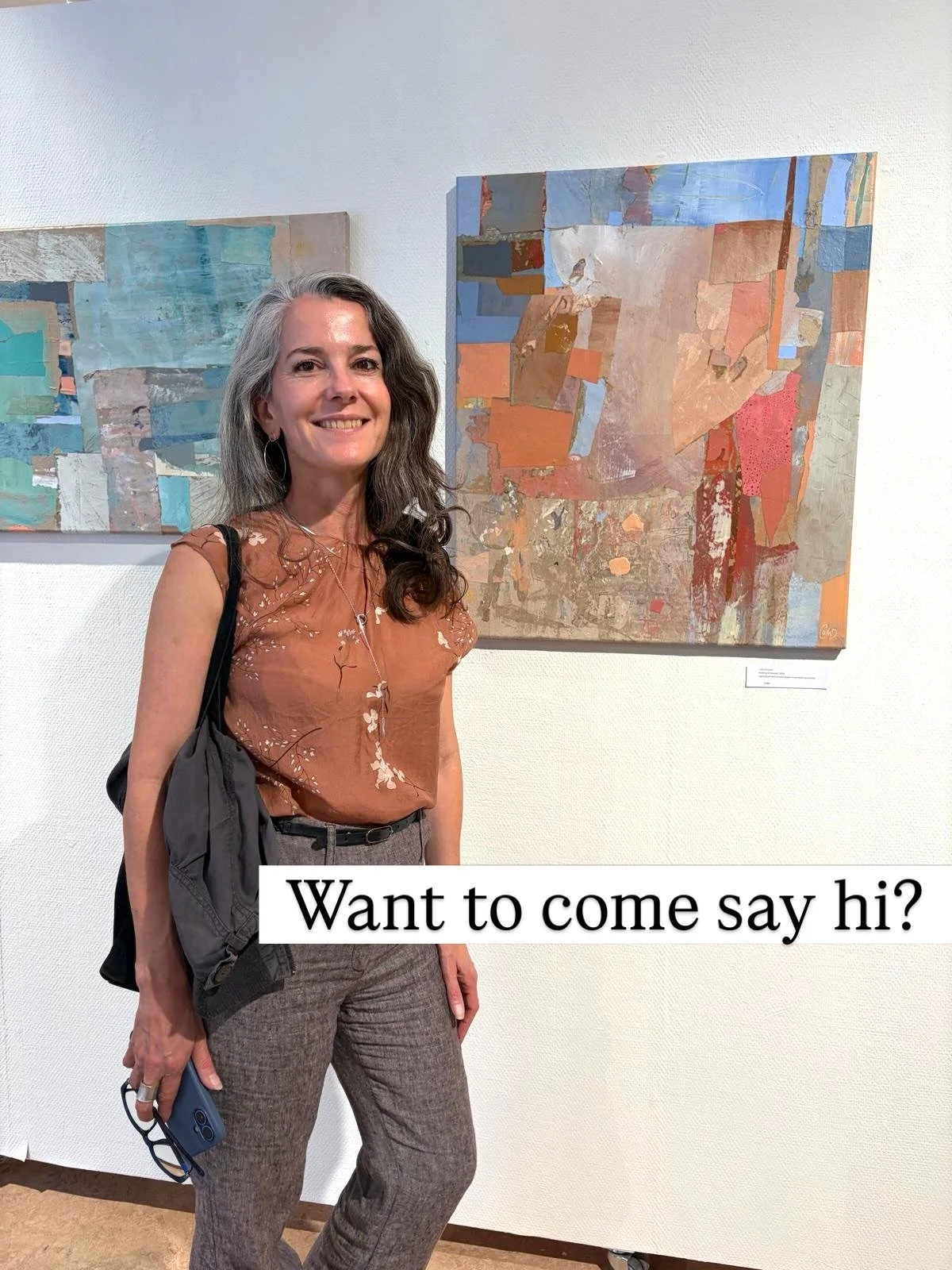
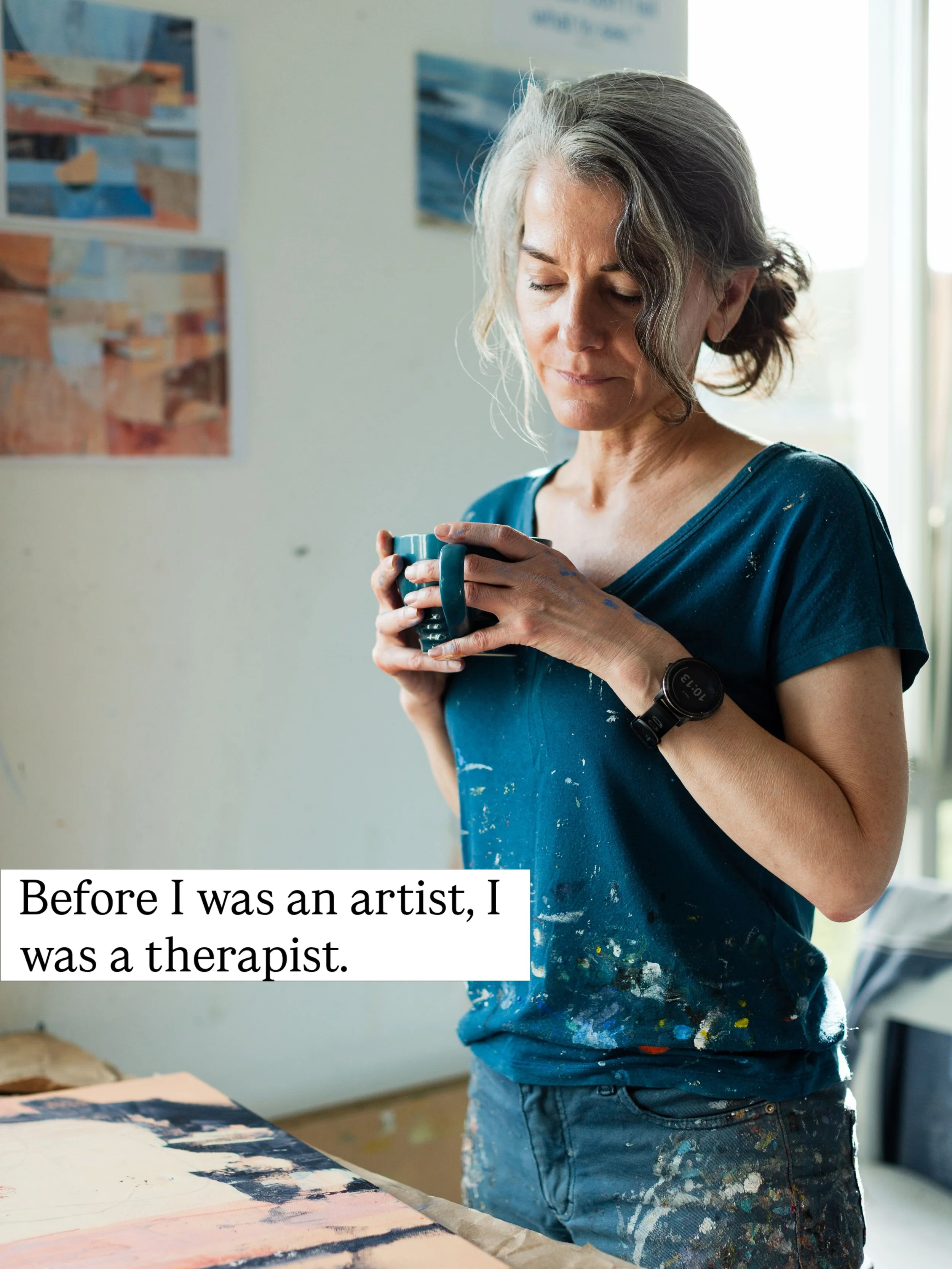
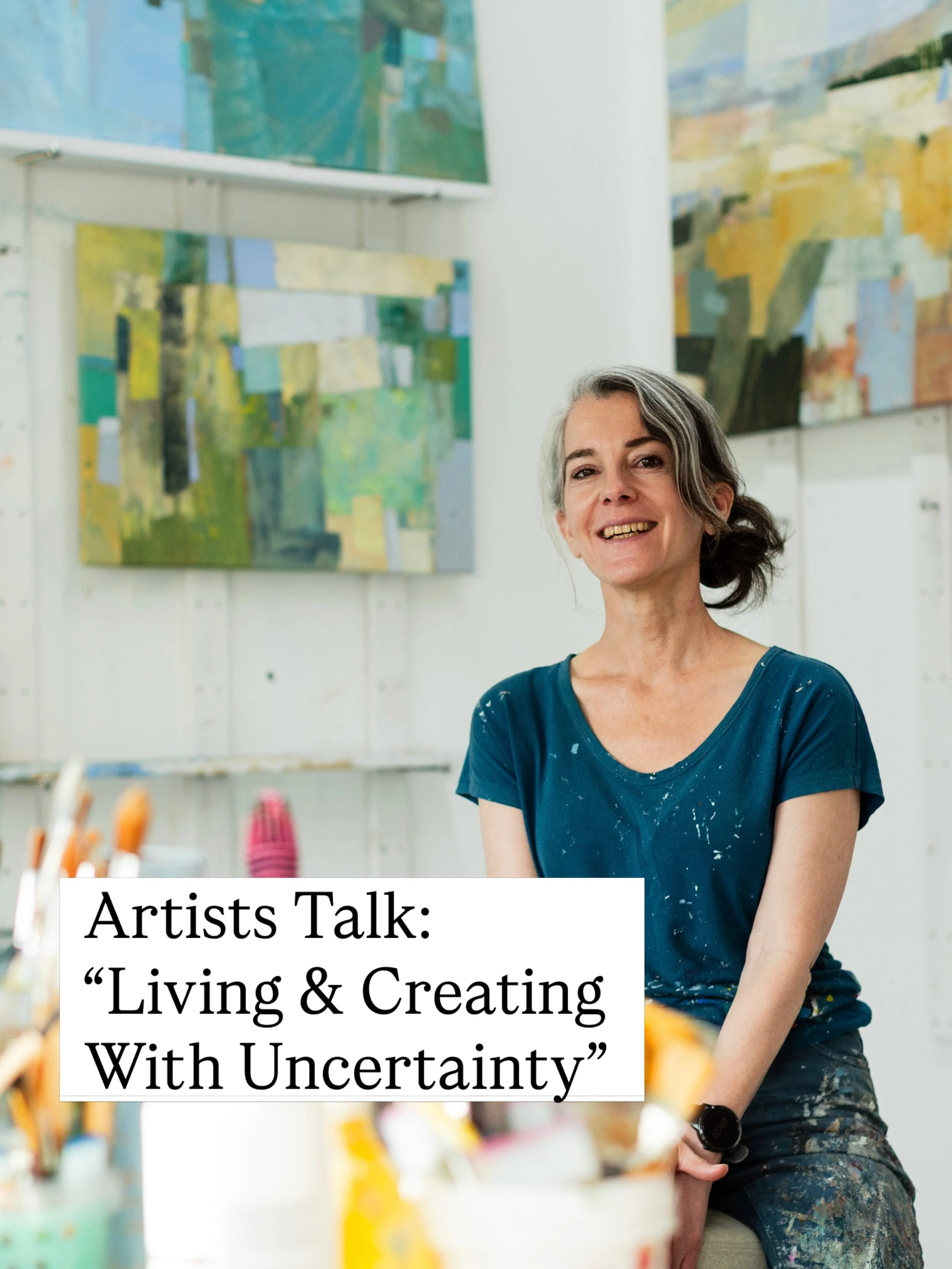
Welcome, and thank you for being here. I’m Cath Duncan, the artist behind these artworks - you’re welcome to read more about my journey from grief therapist to artist.
Whether you’re viewing the Topophilia: Landscapes of Belonging exhibition in person or joining online from your home, this Self-guided Reflection Tour is an invitation to spend time with the artworks, reflect on your own experiences, and notice what stirs, surprises, or settles you.
These artworks grew out of my ongoing exploration of how we create belonging and resilience after loss.
The term topophilia - first used by the poet W. H. Auden and later popularised by geographer Yi-Fu Tuan - describes the way our love for a particular landscape shapes our memories, identity, culture, and sense of belonging. But what happens when we lose a person, a place, a way of life, or a version of ourselves?
In layers of paint and recycled papers, drawing on the textures and wisdoms of the natural world and poetry, I’ve mapped ta journey through these inner landscapes. The tour moves through four chapters, each with four artworks: from loss and fear, through uncertainty, to the sanctuary we can find in nature, and finally to belonging - to ourselves, to nature, and to each other. Along the way, you may even find yourself realising that not only do we belong, but all of life’s hard experiences belong too.
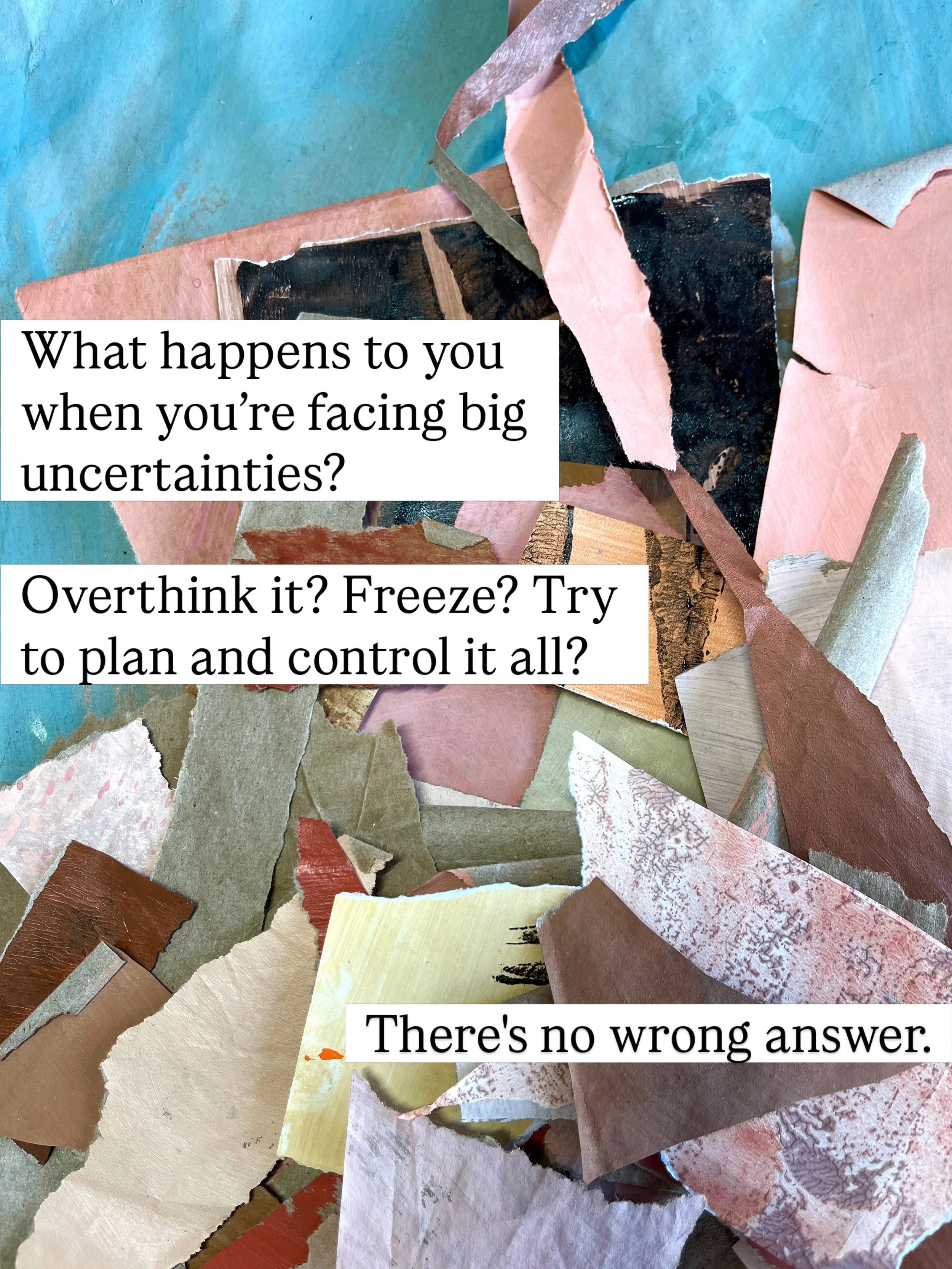
Take your time. You’re welcome to pause, wander, skip ahead, or come back on another day. You don’t need to answer all of the questions - or any of them. Sit with them, hold them, and let them open up your curiosity, sensitivity, imagination, and care - that matters more than any answers.
Before you begin the tour, you might like to take a moment to arrive - noticing your breath, your feet on the ground, the simple fact of being here. And when you’re ready, go ahead and begin…
Chapter 1: Loss, fear, and disorientation
Loss can feel like the ground slipping away, and fear often arrives with it. In this first chapter, the landscapes hold disorientation, falling and rising, borders and limits, and the long grey weather of hard days. As you look, notice that the loss is not the whole of your story. Other threads are being woven too.
Tethered in the Drift (2025)
Mixed media on canvas
70 × 80 cm
€1200
Soft blues, terracottas, and ochres form an abstract landscape where land-like shapes tilt and hang from sky-like colour blocks. The work evokes seasons of disorientation, uncertainty, and grief - when the ground seems to slip away and what we thought we knew is no longer certain. Yet within these shifting forms and colours, if we look for it, there is still always a tether: a sense of grounding, connection, and balance.
When the ground has shifted for you, what has been your tether that has kept you connected to what matters? It could be a person, a place, a practice, a memory, or something else.
What part of you has stayed steady through the disorientation, change, and loss, and what has helped you stay tethered to that part?
Everything Falling, Everything Rising (2025)
Mixed media on canvas
70 × 80 cm x 2cm
€1200
This abstract seascape, set beneath a high horizon, moves in the same rhythms that shape both nature and human life. Its layered forms could be rising toward the light or drifting downward from it - mirroring how our emotions, energy, successes, and even our breath rise and fall. Like tides that ebb and return, the work reflects the cyclical movement of the natural world. It suggests that to rise and to fall is not failure, but part of being human, alive, and deeply connected to each other and the earth to which we belong.
Alongside whatever has fallen, what has been rising in you, even quietly - a care, a skill, a tenderness, a determination?
What does that tell you about what ‘s important to you?
Now Hemmed In, Now Grasping All (2025)
Mixed media on canvas
100 × 120cm
€2300
This watery abstract landscape reflects the movement between the grief of loss and the grace of renewal described in Rilke’s poem, “Evening”. Vertical divisions evoke borders between nations and selves, while soft gradients open toward moments of connection and transcendence. Like the poem, the work expresses the delicate balance of being human: shaped by limits, yet continually reaching toward connection and new beginnings.
Think of one moment when you reached toward growth or connection - however small - even while feeling hemmed in.
What made that possible?
Weathering (2026)
Mixed media on wood panel
30 × 30 cm
€395 (including natural wood floating frame)
Some days are grey, and we'd rather they weren't. Yet out walking along a rugged coast, dressed for the weather and with no picture in mind of how the day should be, the grey skies, wind, cold air, and drizzle can feel validating and nourishing. I wonder if sitting with some of life's unwanted feelings might be like that too. If we let go of what would have been easier, and find what helps us feel sheltered, perhaps they can become bearable, meaningful, even beautiful.
What emotional weather have you been wishing away?
If you stopped bracing against it, what kind of shelter or “clothing” might help you meet it?
Chapter 2: Uncertainty, patience, and trusting what holds us
After loss, many of our questions have no immediate answers, and some may never be answered at all. These landscapes invite you to stay with the unresolved, to notice what is quietly composting beneath the surface, and to trust the currents that may already be carryng you.
Living the Questions(2026)
Mixed media on canvas
120 × 80 cm
€1900
Among splashes, sparkles and clouds, hard and soft edges separate colours and textures into small worlds, like rockpools, full of wonders for anyone willing to linger. The shoreline is an edge, like the many edges we meet in life and within ourselves - presenting us with a myriad of questions and choices. The artwork's title is inspired by Rainer Maria Rilke's advice to be patient with what is unresolved and "live the questions now". Stay and explore the shoreline until, perhaps one day, you "live your way into the answer".
What questions are you carrying that might not need an answer or a final decision yet?
What might happen if, instead of rushing to resolve it, you chose to linger at this edge a little longer?
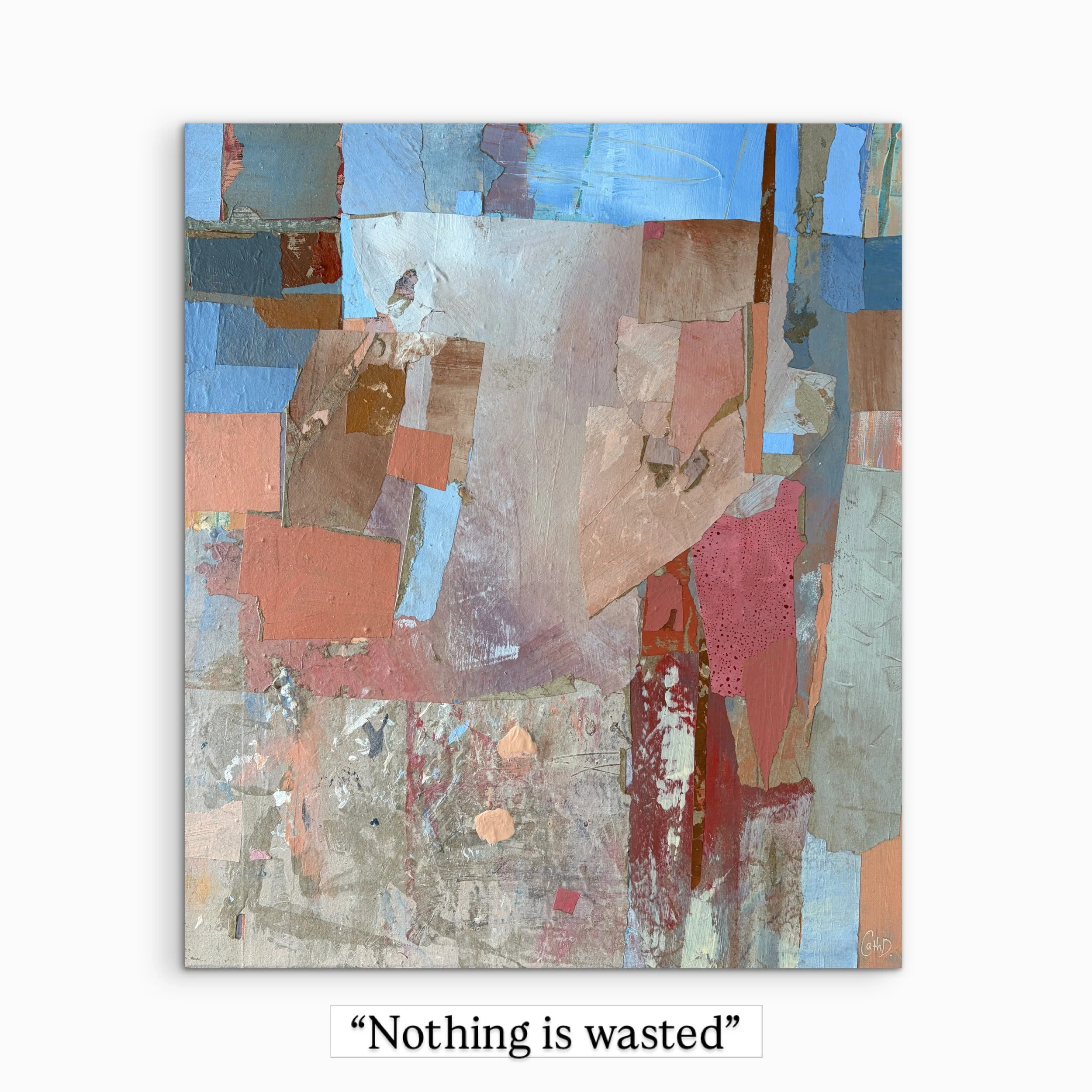
Nothing Is Wasted (2026)
Mixed media on canvas
60 × 70 cm
€895
Beneath a narrow horizon, the ground holds the slow labor of breakdown and becoming: fragments, losses, and buried seasons turning quietly into nourishment. In the dark there is movement - roots searching, matter loosening, life rearranging itself. This work reflects on the patience required to tend the soil rather than forcing growth, trusting that failure and loss are not wasted. Instead, they become nourishing compost for what comes next.
Is there a loss, a mistake or a hard chapter in your story that, looking back, became nourishment for what came after? What grew from it?
What in your life right now still feels “underground” - not yet visible, but perhaps becoming something? What would you say about how you have tended that ground so far?
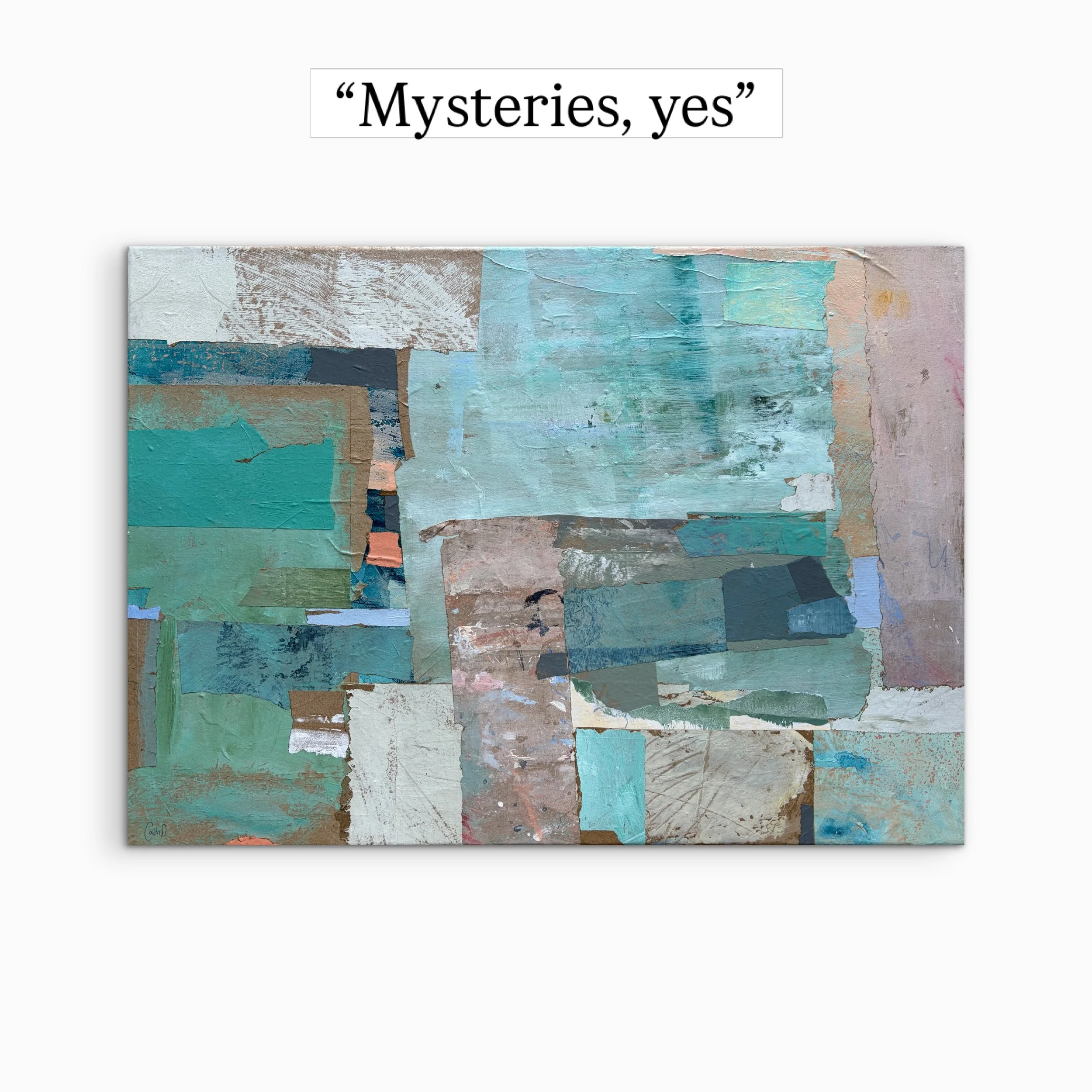
Mysteries, Yes (2026)
Mixed media on canvas
70 × 50 cm
€750
Soft fields of sage, grey, and cream open into a landscape that feels both seen and unseen - hovering between form and atmosphere. Inspired by the spirit of Mary Oliver’s poem, “Mysteries, Yes”, this work reflects on the ease of not needing to understand everything. Scientific language may describe the world in detail, yet there is another way of meeting it - with openness, wonder, and trust in what cannot be fully named. It is a space for attention without certainty, and for allowing awe to arise simply from looking, and noticing, and responding with quiet joy.
What are you willing to not understand right now?
What might that willingness free you from?
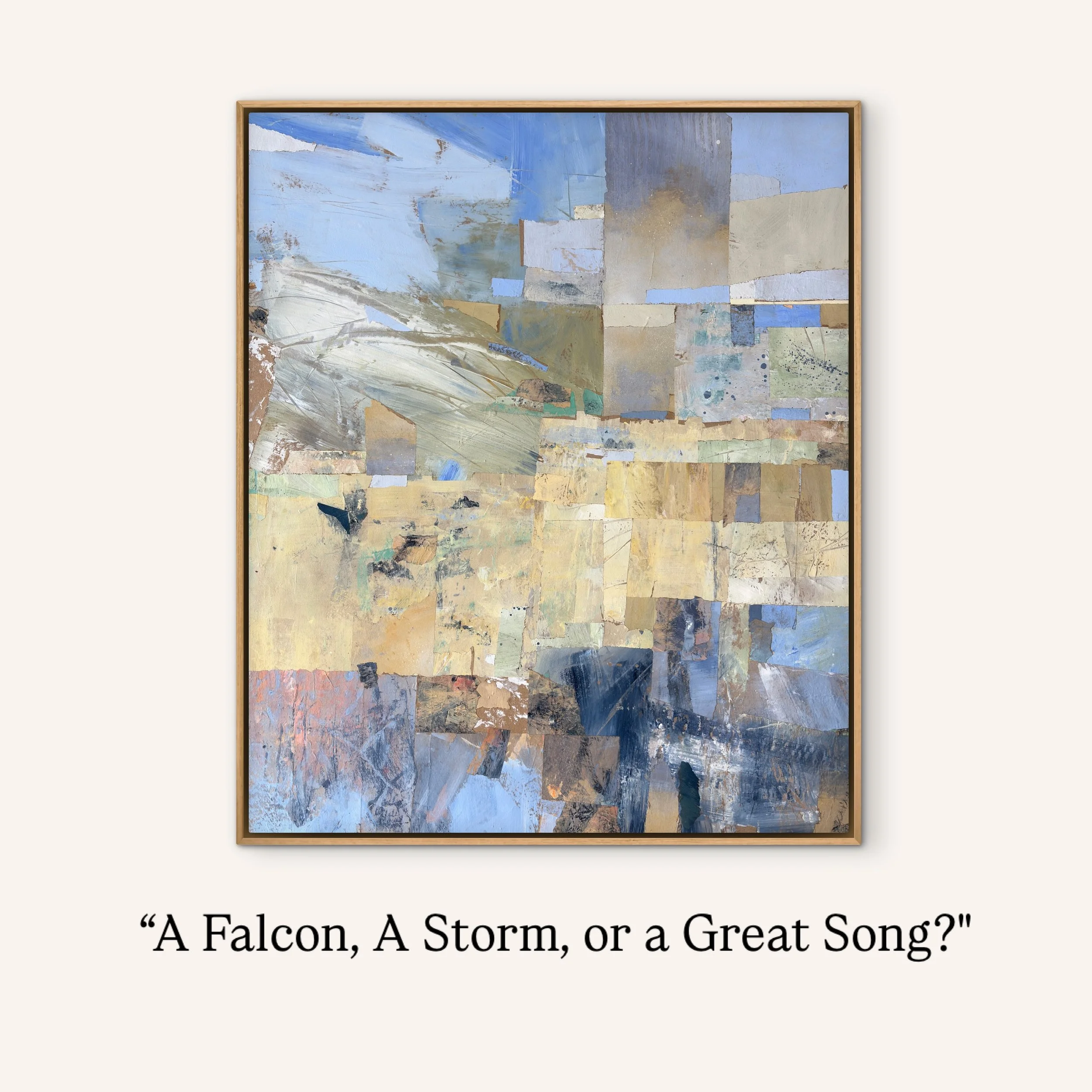
A Falcon, a Storm, or a Great Song? (2026)
Mixed media on canvas
100 × 120cm
€2300
Warm ochres stretch wide beneath a cobalt sky, the horizon loosened rather than fixed. Dark, bird-like gestures rise from a tangle of blue brushstrokes and find lift on unseen currents. The artwork takes its name from the final line in Rilke’s poem, Widening Circles - a poem that invites us to trust what the birds already know - that you don't need to know what you are, or where the circle ends, to give yourself to it. To live expansively is not to arrive at certainty, but to find, again and again, that there is always a current that will hold you up.
When have you been held up by a current you did not see coming? What or who was that current, and what does it say about what you are connected to?
If you trusted that there is always a current that will hold you, even when you feel like you know nothing at all, what might you give yourself more fully to?
Chapter 3: Finding sanctuary in the natural world
Topophilia is the love of place, and after loss the natural world can hold us, calm us, guide us, and inspire us. These works invite you to notice what the sky, the light, the grasses and your own breathing body offer back to you, and what that reveals about your capacity to endure and to delight.
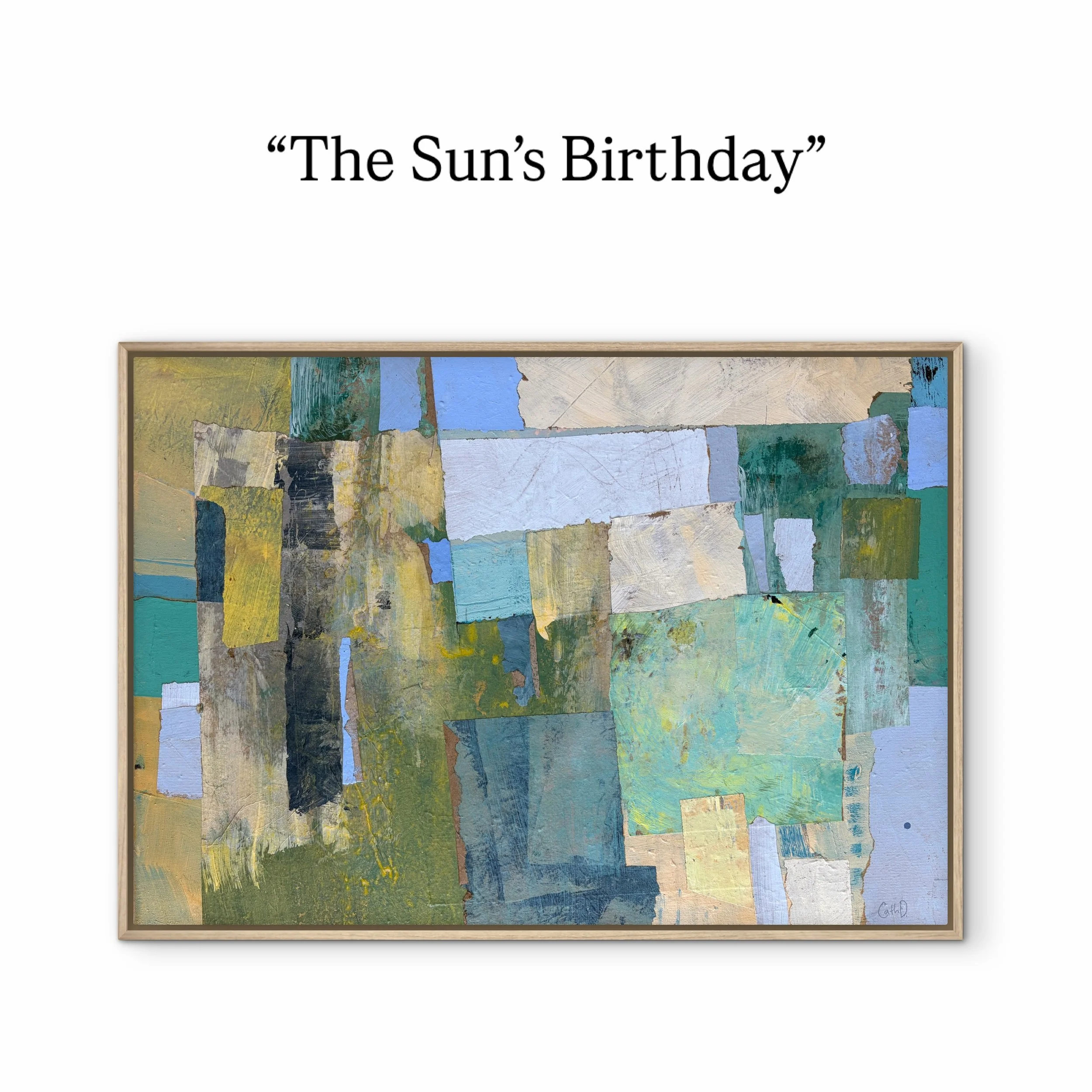
The Sun’s Birthday (2026)
Mixed media on canvas
70 × 50 cm
€750
Light returns in fresh greens and yellows - the colours of new leaves and open sky. Wild foliage lifts into brightness, carrying the simple joy of sunlight, air, and movement. The painting holds the feeling of a world beginning again. Echoing the spirit of ee cummings’ poem, “i thank You God for most this amazing”, this work celebrates the astonishment of being alive in the present moment - the sensory delight of colour, light, and growth, and a quiet gratitude and hope that life continues to unfold toward the light.
Which landscape or natural place has been there for you in hard times?
What did it offer you that nothing else could, and what does that say about what you need in order to feel held?
The Sky Was (2025)
Mixed media on canvas
80 × 70 cm
€1200
This work began in pure delight - an immersion in the colours, textures, and vastness of the sky. I wanted the sky and land to feel integrated rather than separate or hierarchical, because in truth they belong to one another, despite the divisions we often impose in our minds. The process was playful and sensory, guided by the simple joy of exploring colour, shape, and movement. The resulting artwork feels open and cheerful, peaceful yet alive. When I later read E.E Cummings’ poem, “The Sky Was”, it felt as though we had been looking at the very same sky.
When have you felt an unexpected kinship with a place, a poem or a person, and what did that feeling of kinship give you?
What divisions in your life - before and after, here and there, us and them - might loosen if you imagined that both sides belong to one another?
Inside This Soft World (2026)
Mixed media on canvas
40 × 40 cm
€450
The foreground of this abstract seascape is filled with textured grasses and scattered traces, like small treasures left behind along a path. Reflecting on the practice of learning to track the soul the way we might track animals in the wild - by noticing the small signs of aliveness it leaves behind - I found myself returning to Mary Oliver’s poem Mindful, and especially the lines, “to look, to listen, / to lose myself / inside this soft world - / to instruct myself / over and over / in joy.”
What tracks has your soul left for you recently - small signs of aliveness, delight, longing or tenderness?
What do they point toward, and what do they tell you about who you are?
Here, held in the light (2026)
Mixed media on wood
30 × 30 cm
€395, including natural wood floating frame
An abstract seascape in soft yellows, lilacs, and ochres, with layered forms suggesting water and sand held in warm light. This artwork is a reflection on the quiet delight of being in a body - even one that is vulnerable, struggling, or faltering. It holds an invitation to slow down enough to notice how extraordinary it can be to feel, to be present, and to inhabit this fleeting, sensory life: salt on the lips, warmth on the face, and the gentle rhythm of breath.
How has your relationship with your body changed through your experience of loss?
What might your body say if you thanked it for carrying you this far?
Chapter 4: Creating belonging - to ourselves, to nature, and to each other
Belonging is not rebuilt alone, and it is not built only from what is easy. In this final chapter, the landscapes turn toward relationship and wholeness, and toward a surprising realisation: that not only do we belong, but all of life’s hard experiences belong too.
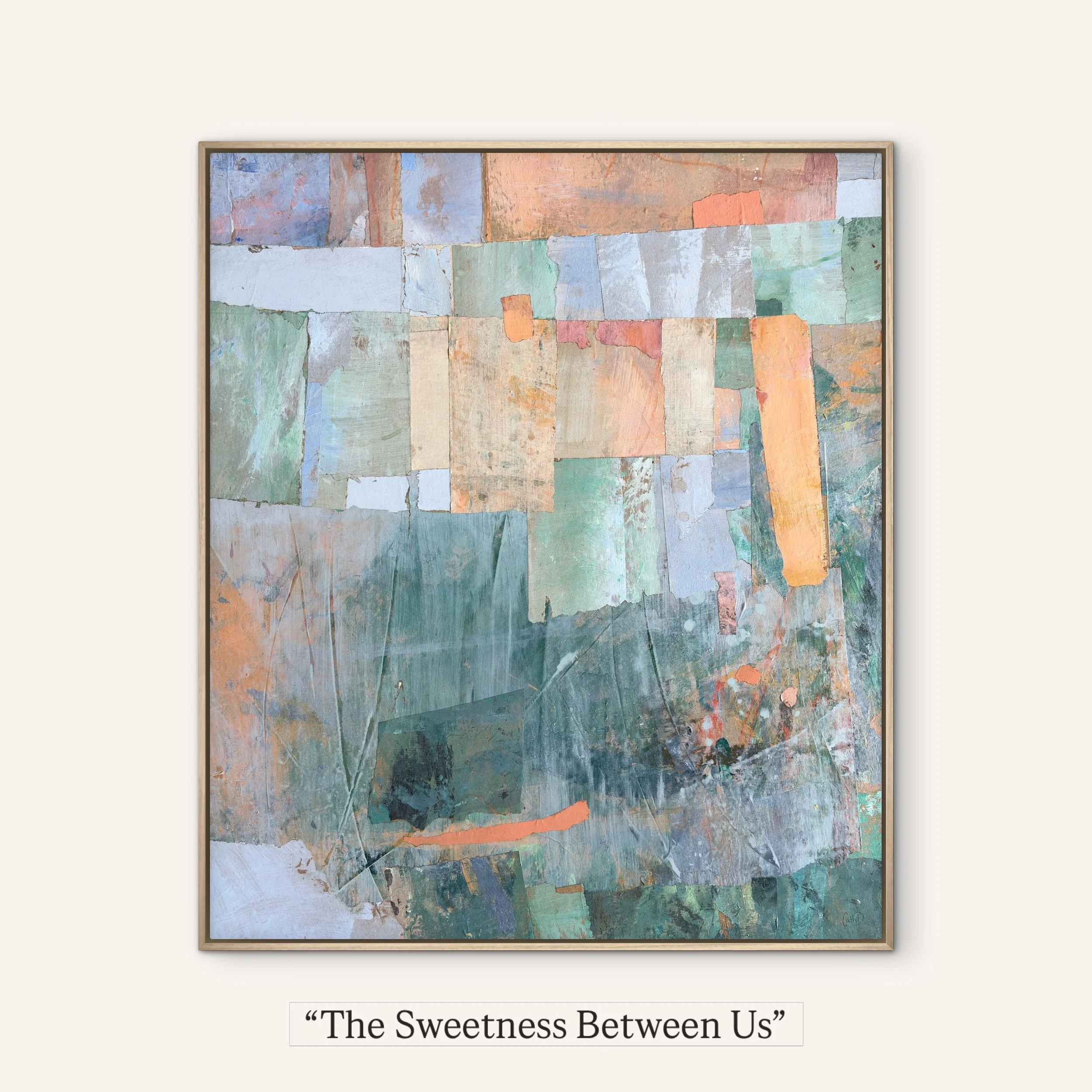
The Sweetness Between Us (2026)
Mixed media on canvas
60 × 70 cm
€895
This work is a vision of paradise - not as solitary abundance, but as vitality built together. Nothing here strains upward alone; everything moves in relation to something else, held in a kind of shared buoyancy - balanced, abundant, and beautiful. Peach speaks of wellness and sweetness, goodwill passed hand to hand. Life flourishes not through force but through connection: roots reaching toward roots, generosity meeting generosity, one living thing lending its light to the next.
Where has goodwill been passed hand to hand to you?
What kind of sweetness would you like to help cultivate with others?
The Water We See Each Other In (2026)
Mixed media on wood panel
70 × 40cm
€710
We come to know ourselves through our relationships: they are the water we see ourselves in. What if we all stopped trying to thrash about or swim for the shore and instead trusted the water to hold us? What if we let ourselves surrender, rest, and float, long enough for the water to still and the mud to settle? In stillness, the water clears, and we may begin to see ourselves - and each other - more clearly.
Who has witnessed how you have carried this season of your life?
What might they say they have seen in you that you can’t always see yourself?
All That Belongs (2026)
Mixed media on canvas
50 × 50cm
€600
Gestural strokes and collaged shapes weave pathways, rays of light, and fragments of water, sky, and land into one another, until they become difficult to separate. The boundaries keep shifting, asking us to see the whole rather than its separate parts. Wholehearted living asks something similar of us: to resist the temptation to divide our experience into what we want and what we wish we could avoid feeling. There can be no courage without fear, no resilience without something to recover from, no deep appreciation of joy without having known its absence. The whole of our experience belongs.
What have you wished to separate from your story, and what might change if you welcomed it as part of the whole?
What has your experience of loss shown you about what you love, and how does that love show up in the way you live now?
Let Everything Happen to You (2026)
Mixed media on canvas
90 × 80cm
€1450
I made this in my studio, drawing on memories of painting on the heathlands of Northumberland: papers flapping, paint flying, no waiting for calmer weather, and the wind as a collaborator. I felt exhilarated, completely in the landscape and in the making, and I wanted to carry that into this work. The title borrows Rilke's invitation to "let everything happen to you: beauty and terror". Being fully engaged, rather than hesitant and careful, can be scary, and it leaves its unpredictable marks and messes - and there can be so much beauty in that.
If beauty and terror both belong in what it means to be fully human, what might it look like to go forward, open to it all?
What and who would you want beside you as you do, and what can you do to draw closer to all of that?
Thank you for visiting
Take a moment to acknowledge yourself for being here. Turning toward reflection, feeling and imagination is an act of courage. Rebuilding belonging after loss does not require answers, performance, or arrival - it grows through attention, honesty, care, and courage.
You’ve travelled from loss and fear, through uncertainty, to the sanctuary we find in nature, and on to belonging - to ourselves, to nature, and to each other. Some questions may have stirred gently; others may have opened something tender or surprising. Nothing needs to be resolved, and you get to choose what you’d like to take with you now. What will that be?
I hope this exhibition and reflection tour leaves you with something that can take root - an image, a feeling, or a question - that supports the flourishing of creativity, connection, and belonging in your everyday life.
Big love,


Would you like to live with one of these artworks?
All of the artworks are available to buy. If you’d like to own one of these artworks, contact me at cath@cathduncan.com or +31-6-27-97-73-66 (call or whatsapp). I’ll be happy to meet you at Sijthoff Cultuur or schedule a phone or video call.
Here’s answers to FAQs about buying, shipping, and my refund policy. Feel free to be in touch if you have any other questions!
Want to share this Reflection Tour with someone?
This tour is best experienced at the Topophilia: Landscapes of Belonging exhibition at Sijthoff Cultuur, Leiden, where you can see the artworks in person (showing from 14 Nov until 6 Dec). You’re also welcome to forward this online version to friends or loved ones who can’t visit the exhibition.
Join me on Insta: @cathd