Welcome!
Thank you for taking the time to learn about my creative process.
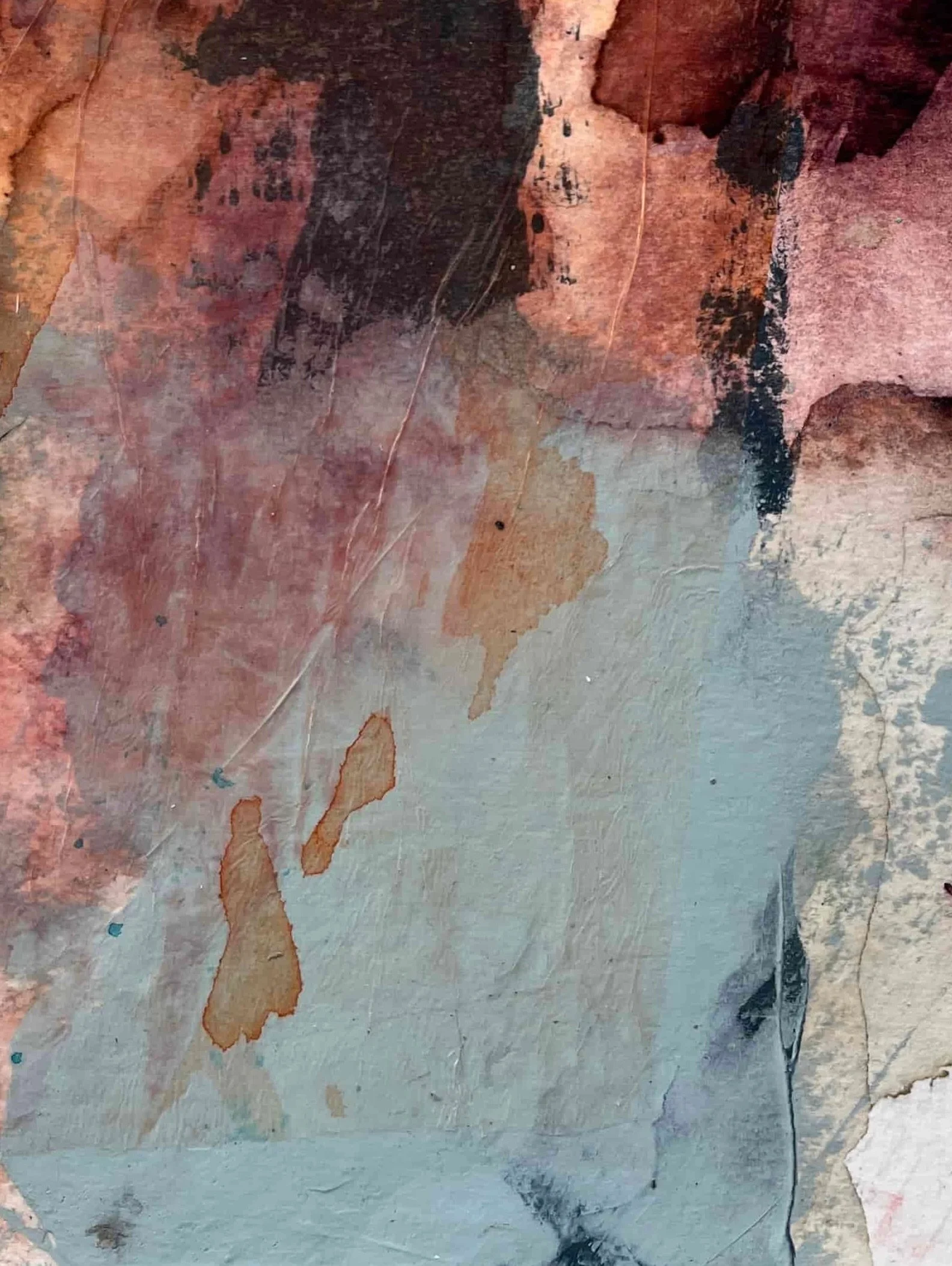
Below is a short reel you can watch, showing the full journey of an artwork I created for a commission for a couple in Australia. The artworks is called, Red Dust and Eucalyptus.
Elements of my creative process
Working with Recycled Materials
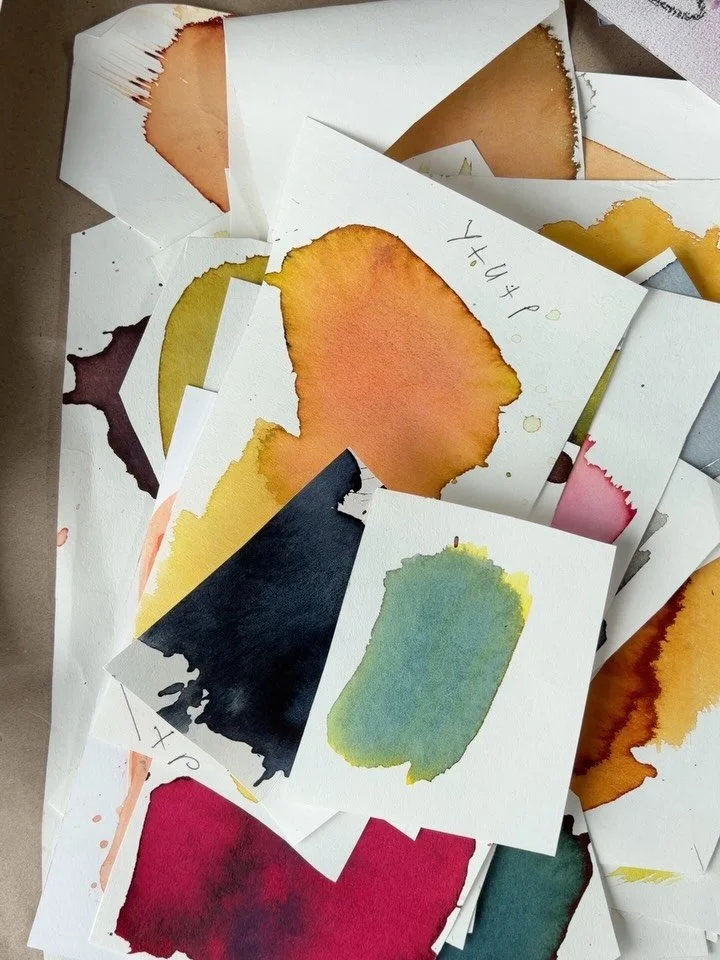
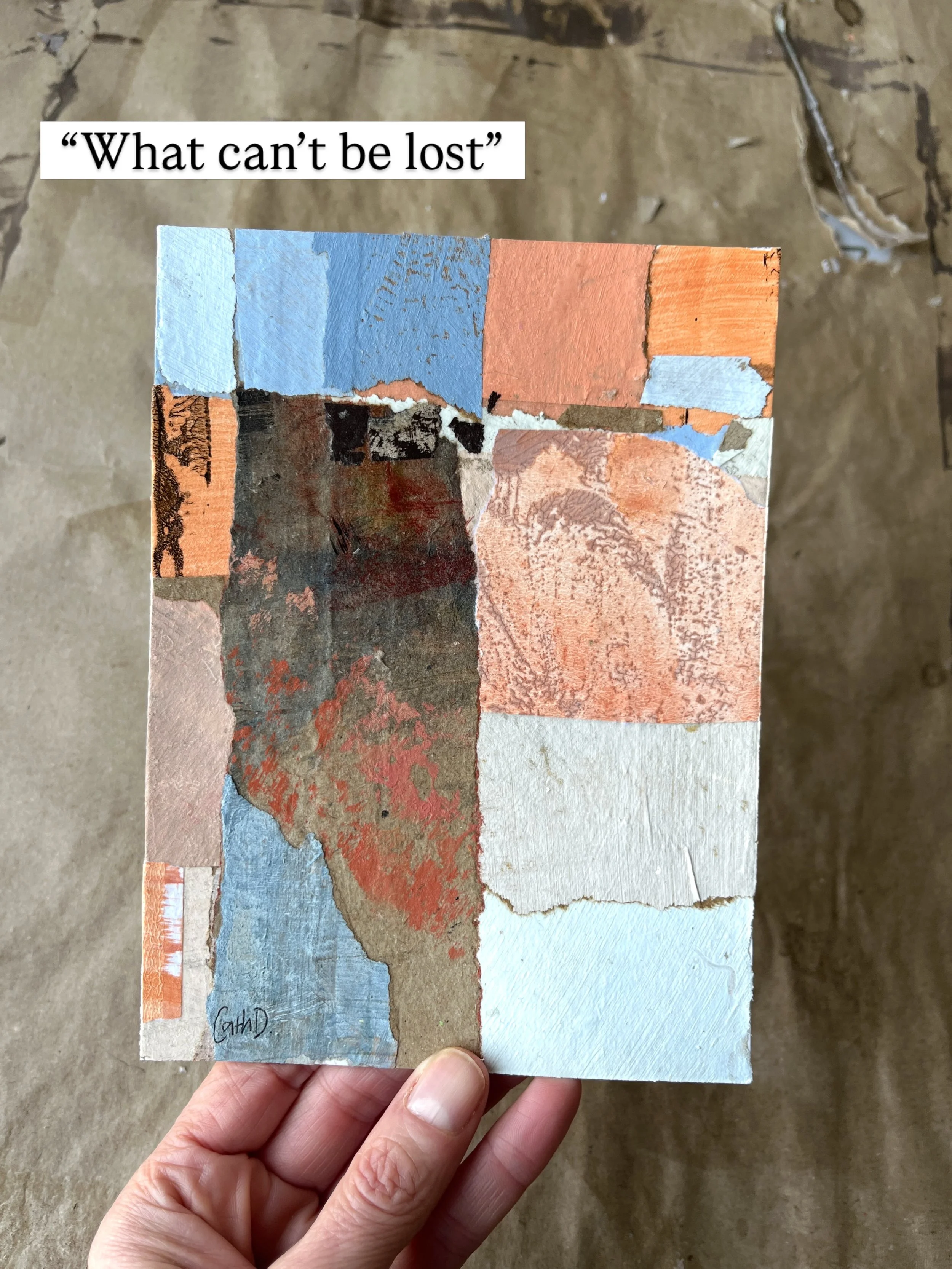
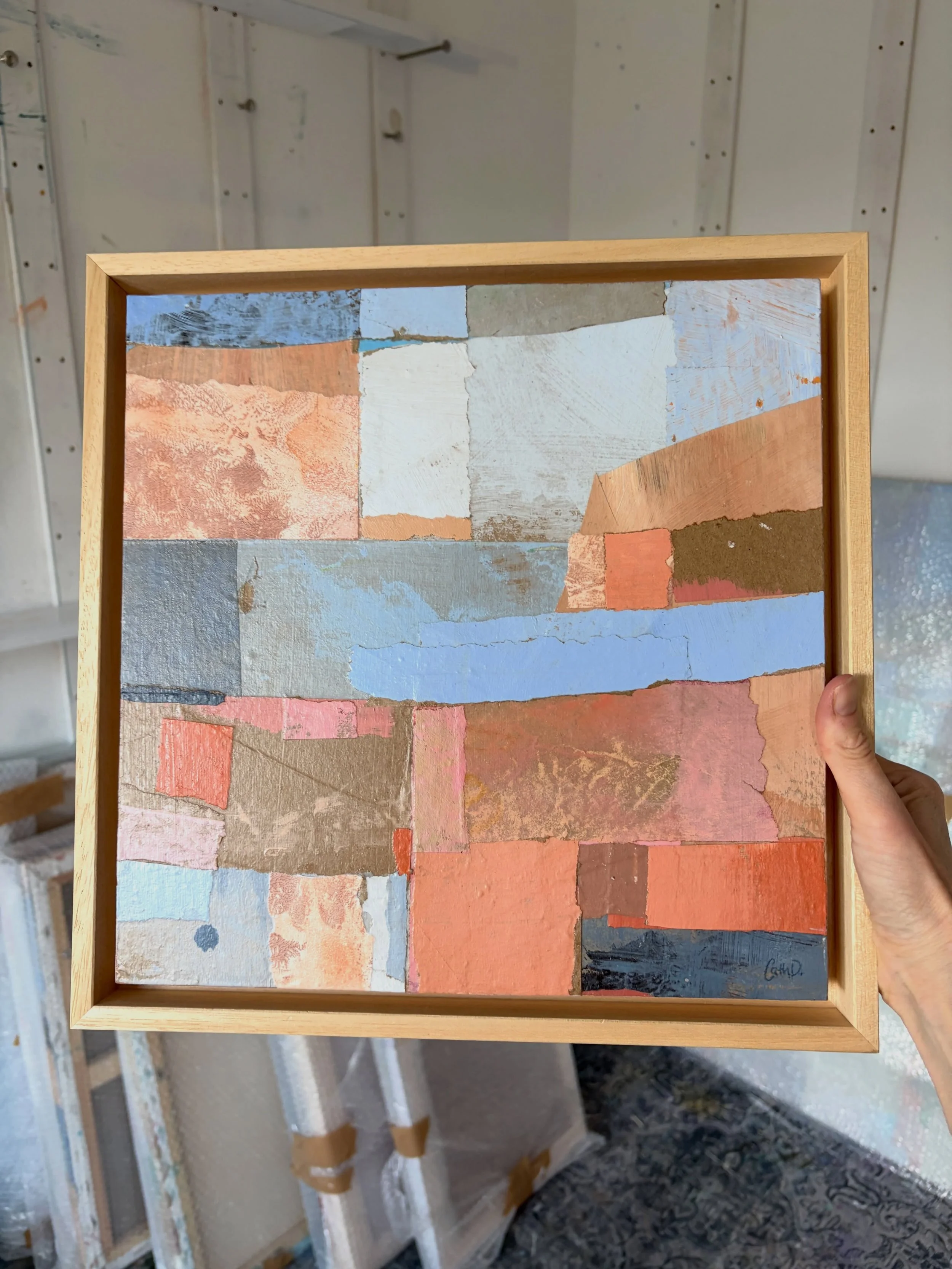
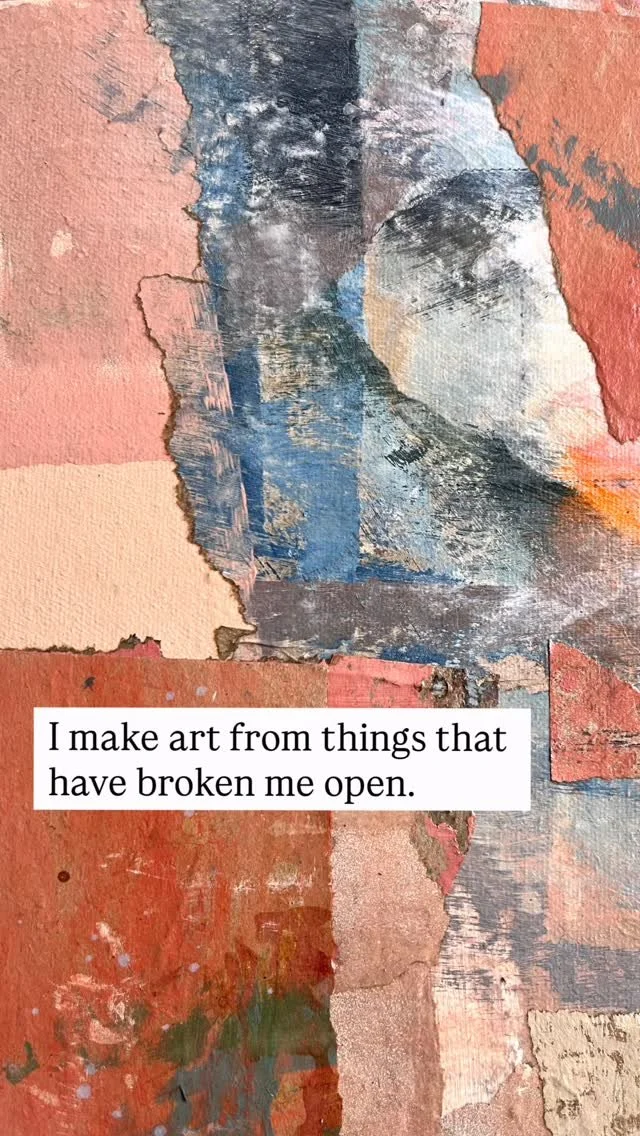
I love working with recycled, painted brown packaging papers - papers that once protected, cleaned, or wrapped. Many already bear traces of earlier creative moments, having been used as table coverings, colour tests, or brush-cleaning sheets. By painting, tearing, layering, and reassembling them, I offer these materials a renewed life and meaning.
This process of re-imagining, layering, and grafting feels like an act of regeneration. It’s a reminder that beauty can grow out of what has been discarded, that nothing need be wasted, and that social and ecological renewal is both possible and deeply rewarding.
Letting the Work Reveal Itself
I rarely know in advance what a finished piece will look like or what it will ultimately mean. Instead, I begin with a sense of the themes and questions moving through my own inner landscape, curious about how the artwork might offer insight into the challenges, losses, and fears most alive for me at the time.
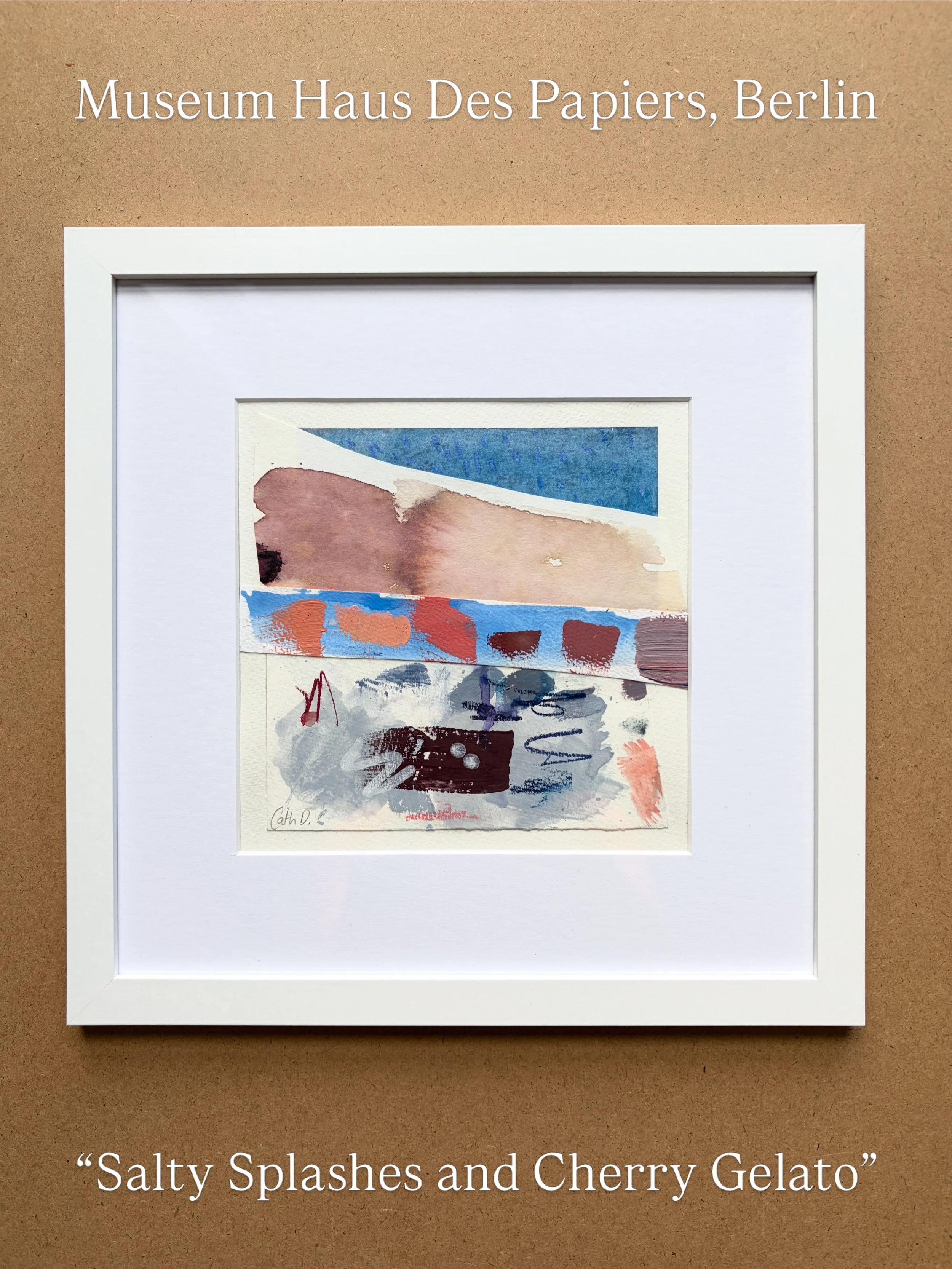
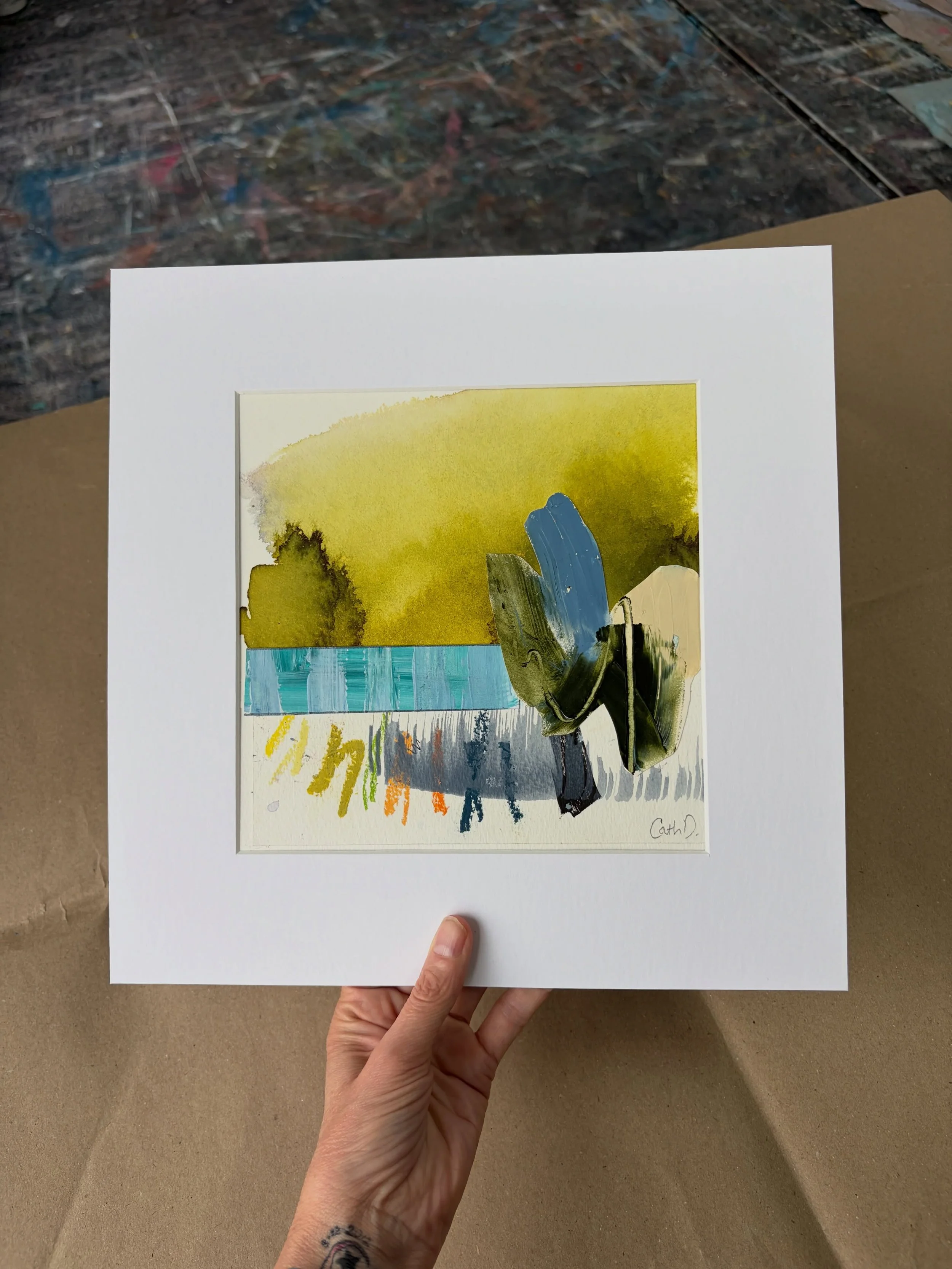
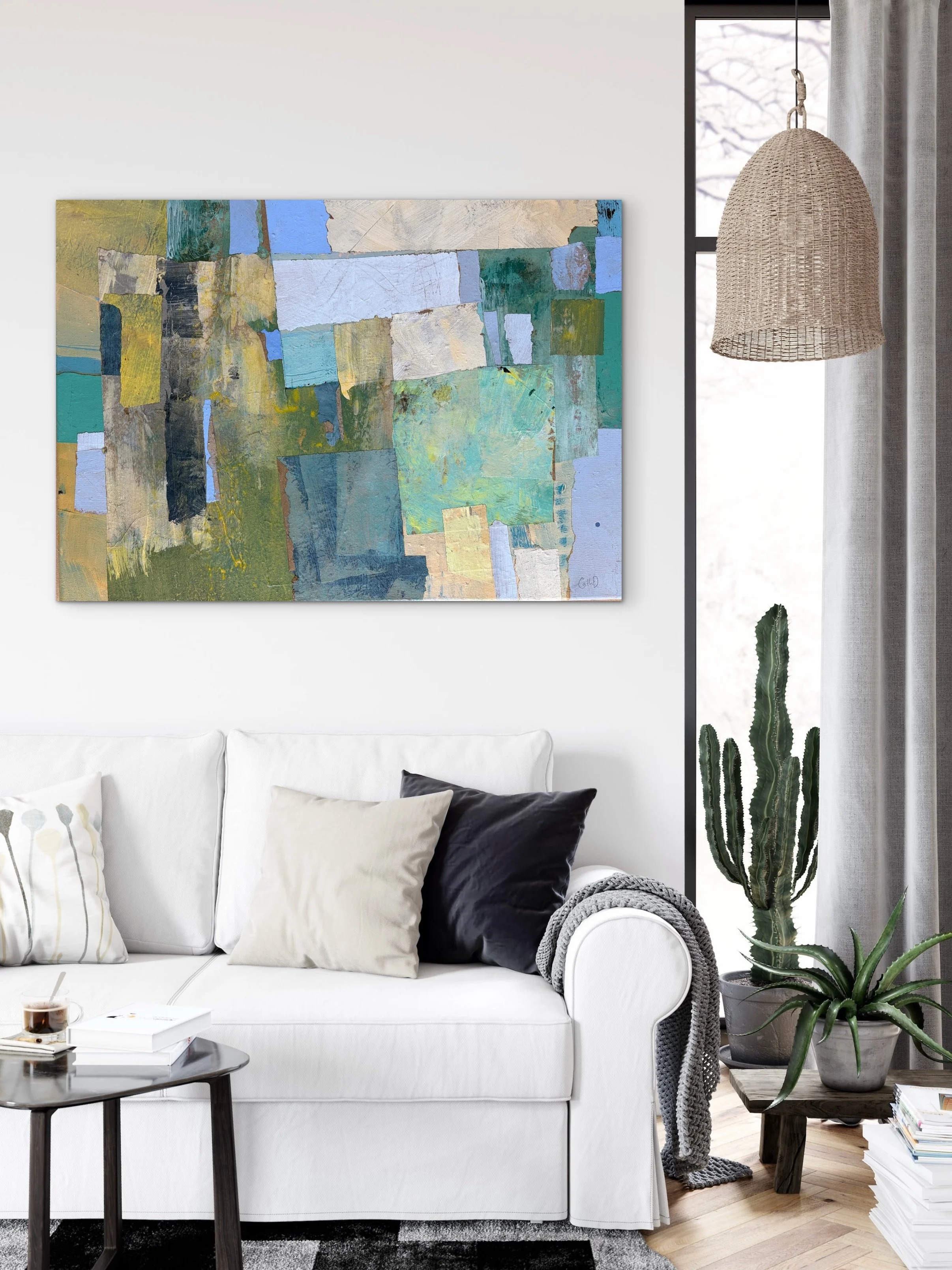
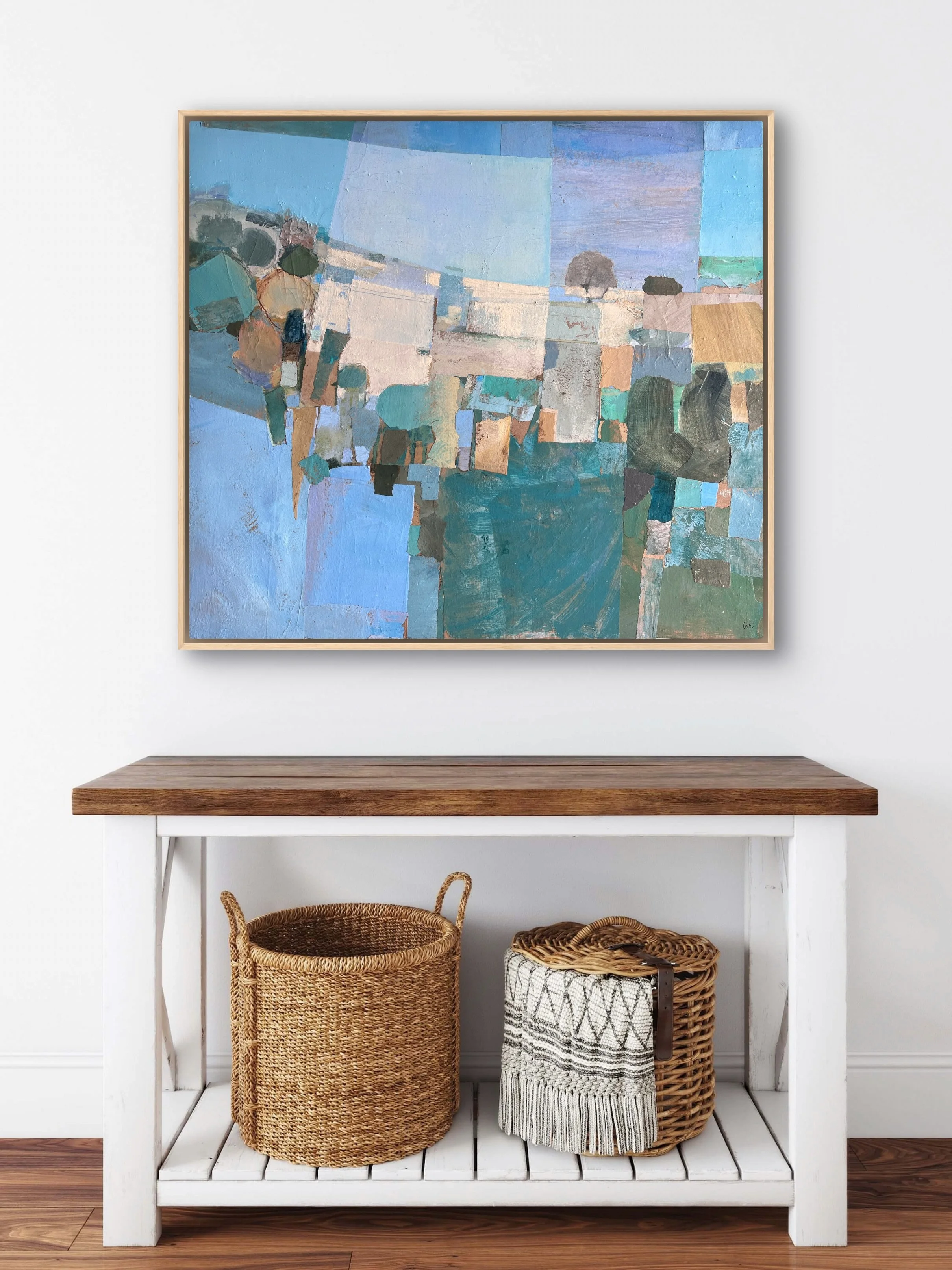
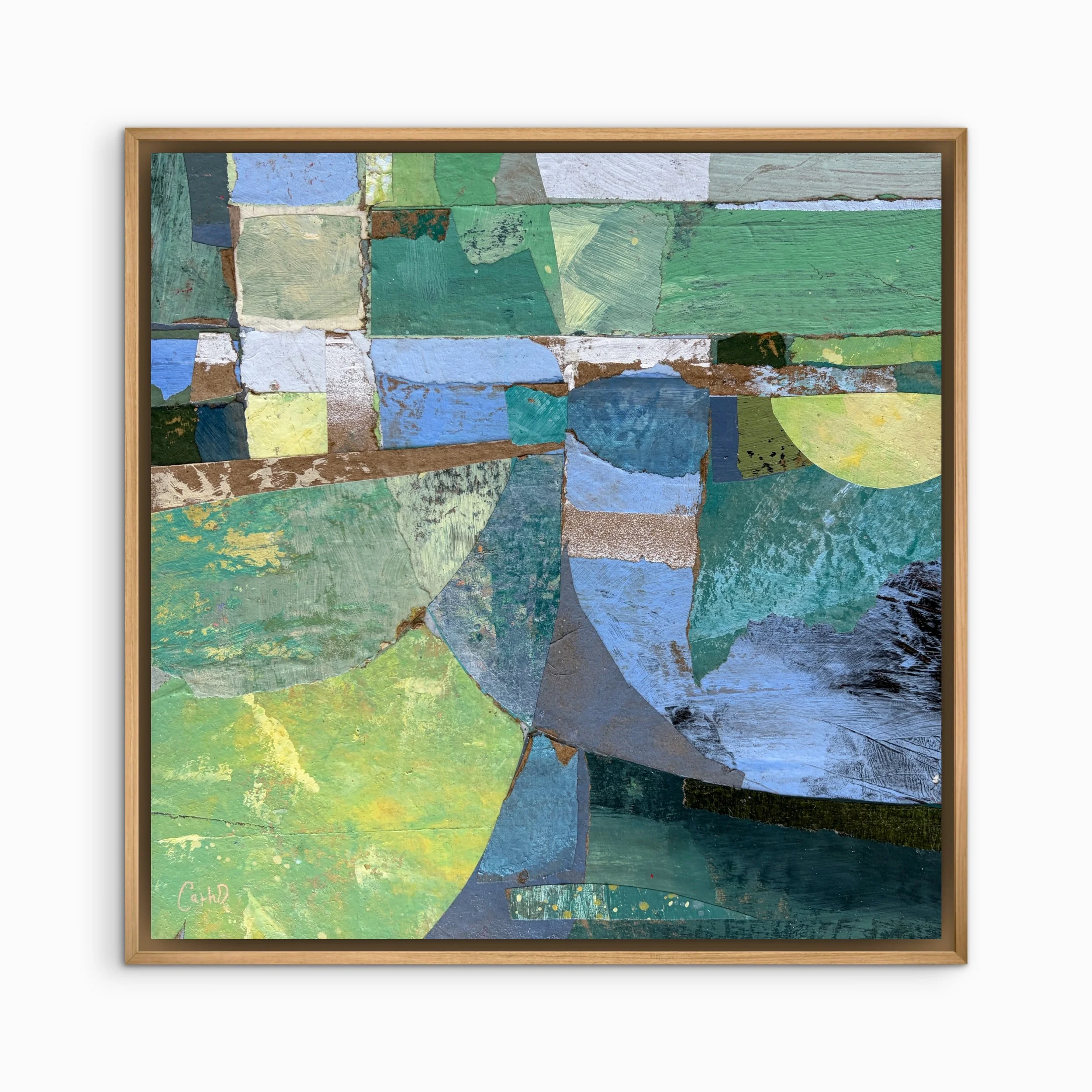
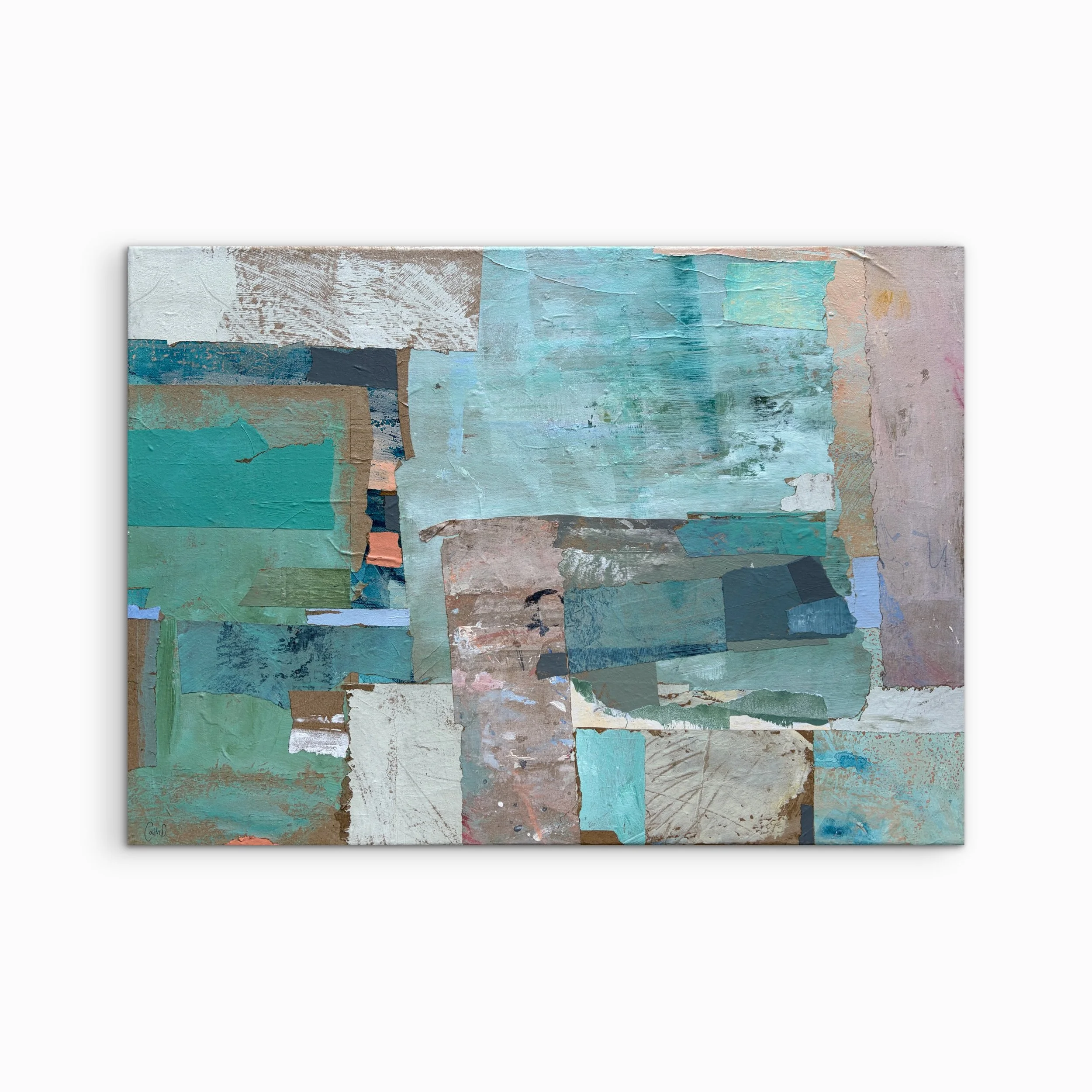
Usually, I start with a colour palette and sometimes a loose sense of a landscape or seascape. I work intuitively, selecting and rearranging larger paper shapes to form an initial composition. From there, I develop the work through smaller pieces of paper and acrylic paint, deepening colour, texture, and spatial depth - often allowing the artwork to change significantly from its original form.
A Dialogue with Poetry
It’s often only near the end of the process that an artwork’s themes and emotional resonances begin to reveal themselves to me. I often read poetry, and sometimes, as this understanding gathers clarity, I encounter a poem that seems to articulate the work’s spirit, and a title emerges from the relationship between the poem and the painting.
Reading poetry nourishes my creative life. It sharpens my attention, deepens my sensitivity to language and metaphor, and offers ways of expressing what can feel difficult to name.
Several titles in Topophilia echo lines from poets who write about human longing and grief, and about nature’s beauty, intelligence, fragility, and awe. One poem in the exhibition was written by my friend, Beth Baugh, in response to the artwork What the Falling Leaves Whisper Back. Together, the poems and artworks form a dialogue - art and language as twin vessels for expressing what is felt but often difficult to say.